
The Silence of the Lambs. Re-watch (previously). Masterpiece. I noticed the close-ups much more this time around. The face are very, uh, in your face. Jack Crawford might be the most unsettling character in the whole movie.
The Silence of the Lambs. Re-watch (previously). Masterpiece. I noticed the close-ups much more this time around. The face are very, uh, in your face. Jack Crawford might be the most unsettling character in the whole movie.

American Honey. Second viewing (the first). I still don’t know what to make of it, thematically, but I was entranced again.
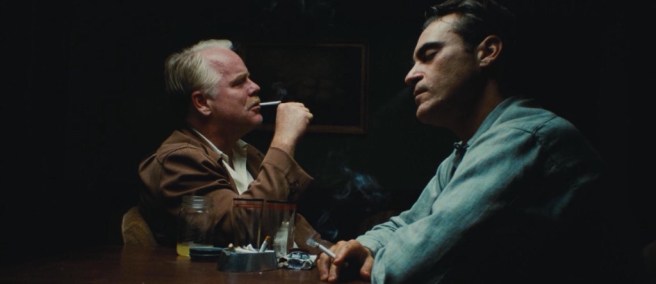
The Master. Second viewing. I liked it a bit more than the first time I saw it. The argument at the party is such a great scene. I miss Philip Seymour Hoffman. :(

The Girl With All the Gifts. Has anyone written about how in movies, if a child is portrayed to be courteous and well-behaved with adults, we think they’re creepy? There’s just something off about a kid who cares a little too much about adults. I like the fine line this one walks, betraying our sense of what a happy ending should be. I think my favorite parts of zombie movies are when they have to sneak by them. This one has a couple good scenes like that, and they made me remember and appreciate similar ones in Shaun of the Dead, Train to Busan, and World War Z.

The Gift. Second viewing (the first). Very nicely done. Love the characterization through costume. Edgerton’s character consistently has something in the wardrobe that’s on the border of “uncool” and “unsettling”. Love how it shows people wrestling with intuition vs. manners, protection vs. politeness.

Annihilation. I dig it. Interesting to see scifi that leans so much on biology. One of those slower exploratory scifi movies that later gets crossed with some truly horrific gore (Stalker meets The Thing?). Great score, especially the climactic scenes. The music was so… three-dimensional. It felt novel somehow to have a discernible rhythm in there, not a long fermata.
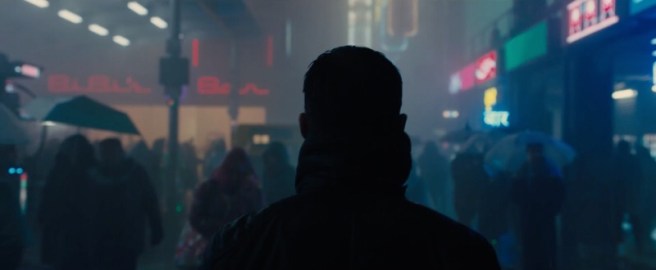
Blade Runner 2049. Pretty. Good. Can’t say I like it as much as the original. I think they could have bumped the pace a bit without losing much. But there are far worse ways to bathe in goofy visuals.
When the portraits of the Obamas were revealed today, I mentioned that seeing Kehinde Wiley‘s work was one of the big Art Moments in my life. I started thinking about a few other peak experiences and wanted to jot’em down.
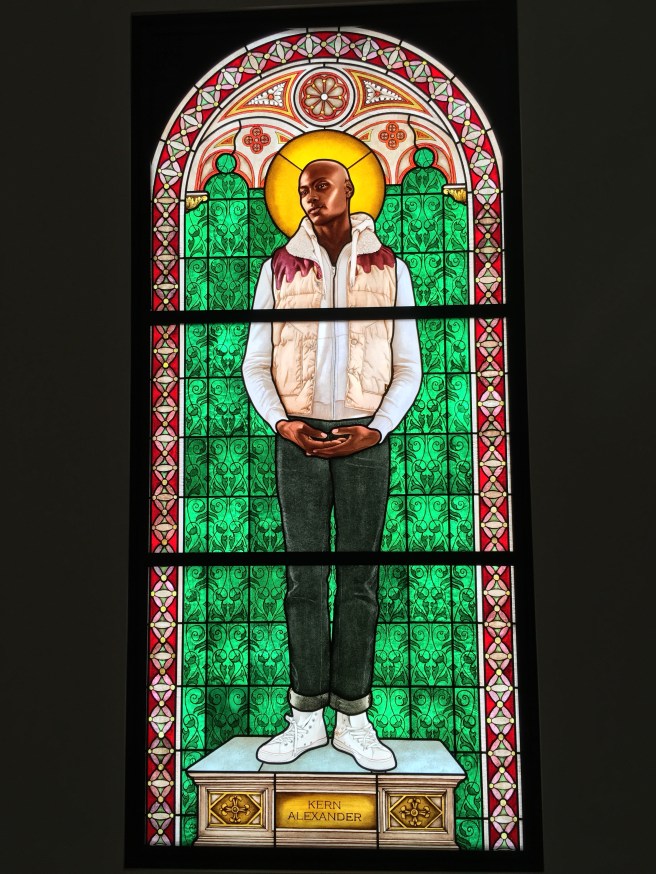
First, Wiley. I saw an exhibition in Phoenix, and just drooled. I love the large painted portraits, but it was the stained glass that really won me over:


The first time I ever saw Out of the Past, I almost couldn’t believe it was happening. At that moment, it was a pinnacle combination of zippy script, glamour, camerawork, noir, tragedy. Just dumbfounded and grateful that I’d found it.

As a teen I got kinda lost in the Louvre and then I came around some the corner, I saw Winged Victory, and I couldn’t move. When the spell wore off a little bit, I didn’t want to leave.
In college I went to see the Atlanta Symphony Orchestra play Rachmaninov’s Piano Concerto No. 2 with a buddy of mine. At this point it was one of my favorite works for orchestra, one I’d listened to a million times, and I lucked into one of those edge-of-your-seat performances where everyone was locked in. It’s all great and then we come to the close of the third movement, just a few minutes remaining, where the pianist is racing through a closing bit of fireworks (32:18 or so), and where there’s a pause (32:33) – it’s just a second, but at this point we’re just dying to hear the orchestra re-enter – we can hear the pianist and the composer both take a deep breath and lunge into action and boooooom we’re back with timpani and strings and big chunky chords and we’re all losing our minds. Lordy.
Lastly (for now) I went to Chicago a few years back and wandered around the Art Institute. I had some time to kill so I figured why not wander to the bottom floor and see about that Ethel Stein exhibit they had tucked away. I’d seen plenty of woven stuff before but this was one that made me really appreciate how high the ceiling can be.


I know I’m missing a bunch, and that’s fine. These are the ones that stick out for now. Here’s to many more.

Wind River. Man, this was great. I’ve been catching up on 2017 movies, and when I see ones like this and The Lost City of Z and Good Time, I start to wonder why we weren’t talking about them all year long. Wind River sits with its pain, a steady undercurrent of mourning, and explores how we accept loss, or find ourselves in some other endless form of pursuit, resignation, denial. Native American mistreatment is also a big theme, shown with visuals – contrast modest homes vs. trailer parks – or just ignorance, like when our well-meaning FBI agent bumbles through an interview with a victim’s family. At times the script feels more written than spoken, but that’s not so bad when the words are great. Director Taylor Sheridan also wrote the excellent Sicario and Hell or High Water.
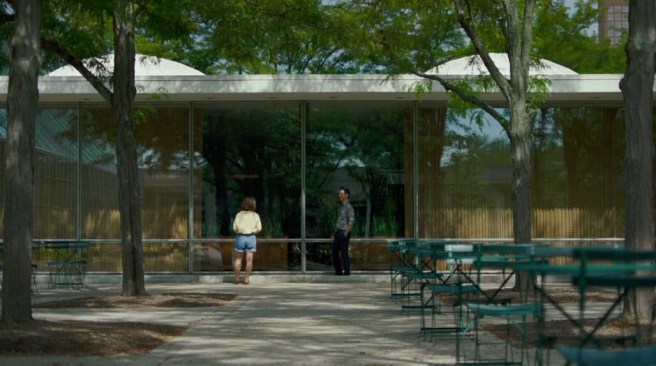
Columbus. I dig it. There is definitely some Lost in Translation similarity. Two strangers finding another someone who’s a little lost, seeing each other down the road a ways. They each give each other the nudge they didn’t want to want, but know they need. I like how these characters sometimes get a little peevish with other. The script is rough sometimes, but every picture is lovely to look at.
If the film has a point, it is that “discerning a point” is harder than ever in a world where mediated experiences of “beauty” are more ubiquitous, accessible and customizable than ever, but less and less tied to rubrics of meaning.
I really liked this essay by Brett McCracken.

Life Off Grid. This was a decent little documentary, profiling a few Canadians from each province who decided to disconnect, to one degree or another. It made me realize my instant association with “off the grid” is survivalist paranoiacs. Not fair, but there you go. Nice to have a broader perspective here. For many of them, going off the grid wasn’t the goal in the first place. It was a side effect of some other life choice. One guy, for example, just wanted to live with less money. Another couple, well, they liked the location, and electricity simply isn’t available out there. Each find their own way. Another common theme was the sense of responsibility and efficacy. Most of them talked about or hinted at ripple effects of their choices, the tensions between what they want, the effort it would take to attain it, and all the baggage that could come along. Also cool to see how each household approached common problems in different ways – water supply, grocery shopping, TV, poop, dishes. On the whole, the eastern Canadians seemed more… balanced? Mainstream?

Dunkirk. It is tremendous. Couldn’t look away for even a sliver of a moment. Out of all of Christopher Nolan movies I’ve seen, I’d rank this at the top. One thing that did him a favor is that the dialogue is so minimal. A trim, direct story so he can focus on the construction. I love the layered stories – the boat scenes being my favorites – that are racing to meet at the end, which we know with hindsight is only a beginning.
I haven’t updated my Christopher Nolan power rankings in a while, so…
That feels right for now.

Good Time. Hoo boy I loved it. An urban chase film where our protagonist keeps digging himself in bigger holes. The music is key – similar to how Thief and The Guest get so much grimy energy from their own moody, heavily electronic scores. Interesting choices to light scenes using only televisions, and in the roles that phones play in plot and theme.
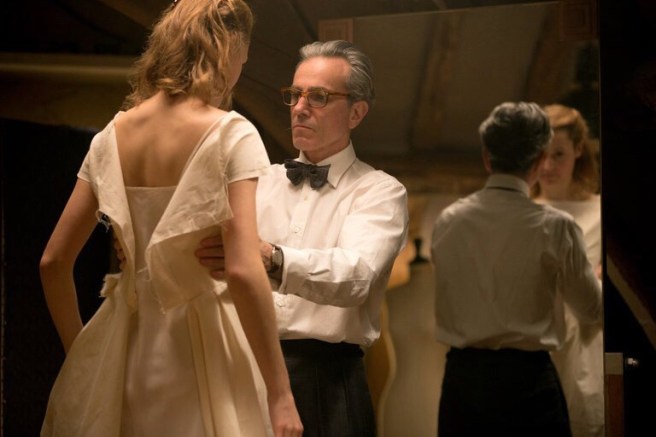
Phantom Thread. Loved it in the moment. Didn’t know where it was going, didn’t care, I just knew I wanted to be there. I’d probably put this in my top 3 Paul Thomas Anderson movies, but I’m not yet sure how I’d reshuffle them.

It Comes at Night. It’s great! Movies like this remind you of what a simple, almost primal pleasure it is just to watch how light fills and moves through a dark place. I also like that it doesn’t bother with answers about the general state of the world, and doesn’t waste time with half-hearted attempts. People seek and accept what’s practical, and move on. Backstory is irrelevant to a degree. The red door in the house – like a church, perhaps? I’ve really come to love this survival-cabin subgenre. Other recent ones that are worth a look: 10 Cloverfield Lane, Into the Forest, Z for Zachariah. What else?
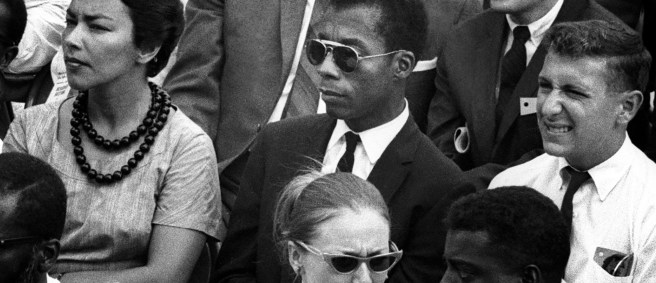
I Am Not Your Negro. I liked it a lot. Just the premise – a movie rendition of an unfinished book – is such an interesting way to start. I’ve heard similar formulations before, but two ideas in here really stuck with me. One, his comments during an interview that, while he may not know what whites believe, he can see the state of our institutions (church, work, real estate, etc.). They tell you something you cannot deny. Second, his prompt to ask ourselves why the negro was invented. Black people didn’t come up with it. It’s a white invention to fill some need – one worth examining. Recommended. Filed under: documentaries.


A spread from my forthcoming imaginary book, Pilgrims and Converts: The Sublime Loves of Terrence Malick. To the Wonder (2012). Song to Song (2017). Knight of Cups (2015).
Filed under: imaginary books.
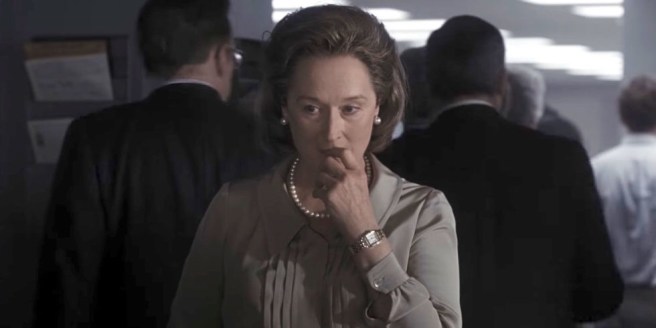
The Post. Precisely what I expected it to be!

Song to Song. Rooney Mara might be the best dizzy princess Malick’s ever had. This one also has some of the best music. It’s also one of the few Malick’s to ever make me laugh multiple times. I was surprisingly swept up for the first hour or so. And yet… the staying power wasn’t there for me. Still good, though.
Updated Terrence Malick power rankings:
That is a solid body of work.
 Mark Larson