chitwoodandhobbs:

The Sultan of KO

July 5th, 1924. In a game against the Washington Senators, Babe Ruth was knocked unconscious when he collided with a concrete wall while chasing down a fly ball. Out cold for five minutes, Ruth was awakened by the Yankees trainer and insisted on staying in the game. Despite a bruised pelvic bone and most certainly battling post-concussion syndrome, Ruth hit a double in his next at-bat and went 3-for-4 the next day with two doubles and a home run. (Damn.)

In the 1920s, you couldn’t keep a grown man from ballin’.

General Orders No. 9

General Orders No. 9. Man, what a frustrating movie. There’s one refrain that appears throughout the movie: “Deer trail becomes Indian trail. Indian trail becomes county road.” And so we have a history of Georgia, or part of it anyway. It’s about the march of time, progress, “progress”, cities, bygone ways, and maybe about struggling to suck it up and move on without forgetting where you came from or resenting what’s now around you. Recurring images include water towers, courthouses, cemeteries, rivers, lonely trees in open fields, interstates, damp southern forests. Visually, it’s like 70 minutes of (what in many other films would be used for) b-roll and pillow shots, but a lot of it is beautiful.

There’s narration sprinkled throughout, with sets of lonely sentences bookending the sections of the movie. I feel like maybe he could have used an editor for both text and image. Would that rob it of its deeply personal heart and soul? Maybe. (I also got to wondering at one point if I would like the narration even less if he didn’t have a southern accent. It’s what I grew up around, so there will always be a soft spot. I would not be surprised if the words sounded more crude or banal in another voice.) The title refers to Lee’s Farewell Address, by the way.

I’ve noticed that my best ideas always bubble up when the outside world fails in its primary job of frightening, wounding or entertaining me.

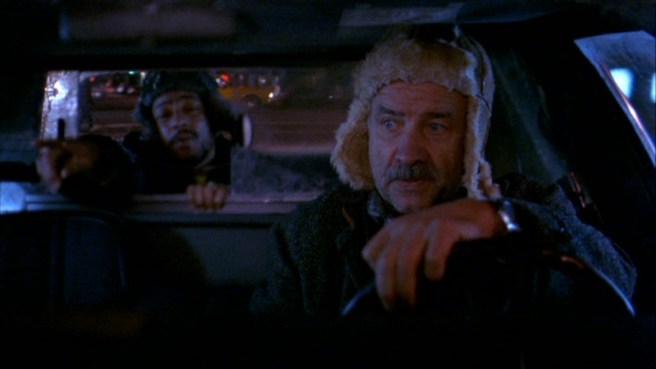
Night on Earth

Night on Earth. It’s a mixed bag. A set of five short films, like Paris, je t’aime. None of the stories connect or tie in with each other in the Syriana/Babel/Magnolia/Pulp Fiction/Crash/Love Actually kind of way, besides the fact that they revolve around taxis. They all stand on their own. The Los Angeles and New York stories are the best. Paris was also very good. Rome and Helsinki rely too much on the storytelling of the drivers rather than the passenger-driver relationship of the first three stories. Though I wonder if there’s some cultural or filmic references that I’m missing that would have made those more enjoyable.

I actually believe the South is a hungrier place, and always describe the East Coast as a piece of bread, and the West Coast as a piece of bread, and the South, the meat. Everybody’s roots is from the South, so at the end of the day, we the meat.

The medium chill | Grist

Fact is, we just don’t want to work that hard! We already work harder than we feel like working. We enjoy having time to lay around in the living room with the kids, reading. We like to watch a little TV after the kids are in bed. We like going to the park and visits with friends and low-key vacations and generally relaxing. Going further down our respective career paths would likely mean more work, greater responsibilities, higher stress, and less time to lay around the living room with the kids.

There’s something important here. I’m not good at keeping to them all the time, but I think I have similar ideals.

The medium chill involves what economists call satisficing: abandoning the quest for the ideal in favor of the good-enough. It means stepping off the aspirational treadmill, foregoing some material opportunities and accepting some material constraints in exchange for more time to spend on relationships and experiences.

It turns out, though, that satisficing doesn’t come easy to us human beings. We have an extremely hard time saying, “okay, this is good enough.” Why?

The medium chill | Grist

‘What am I doing here anyway?’ — the fundamental mantra if not prayer of every traveler. For it is precisely on a trip, in the morning, in a strange city, before the second cup of coffee has begun to work, that you experience most palpably the oddness of your banal existence. Travel is no more than a relatively healthy form of narcotic, after all.

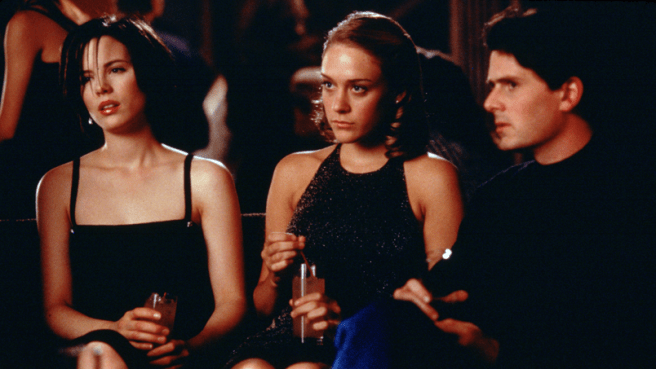
The Last Days of Disco

The Last Days of Disco. I loved Whit Stillman’s Metropolitan. (At this point I might as well complete the semi-trilogy with Barcelona). This one isn’t quite as fun or funny as Metropolitan, but it still has that same well-paced, compulsively watchable slice-of-life-ness to it. Some of the old characters reappear, slightly older, but still as earnest and floundering and full of shit. Sevigny’s character Alice is the most grounded of the lot. Worthwhile. And it’s got an UNDENIABLE SOUNDTRACK. Criterion essay. Ebert says:

The underlying tone of the film is sweet, fond and a little sad: These characters believe the disco period was the most wonderful period of their lives, and we realize that it wasn’t disco that was so special, but youth.

Whenever I’m asked why Southern writers particularly have a penchant for writing about freaks, I say it is because we are still able to recognize one.

The difference is between sitting around listening to music and partying to music. You can’t just be walking back and forth on stage, otherwise it could just be a seminar.

Lil Scrappy on crunk, quoted in Dirty South. You could say that the music happens between fans and stars rather than between listeners and musicians. And like Little Steven says, performance relies on a working-class energy. And then there’s Elijah Wald’s observation that critics tend to be people that collect and discuss music, rather than dance to it.