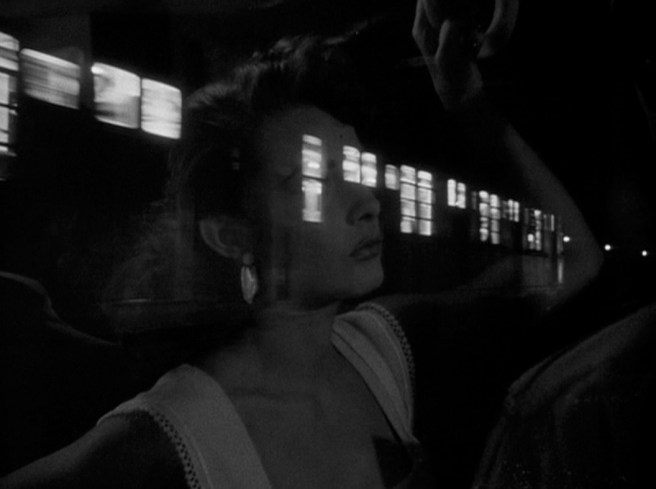
A still from Samuel Fuller’s Pickup on South Street. Part of a really awesome collection of stills in this series about trains in film. Linking to part 8 because it links to all the posts in the series at the bottom of the page.
A still from Samuel Fuller’s Pickup on South Street. Part of a really awesome collection of stills in this series about trains in film. Linking to part 8 because it links to all the posts in the series at the bottom of the page.
What punk was to rock, crunk is to rap.
Reflections on Atlanta from a Yankee who now calls it home. (via)
Atlanta is a profoundly pleasant city. That is not as easy as it seems. New York is thrilling, Hong Kong a marvel of density, Moscow the closest a city can get to a cocaine level of jitteriness and excitement, London endless: I love all four places, but I would never describe them as pleasant. They are none of them as comfortable and human-scaled as Atlanta. Social life just sort of happens here. In New York and London my calendar filled up weeks in advance; here it is not unusual to look forward to a relaxing, empty weekend on Thursday and then find that Saturday and Sunday are frantic.
The weekend thing is soooooo true. Also, while it’s in the South, it’s not always of the South:
Atlanta has always been about trade, business, enterprise—the hustle. And if that fact robs it of the stately southern charm of Savannah or Charleston, it also did much to protect it from the worst excesses of reaction during the turbulent mid-60s, and made it a bastion of openness and tolerance in the South (not to mention a springtime blessing for those of us allergic to both Spanish moss and antebellum nostalgia).
There are, for example, only two reasons for children to go to school – apart, that is, from acquiring the werewithal to earn a living: to make friends, and to see if they can find something of absorbing interest to themselves.
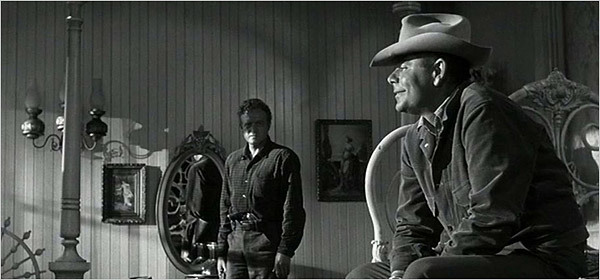
3:10 to Yuma (1957). This is another western with a somewhat reluctant hero on a deadline, like the excellent High Noon. This one, in Glenn Ford’s character, also has an early appearance of the now-archetypal chatty, charismatic villain. Lovely camerawork and a good soundtrack, too.
I come from a classical background. I came up singing Italian sonnets, Negro spirituals, and shit of that nature.
Perhaps you should consider consuming less, but consuming something special. Prioritizing something that pays a person who is creating a product that approaches art, rather than approaching widget.
You know how they make us look on TV? Like we live on the front porch with flies and shit flying around us, with our stomachs all big eating watermelon rinds? That ain’t us, man. We’re smart, man. Our life is slowed down so we don’t miss nothing. When shit gets moving too fast you miss everything.

Three guys running the marathon at the 1896 Olympics. Primitive running gear aside, this is a lovely photo. (via)
I don’t want to say it was cool, [but] the girls was cool in school.
The art market is not a free market. It’s rigged; hugely distorted by the presence of public subsidy – the grants and funding available to organisations and individuals deemed to be producing “significant” work. To get access to this, it’s even more important that artists create the right theoretical discourse to surround their work.
Also known as bullshit. A handy guide for writing your own art bollocks:
A useful catch-all formula can be applied to all of this work, which I freely offer here, without charge:
“X’s work
{wryly/mockingly/cunningly/innocently/intelligently}
{deconstructs/subverts/disrupts/parodies/appropriates/undermines}
{popular notions/stereotypes/archetypes/conventions/the mythology/strategies}
of
{gender/representation/style/sexuality/commodification/identity}
by …”
followed by a nod at whatever images or objects are assembled.
Colin Marshall on Creative Community from Colin Marshall on Vimeo.
Colin Marshall on Creative Community. In which I continue to admire Colin’s thoughtfulness and wonder when his film based on an awesome Borges story is gonna drop.

One overriding sense that I get from Tyler Cowen’s books (and the blog he co-writes) is that he could explain a lot more in more exhaustive depth and detail, but prefers not to do so. The brainpower is there, for sure, and the writing is clear, but the feeling is that he wants me to think rather than be spoonfed. I appreciate this.
You might have heard of The Age of the Infovore under its earlier name, Create Your Own Economy, which maybe explains the contents a bit better (his own summary). Here’s the idea: we live in a crazy modern world etc. etc. information overload etc. etc. BUT the optimistic take is that this cultural explosion coupled with technological advancement means it’s easier and easier for us to assemble these cultural pieces in ways that are meaningful for each of us as individuals.
One result of the internet, I think, is that it makes almost everyone smart more eclectic, whether in terms of substance or presentation.
Which ties in with a later argument…
The mixing of populations lowers the cost of being unusual.
And similarly…
As cultural production becomes more diverse, more and more art forms will be directed at pleasing people with unusual neurologies. More and more of the aesthetic beauty of the world will be hidden to most observers, or at least those who don’t invest in learning.
And luckily, that applies not just to the consumers of art but the art itself. The neurology thing comes up again and again, because one of the continuing threads throughout the book is autism/Asperger’s. He tries, successfully I think, to show the advantages that these conditions can have. Above-average strengths often appear in the autistic cognitive profile (in sorting/ordering, perception of detail, specialization, pattern detection, accurate recall, etc.) and you could say we’ve begun to use things like the internet to order our lives and pursue our interests in ways that more closely mimic autistic traits. Unfortunately, our culture seems to sweep autistics aside because it’s more stereotypically associated with more observable, less desirable personality/behavioral traits. Much of the book tries to set this straight, and in a typically Cowen-esque approach, see the other side.
So back to maybe the greatest joy of modern life: the way we can delve into so many different interests (social, intellectual, cultural, spiritual, etc.) and media (books, blogs, movies, music, etc.) at the same time. And at this point I realize I’m writing this while listening to Mbalax music and texting with a couple friends. While the immediate outside impression-at-a-glance is of overwhelm or disorder, this stuff usually relates to our long-term interests:
While it is easy to observe apparent overload in our busy lives, the underlying reality is subtler. The common word is “multitasking” but I would sooner point to the coherence in your mind than regard it as a jumbled or chaotic blend. The coherence lies in the fact that you are getting a steady stream of information to feed your long-run attention. No matter how disparate the topics may appear to an outside viewer, most parts of the stream relate to your passions, your interests, your affiliations, and how it all hangs together. […] The emotional power of our personal blends is potent, and they make work, and learning, a lot more fun. Multitasking is, in part, a strategy to keep ourselves interested. […] The self-assembly of small cultural bits is sometimes addictive in the sense that the more of it you do, the more of it you want to do. But that kind of addiction doesn’t have to be bad. Anything good in your life is probably going to have an addictive quality to it, as many people find with classical music or an appreciation of the Western classics, or for that matter a happy marriage. Shouldn’t some of the best things in life get better the more you do them?
Cowen has a definite anti-snob bent. Not a cultural relativist per se, but a similar word to the title, “omnivore”, definitely fits. One chapter analogizes modern culture and marriage:
Many critics of contemporary life want our culture to remain like a long-distance relationship, with thrilling peaks, when most of us are growing into something more mature. We are treating culture like a self-assembly of small bits, and we are creating and committing ourselves to a fascinating daily brocade, much as we can make a marriage into a rich and satisfying life. We are better off for this change and it is part of a broader trend of how the production of value—including beauty, suspense, and education—is becoming increasingly interior to our minds.
I love that idea of a “daily brocade”. Speaking of texting and such, here’s a bit on phone calls:
When you make a cellphone call, you open yourself up to being asked questions. You have to commit yourself on matters of tone and also on key information, such as telling your mother where you are and what you are doing and why you didn’t call earlier. A phone call is actually a pretty complicated emotional event and that is one reason why so many people remained “cellphone holdouts” for so long. […] A phone call is a demand on you. A phone call is a chance to be rejected. And a phone call is a chance to flub your lines or overplay your hand.
On the internet’s potential to open your mind politically-speaking:
Being a Democrat, Republican, Libertarian, etc. doesn’t many any single thing for what we are actually like as human beings. One thing we do on the web is seek out others who are like us in non-political ways and then we cement those alliances and friendships. Over time, we will discover that many of these truly similar people do not in fact share our political views. Then we realize that politics isn’t as important as we used to think.
Here’s a nice/terrifying bit on education that I first read on Ben Casnocha’s blog. Comparing high-school-only grads to college grads is common, but if you really want to control, you have to compare college grads to people who think they’re being college-educated to find out if it’s actually working…
It’s now well-known in the medical literature that a medicine needs to be compared to a placebo, rather than to simply doing nothing. Placebo effects can be very powerful and many supposedly effective medicines do not in fact outperform the placebo. The sorry truth is that no one has compared modern education to a placebo. What if we just gave people lots of face-to-face contact and told them they were being educated? I’m not sure I want to know the answer to that question. Maybe that’s what current methods of education already consist of.
I really liked his chapter on “The New Economy of Stories”. You’ll get a good idea of what he has to say if you watch his awesome TEDxMidAtlantic talk on stories.
Some of this branches off from economist Thomas C. Schelling’s essay, The Mind As a Consuming Organ.
Schelling emphasizes that we “consume” stories through memories, anticipations, fantasies, and daydreams. Concrete goods and services, such as Lassie programs, help impose order and discipline on our fantasies and give us stronger and more coherent mental lives. Of course consuming stories is not just about watching television, even though the average American does that for several hours in a typical day. If the tube bores us, we play computer games, read novels, reimagine central events in our lives, spin fantasies, or listen to the narratives of friends.
One way we tell ourselves stories is in how we use our money. (A book that’s become a sort of touchstone for me, Geoffrey Miller’s Spent, comes at these ideas from a similar angle):
You’re not just buying a sneaker, you’re buying an image of athleticism and an associated story about yourself. It’s not just an indie pop song, it is your sense of identity as the listener and owner of the music. If you give to Oxfam, yes you want to help people, but you also are constructing a narrative about your place in the broader world and the responsibilities you have chosen to assume. The Portuguese author Fernando Pessoa wrote: “The buyers of useless things are wiser than is commonly supposed—the buy little dreams.” That is a big part of what markets are about. Whether you are buying cosmetics, a lottery ticket, or an oil painting, you are constructing, defining, and memorializing your dreams into vivid and physically real forms.
And it’s important to keep in mind that these dreams, the stories we tell ourselves, may not be so special or unique to us:
Hollywood blockbusters… end up drained of vitality and risk-taking in an effort to appeal to the least common denominator in a large group of people. We’re less likely to see that the same logic applies not just to the Hollywood studios but also to ourselves. In this way I am pretty typical. Some of the inputs behind my deepest personal narratives suffer from the least-common-denominator effect. The logic applies to my dream. To my fantasies. To my deepest visions of what I can be. I treasure those thoughts and feelings so much but in reality I pull a lot of them from a social context and I pull them from points that are socially salient. That means I pull them from celebrities, from ads, from popular culture, and most generally from ideas that are easy to communicate and disseminate to large numbers of people. We all dream in pop culture language to some degree.
This next quote is all Pessoa, writing perhaps too stridently about the dangers of novelty, but it’s worth considering:
Wise is the man who monotonizes his existence, for then each minor incident seems a marvel. A hunter of lions feels no adventure after the third lion. Fro my monotonous cook, a fist-fight on the street always has something of a modest apocalypse… The man who has journeyed all over the world can’t find any novelty in five thousand miles, for he finds only new things—yet another novelty, the old routine of the forever new—while his abstract concept of novelty got lost at sea after the second new thing he saw.
A later chapter goes into art and culture and aesthetics. Branching off some ideas from neurology and from David Hume’s “Of the Standard of Taste”:
Sociological approaches to cultural taste often imply that taste differences are contrived, artificial, or reflect wasteful status-seeking. The result is that we appreciate taste differences less than we might and we become less curious. Neurological approaches imply that different individuals perceive different cultural mysteries and beauties. You can’t always cross the gap to understand the other person’s point of view, but at the very least you know something is there worth pursuing.
I liked the argument here about musical complexity, but surely the argument applies anywhere else you have cultural competence:
An issue arises if you get “too good” at finding the order in music. You must resort of bigger and bigger doses of informational complexity to achieve the prior effects that were so enjoyable. It’s a bit like needing successively stronger doses of heroin, wanting to move beyond Vivaldi, or more prosaically having to switch from one pop song to the next. Don’t we all do that? But the metric for the right amount of complexity differs across listeners, even across listeners with the same degree of musical experience and education.
And this ties in with how we evaluate cultural works…
The most common reaction is simply to evaluate the aesthetic perspective through the taste of either the public or the educated critics. We privilege those perspectives either because they have social status or because, in the case of the consumers, they have buying power and thus they command the attention of the media. So if it is serial killer stories, maybe the critics call it too lowbrow and talk about the decline of our society. If it is atonal music, it gets labeled as too inaccessible or too highbrow or it is claimed that the academic composers are perverse and self-indulgent. Most cultural criticism is staggering in how much it begs the question of what is the appropriate middle ground.
Boom. Read this book.
THE SHINING: Spatial awareness and set design. Part 1. Part 2. See also Rob Ager’s Mazes, Mirrors, Deception and Denial. I’m not the biggest fan of The Shining, but dang, there’s some thought that went into it. (via)
1992 NLCS: Sid Bream’s Mad Dash. Just remembered the greatest sports highlight of my first 9 years of life: Sid Bream chugs around third, scores the winning run, and the Braves head to the 1992 World Series.
Let’s not bring flame where light is enough.
The ghost at the banquet of all public commemoration is always politics—above all, the mobilization of solidarity […] It is about the reaffirming of group loyalty rather than the establishing of historical accuracy, let alone the presenting of an event in all its moral and political complexity.
After 9/11: The limits of remembrance—By David Rieff (Harper’s Magazine)
A mature culture is one which wishes to know more about other cultures, and which values the best examples of what it has of them, and which is better able to appreciate them because it has standards and insights developed in appreciation of its own.
It was the African figures in the Louvre that inspired Picasso. That one fact alone could serve to remind us how porous high culture is, in both directions, and how symbiotic the existence of all cultures is, especially in the globalised world. When receptive sensibilities engage with the artefacts of the past and other civilisations, they are nourished by them and learn from them, not least how to be discerning.
A question of discrimination – AC Grayling on art and elitism | The Guardian
Probably more people have thought Hamlet a work of art because they found it interesting, than have found it interesting because it is a work of art. It is the “Mona Lisa” of literature.
In practical life… one will hardly find a person who, if he wants to travel to Berlin, gets off the train in Regensburg! In spiritual life, getting off the train in Regensburg is a rather usual thing. Sometimes even the engineer does not want to go any further, and all of the passengers get off in Regensburg. How many, who sought God, finally remained standing before a carved figure! How many, who sought art, became caught on a form which an artist had used for his own purposes, be it Giotto, Raphael, Durer, or Van Gogh!
 Mark Larson