Locke

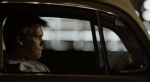
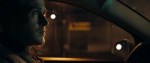
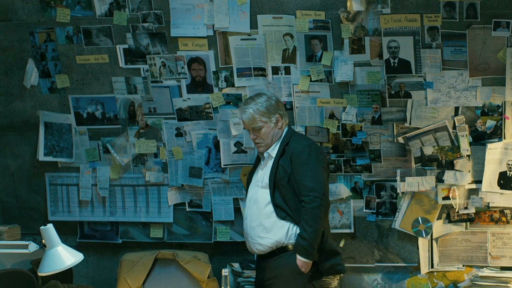
Locke. I really liked this movie. Two things it reminded me of: Arbitrage, because he’s in a really crappy position and he’s trying to make do. And Bronson, because it’s Tom Hardy putting on a one-man show and just nailing it. About 99% of it is watching him on phone calls while he’s driving. I love it when movies play with constraints like this. So good.

Don’t focus too much on this idea that your influences will be similar to people whose films you admire. In fact, it’s really the opposite: You like people who are doing something completely different, and it’s very relaxing to you because they’re dealing with all kinds of problems you don’t have to deal with.

How to Live Safely in a Science Fictional Universe

I read Charles Yu’s How to Live Safely in a Science Fictional Universe, and I loved it in the end. I might even say it changed my life in a few pointed ways. It’s a mildly science fictional story that pairs a good sense of humor with some great thinking on memory, nostalgia, wistfulness, and stories we keep telling ourselves.

Time does heal. It will do so whether you like it or not, and there’s nothing anyone can do about it. If you’re not careful, time will take away everything that ever hurt you, everything you have ever lost, and replace it with knowledge. Time is a machine: it will convert your pain to experience.

The writing is slightly distant and self-aware because it’s more fun that way. Like this heavily-footnoted passage, where he’s describing the time machine he lives/works in, which leads to a minor footnote on particle physics:

This unit, this phone booth, this four-dimensional person-sized laboratory, I live in it, but, over time, through diffusion and breathing and particle exchange, the air in here, the air that travels with me, it is me, and I’m it.* The exhaled carbon dioxide that gets recycle and processed by the pump, the oxygen-rich air that is piped back in, these molecules* move around me, and in me, and then back out, all* of it* the same matter.* I breath it* in, it* is in my bloodstream. Sometimes, they* are part of me, sometimes, I am part of them.* Sometimes, they* are in my sandwich,* […]

There are plenty of little aphoristic moments that come up, like…

Life is to some extent an extended dialogue with your future self about how exactly you are going to let yourself down over the coming years.

…or like this aside on growing up in a household with parents arguing and fighting:

Call it the law of conservation of parental anger […] bouncing around, some of it reflected, some of it absorbed by the smaller bodies in the house.

One of my favorite turns of phrase came up in one travel scene, picking up on that swelling, aching beautiful uplift you can feel when flying:

As the machine banks into its approach and we angle into our steep descent spiral, looking down into the city, I have, for a minute or two, some clarified sense of scale, the proper balance of awe and possibility, a kind of airplane courage […]

There’s also some clever meta-textual work relating to the physical book itself and some interludic commentary (like how people in recreational alternate universes can qualify as “protagonists” or even “heroes” in these fantasylands, or diagrams that clarify the plot, background sketches on history/setting, magazine tips for time travel, etc.).

I have to acknowledge that there’s a definite patch just after the halfway point where it dragged a bit for me. (You can see him getting carried away, piling ideas between commas.) But the opening half is so fun, and the final sprint led to a goosebumps ending for me. Very much recommended. Earlier this spring I also really liked Yu’s collection of short stories, Third Class Superhero.

Sacred Hoops

I read Phil Jackson’s Sacred Hoops, and mostly liked the more biographical stuff. His tales of the early days (in a Pentecostal family in North Dakota) reminded me of my father and grandfather, devoted Christians growing up in the midwest and geeking about about basketball and eventually other spiritual traditions. One nice treat of reading books like this – recent history when there are always cameras rolling – is the ability to check YouTube for the highlights.

Emily Dickinson: Selected Poems

I read some Selected Poems by Emily Dickinson, which is a good way to fill little pockets of time here and there. Some of my favorites:

If you’re hankerin’ for some Emily Dickinson set to music, check out John Adams’ orchestral piece Harmonium, which uses Donne’s Negative Love in addition to Dickinson’s Because I could not stop for Death and Wild Nights – Wild Nights!. It’s a phenomenal piece of music.

Collateral

Collateral. My third viewing. (Ignore my comments after the second.) It feels like every time I watch a Michael Mann movie it becomes my new favorite of his.

This movie is seriously in love with LA, too. You almost never get this much richness in setting. The surfaces, the light, daytime and night. Passing scenes and shots of a Hispanic gas station, a Korean (?) newspaper, murals, traffic, strip malls, modest neighborhoods, airport boulevards. Crucial scenes in Latino and (mostly Asian) nightclubs.

This sense of place fits with one of the movie’s themes – presence. Our protagonists are Vincent (Cruise’s cool, decisive, efficient professional) and Max (Foxx’s daydreaming perfectionist). Max is dreaming miles into the future, but too hesitant or cautious (“It’s gotta be perfect.”) to do anything to get there. Vincent is skimming along the moment, zipping through assignments. (“We gotta make the best of it, improvise, adapt to the environment, Darwin, shit happens, I Ching, whatever man, we gotta roll with it.”)

Two early soundtrack moments underscore the contrast, too. Early on, Max enjoys the nostalgic, old-school vibes of Groove Armada’s Hands of Time as he cruises through the city. Soon after, we see some of Vincent’s subway/disconnection speech (foreshadowing!) backgrounded with a cool blues-y rendition of Bach’s Air on the G String. Pure sophistication. It’s not until (after the missed-opportunity soliloquy in the jazz club scene) Max is forced into impersonating Vincent that he starts to show some real agency.

On this viewing the humor came through much more for me, thanks to Cruise. Lines like “Promise not to tell anybody, right?” and “Don’t let me cornered. You don’t have the trunk space.” and “What? I should only kill people after I get to know them?”. I could go on. What a damn great movie.