Shitphone: A Love Story

One of the lesser-appreciated joys of online shopping is that, in the process of streamlining and compressing the expressions of capitalism we call “retail,” it gives us a god’s eye view of market patterns. In one search on Amazon or Newegg you can see a category’s past, present, and near future: high-margin luxury options on one side, low-margin or out-of-date good-enough options from unlikely or unknown brands on the other. Then, in the big mushy middle, brands fighting over a diminishing opportunity. This is faintly empowering. To watch the compressed cycles of modern consumer electronics pass through your viewfinder gives a calming order to an industry that depends on the perception that it is perpetually exceptional. This perspective also helps to enforce realism about your relationship with consumer electronics. Whether you choose the luxury option, the commodity option, or something in between, you are buying future garbage.

Shitphone: A Love Story

I’ve had my dictaphone since the mid- to late ’90s. In my previous life, I used to record demos on it. Then I ran into some trouble with tendonitis and repetitive stress and it prevented me from writing at my laptop. I got really bummed about it, so I started speaking my scripts out into this dictaphone I had lying around. I realized it was really helpful for my creative process. Having a linear writing machine, where I couldn’t go back and hate myself and edit myself, allowed me to blast through drafts of scripts much more quickly and write from a much more instinctual, as opposed to intellectual, place. It’s a mess when it comes out, but the pacing is really good. So I have Radio Shack to thank for my entire creative process.

Mark Duplass. (via). And also:

For the first time in my life, I’m starting to make more money than I know what to do with. And it’s really weird. What it does is it kind of kills your god. Because your god, as an artist, is to try to find a way to make the art you want to make while being financially sustainable. And to have achieved that murdered my god. So now I look to Warren Buffett — the way he’s still actively excited about achieving career success and making money, and then he throws it all away on people who need it. That is the most inspiring thing that I can imagine.

Fargo

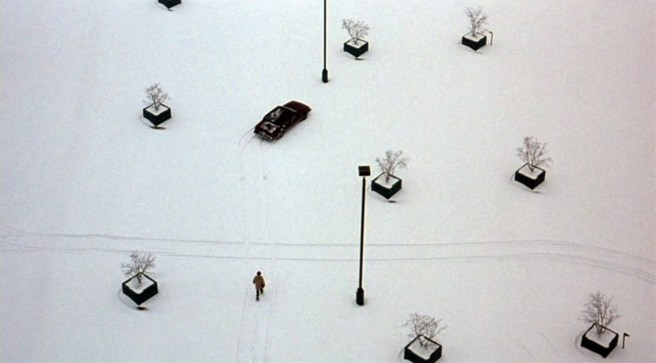
Fargo. First off, how is this movie 19 years old now? Second, it’s great. Some of the gee-golly-dontcha-know Midwestern charm doesn’t age as well, but it does a wonderful job of nudging these great characters along, and switching between their scenes. McDormand and Macy are geniuses. I realized when watching this time that Stomare’s Grimsrud character is something of an early variation of Waingro, and anticipates their own rendition of Chigurh, too. As for the based on a true story part:

If an audience believes that something’s based on a real event, it gives you permission to do things they might otherwise not accept.

Darkwater – Matt Gemmell.

That’s what’s so frightening. Because it feels wonderful. Sensory deprivation, when you need it most. It’s an off-switch from all that’s outside. And wherever you go, it stays with you.

The Silence of the Lambs

The Silence of the Lambs. Absurdly great movie. Its greatest strength is its exploration of institutional sexism and the constant, relentless challenge of demanding respect and getting her shit done without it. Combines some great slow-burn mystery/thriller tactics with occasional over-the-top violence and just enough sly humor. The pacing and the ties between scenes are brilliant. I also appreciate the small bits of foreshadowing and “warm-up” material (the view from the Belvedere, inkpen, creeper nightvision goggles, etc.) throughout.

The invisible network that keeps the world running – BBC – Future.

To find out more about this huge, invisible network, I accompanied a group of architects and designers called the Unknown Fields Division for a rare voyage on a container ship between Korea and China. The aim of the trip was to follow the supply chain back to some of the remotest parts of China and the source of our consumer goods – and what we saw as we travelled through mega-ports and across oceans looked closer to science fiction than reality.

If I ever change to a new career it just might be container shipping.

A Professor Explains Why He’s Teaching College Kids About Kanye

Just down the road from me, Georgia State professor Scott Heath doing work that needs to be done.

“He’s aware of the criticism and the critiques that come his way, and he then critiques those critiques. This is a guy who gives interviews where the entire interview is about another interview that he gave earlier,” says Heath, pointing to conversations with Jimmy Kimmel and Ricky Smiley as examples. “That, to me, is very keenly discursive.”

And also:

“He’s having to process or deal with other people’s interpretation of what he’s saying and who he happens to be,” says Heath, alluding to Du Bois’ assessment that black people in America are tasked with the emotionally arduous task of filtering their own identities through the lens of dominant white culture. “An exciting moment for me was the students reading Du Bois and the lightbulb going off and them making the connection to Kanye.”

Filed under: Kanye West.

A Professor Explains Why He’s Teaching College Kids About Kanye

GQ&A: Kobe Bryant

Do you ever think that the qualities that make you great are actually problems?

Oh, yeah. But the things that make a person average are also problems. The things that make someone not good at anything at all are a problem. If you want to be the greatest of all-time at something, there’s going to be a negative side to that.

GQ&A: Kobe Bryant

How Adam Smith Can Change Your Life

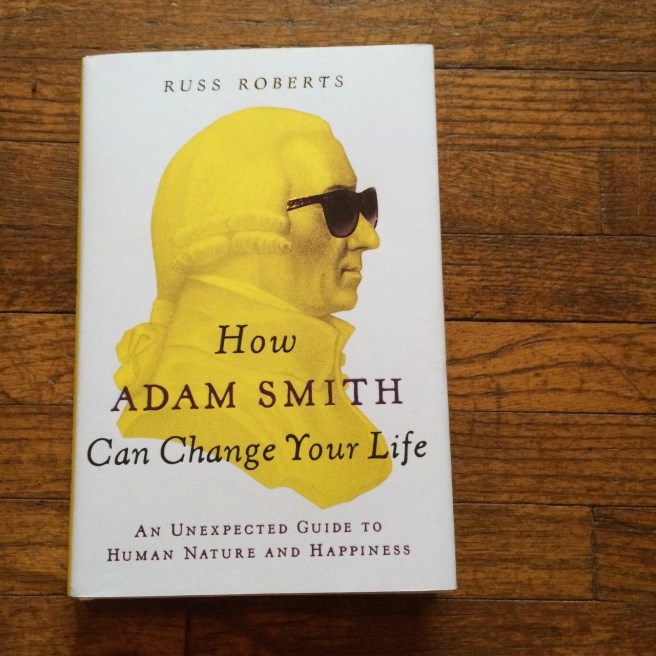
I read Russ Roberts’ book How Adam Smith Can Change Your Life, and it’s certainly the most heavily dog-eared book I’ve read in the last couple months. It’s slighter in hindsight, but still got some good stuff out of it. Smith is best known for the more macro-level, distant, impersonal view on economics in The Wealth of Nations. This books relies on Smith’s lesser-known A Theory of Moral Sentiments, which explores the more intimate, direct relationships between individuals.

What I like is its undercurrent of humility and courtesy, for one, and the idea of ripple effects that go beyond us. There’s the idea of the “impartial spectator” in here – a hypothetical (and likely impossible) imagined outsider, an objective witness we can turn to to evaluate what we do. Of course, we’re delusional and biased and self-obsesssed. The principle stands, though, and the community around us helps to shape this hypothetical ideal that we imagine.

Virtuous behavior is like passable writing vs. great writing. At a basic level, there is grammar and syntax. There’s broad agreement on many of those details. But there’s a special something that goes beyond the basic requirements. Along the same lines, no one individual really decides what proper grammar is, and how a language works. But many people, making many small decisions every day, spread and sustain behaviors that add up to something bigger on the scale of family, office, neighborhood, nation, culture. And it’s that big-picture thinking that (hopefully) motivates us to “be lovely even when we can get away with not being lovely”. Going along with that are some healthy warnings about our obessions with powerful people, and about hubris when it comes to societal engineering.

Some other parts I like? Smith on keeping it simple:

What can be added to the happiness of the man who is in health, out of debt, and has a clear conscience?

Smith on praise we haven’t earned…

To us they [his praises] should be more mortifying than any censure, and should perpetually call to our minds, the most humbling of all reflections, the reflection of what we ought to be, but what we are not.

Or as Roberts phrases it, “Undeserved praise is a repimand – a reminder of what I could be.”

There’s another great section that talks about how gadgets are seductive. Roberts says, “We often care more about the elegance of the device than for what it can achieve.” Smith’s line here made me think about the tech and especially the #EDC community:

How many people ruin themselves by laying out money on trinkets of frivolous utility? What pleases these lovers of toys is not so much the utility, as the aptness of the machines which are fitted to promote it. All their pockets are stuffed with little conveniences.

Smith on why friendship is so valuable when you’re grieving – we see our pain through their eyes, and see it’s not so bad:

We are immediately put in mind of the light in which he will view our situation, and we begin to view it ourselves in the same light; for the effect of sympathy is instantaneous.

Roberts on caring on a smaller scale than save-the-world dreams:

Maybe, just maybe, your best way of making the world a better place is to be a really superlative husband or mom or neighbor. […] We forget that being good at our work helps others and makes the world a better place, too.

And a lovely bit of rabbinic wisdom:

It is not up to you to finish the work. But you are not free to desist from it.

A similar, more energetic book along the same lines is Sarah Bakewell’s very excellent How to Live: Or A Life of Montaigne in One Question and Twenty Attempts at an Answer.