Maiming and death are just as central to Anderson’s vision of things as are all the precise costumes that his characters wear. Misfortune comes just as suddenly to dogs as it does to humans. By including the beloved dog in this condition of life, he reminds us that no one is safe. […] Another way to look at it is that these dogs are most often punished as collateral damage of the moral and practical ineptitude of adults.
Religion for Atheists (review)

Alain de Botton’s Religion for Atheists has a simple, reasonable, open-minded premise: whether or not you believe in God/Jesus/Heaven/afterlife/salvation/etc., religions can still be interesting, useful, and consoling. The idea here is to explore function rather than truth. Religious institutions are some of the most successful, influential, widespread, long-lived things that humans have ever done, so there’s a lot to learn.
There’s the idea of community, for one. “Religions know a great deal about loneliness” de Botton writes. And if you’ve been to mass with any frequency, you know how often things like poverty, sadness, failure, and loss come up—because the church “sees the ill, frail of mind, desperate, and elderly as aspects of humanity and ourselves that we’re tempted to deny.” But acknowledging these things can bring us closer, or at least make us more humble.
De Botton talks about this sort of groundedness again later. There’s an earthly pessimism that comes with some religious belief. Hopes are ascribed to the next life, not this one. For this one you just try to do right, be generous, and get by as best you can. This pessimism deflates our hopes a bit, but helps to balance those needy, absorptive, consuming, ever-optimistic desires that come in everyday life. Christianity is sober, where perhaps the secular world is too optimistic, or maybe too cowardly, to face life’s hard facts. I like this line where de Botton summarizes all secular arguments:
Why can’t you be more perfect?
Luckily, “sermons by their very nature assume that their audiences are in important ways lost.” We need teaching, and religion’s insistence on that is pretty useful.
Christianity concerns itself with the inner confused side of us, declaring that none of us are born knowing how to live; we are fragile, capricious, unempathetic, and beset by fantasies of omnipotence.
The ever-seeking nature of secularism can also lead to lack of gratitude. Religions bring us back to the basics. A prayer of gratitude before you eat. Marking the passing of the hours with prayer or the seasons or harvests with celebrations. We need reminders of the transcendent, of our smallness. We need rituals and practices that put us in our place.
Art could do this, perhaps—“We need art because we are so forgetful”. De Botton has a great section on the opportunities that modern museum culture misses out on.
We tend to enter galleries with grave, though by necessity discreet doubts about what we are meant to do in them. […] It would take a brave soul to raise a hand.
Museums have a hard time explaining why they’re valuable. Education, sure. They’re not made for prayer or worship, really. We end up with buildings about history of art-ness. But what about something more ambitious? There’s an opportunity to meet our own psychological, emotional needs. We see placards on the walls about style and era and medium and influence. But just like churches aren’t made to teach us about the history of theology, necessarily, museums need not teach us about art history (exclusively). Why don’t we see an exhibition about Death? Or Parenting? Loss? Courage?
De Botton makes similar arguments about secular education, which is fairly impractical. Things like accounting and psychology are useful, yes, but where are the classes about tensions in marriage, or dying gracefully, or the struggles of friendship? (Of course, a philosopher would argue for these things, of course.)
Topics aside, there’s also the structure and etiquette of the modern class to consider. Lector, desks, students, whiteboard. Boring. Contrast with a vibrant church where the attendees are shouting “Amen” and “Preach on!” and “Thank you, Jesus.” You can’t underestimate the value of rapture and assent and an active audience. Teaching is a kind of performance, too.
What purpose can possibly be served by the academy’s primness? How much more expansive the scope of meaning in Montaigne’s essays would seem if a 100-strong and transported chorus were to voice its approval after ever sentence.
There’s also the idea that religious education isn’t, well… it’s not all that new. But the lack of novelty is a blessing in its own way. It makes room for reflection. The church hasn’t had big discoveries or breakthroughs. But it does a fantastic job for structure, schedules, repetition, and reinforcement of its long-held ideas.
A Catholic lectionary, for example, outlines everything you’ll be reading over the course of three years, with readings matched to season and occasion in the church calendar. If you’re devout and interested, there’s a plan there for you to follow. Even if you’re a casual but regular churchgoer, you’re going to cover a lot of material, and it’ll be appropriate to the season. But what’s the best way and context for me to revisit Marcus Aurelius’ Meditations? Is there a good calendar for reflecting on Leaves of Grass, if that’s your thing? How can you carve out a space for secular reflection in your life? It’s not just a scheduling thing. It’s knowing what to do when the time comes. Church attendance is a kind of rehearsal for life outside its doors, and inside its doors you know exactly what’s going to happen.
Another favorite passage:
An absence of religious belief in no way invalidates a continuing need for “patron saints” of qualities like Courage, Friendship, Fidelity, Patience, Confidence, or Skepticism. We can still profit from moments when we give space to voices of the more balanced, brave, generous–and through whom we may reconnect with our most dignified and serious possibilities.
Again, whether or not Mary gave virgin birth, or whether or not Jesus was also God, or whether or not Saint So-and-so really bled from her hands and levitated? Make your own call. The truth is secondary to De Botton’s argument. The function of these beliefs is to get you to be a better person.
This is one of the best books I’ve read in 2012 so far. Very highly recommended.
Great Air Conditioners | The Wirecutter
I don’t need a window air conditioner, nor do I expect to, but I’ll be damned if this isn’t worth reading anyway. Cf. The Wirecutter is on to something good.
The Four Deadly Fallacies, Pathetic and Otherwise
Age and experience will slowly whittle away at your dreams, so don’t do that to yourself. Let other people do that to you.

The Service Patch – NYTimes.com
Many people today find it easy to use the vocabulary of entrepreneurialism, whether they are in business or social entrepreneurs. This is a utilitarian vocabulary. How can I serve the greatest number? How can I most productively apply my talents to the problems of the world? It’s about resource allocation.
People are less good at using the vocabulary of moral evaluation, which is less about what sort of career path you choose than what sort of person you are.
In whatever field you go into, you will face greed, frustration and failure. You may find your life challenged by depression, alcoholism, infidelity, your own stupidity and self-indulgence. So how should you structure your soul to prepare for this? Simply working at Amnesty International instead of McKinsey is not necessarily going to help you with these primal character tests.
[…] It’s worth noting that you can devote your life to community service and be a total schmuck. You can spend your life on Wall Street and be a hero. Understanding heroism and schmuckdom requires fewer Excel spreadsheets, more Dostoyevsky and the Book of Job.
I missed this last month, so many thanks @davidbhayes for the post!
The Godfather
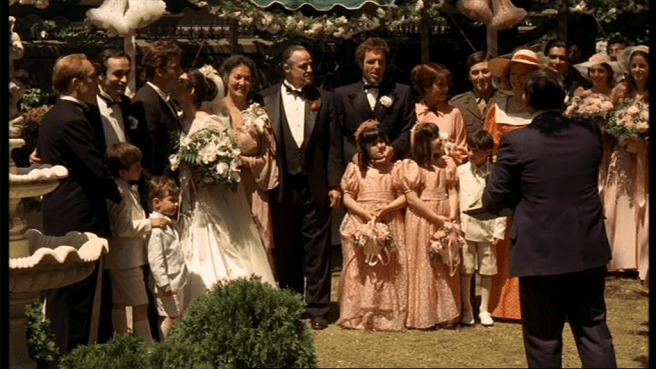
The Godfather. Not much I can add to the well-deserved praise this one has gotten over the past 40 years. Incredible storytelling. I paid a lot more attention to Gordon Willis’ work here after learning more in Visions of Light.
Which old sayings are true and which are false? – Barking up the wrong tree
Let’s go ahead and insert the “studies say” caveat, but there’s a lot of interesting stuff here. Selections:
“All _____ people look alike”
For all of us, whenever people are a different race it’s harder to tell them apart.
“The light that burns twice as bright burns half as long”
“You can tell a lot about a man by his handshake”
Absolutely. “Results showed that HGS was correlated with SHRs, aggressive behavior, age at first sexual intercourse, and promiscuity in males but not in females. HGS appears to be an honest signal for genetic quality in males.”
“Happy wife, happy life”
When the husband is happier than the wife, couples are more likely to divorce.
“Gaydar”
Yes.
“Attractive women make men stupid”
True. In fact, just thinking about attractive women makes men dumb.
“It’s the booze talking”
No, actually, that’s you talking.
“Spanking is bad for kids”
Kids who were spanked behave better as teenagers.
Which old sayings are true and which are false? – Barking up the wrong tree
Moonrise Kingdom

Moonrise Kingdom. Wes Anderson is simply not my director. When I wrote about Bottle Rocket, I had the thought:
I wonder if I’d like his movies more if I’d seen them as serials?
I wonder about this because the structural repetition really wears on me over the course of a movie. Repetitive framing, symmetry, truck here, pan there, dolly now and then. It’s like a slideshow sometimes. I respect the precision and fastidiousness, but for most of it I just couldn’t sustain an emotion beyond “that’s kinda neat”. Because I have no heart, basically. Or I don’t function well with magical realism. Or because the script is on the bad side, and while there’s invention, there are no surprises. Everything tidy, labeled, anticipated. It’s not terrible, though. Just frustrating. I did LOL on multiple occasions. And using The Young Person’s Guide to the Orchestra to open the movie, and then mirroring that work, was clever. Kids run away (main theme), then we follow reactions by the group of scouts, the scout leader, the cop, the parents, and social services (variations). My rankings for Anderson’s films that I’ve seen:
- The Darjeeling Limited
- The Royal Tenenbaums
- Moonrise Kingdom
- Bottle Rocket
- Rushmore
I analyzed the chords of 1300 popular songs for patterns. This is what I found. | Blog – Hooktheory
I’m interested to see what the @hooktheory folks come up with down the line.
I analyzed the chords of 1300 popular songs for patterns. This is what I found. | Blog – Hooktheory
The best thing that hearing music can do for you is make you want to make your own. I find it close to absurd that some people are musicians and singers and others are silent apostles who never let out a peep, maybe not even in the shower. Music seems like a basic human right, much like the right to prayer and the right to fall in love.
Prometheus

Prometheus. My first draft for this post was longer, but it was turning into a pile-on. Prometheus is not all bad, but, still… it’s kind of a mess. No good when you find yourself laughing at a dark, mysterious, portentous movie. I was sold for the first 70-80 minutes, though. Mostly. A better script is a must, and serious editing would help. Too many cooks in this kitchen? I’m not sure what kind of movie it wanted to be. It’s also handicapped by a cookie-cutter score. Cue the French horn! Shame to see talent like Fassbender, Rapace, Theron, and Elba not put to full use. You’re definitely better off staying home and watching Alien again.
Zing!: What the New Science of the New Sciences Tells Us About Our Unquenchable Craving for the Illusion of Scientifically-Validated Insight | The Moral Sciences Club | Big Think
Popularizations that hold up are most likely penned by actual experts who happen to write well.
Out of the Past

Out of the Past. Said it before, I’ll say it again:
OUT OF THE PAST. #greatestmovieofalltime
— Mark Larson (@mlarson) June 12, 2012
//platform.twitter.com/widgets.js
Part of what sets it apart is an incredible script.
Ann: Every time I look at the sky, I think of all the places I’ve never been.
Jeff: Yes, and every time you look up, they’re all the same.
A: You’ve been a lot of places, haven’t you?
J: One too many.
A: Which did you like best?
J: This one right here.
A: I bet you say that to all the places.
I fear that my feelings about the rest of Jacques Tourneur’s work mirror my feelings about about Larry McMurtry’s:
I realized I can’t read another Larry McMurtry novel because it won’t be Lonesome Dove. #librarytweets
— Mark Larson (@mlarson) May 25, 2012
//platform.twitter.com/widgets.js
To sum up, this is my reflex film. It’s what I turn to when there is no other hope. Though there are many very good reasons to love this film, my enthusiasm is now well beyond the bounds of rationality, and I won’t have it any other way.
Hereafter

Hereafter. The ending is way too cute and coincidental, but the journey there is decent and it has a good premise treated seriously. The opening tsunami scenes are rightfully praised, but the cooking scenes were the real stand-outs for me. Excellent acting and directing there. The two boys are a little wooden, but I probably shouldn’t pick on kids. I recognized that Clint Eastwood did the score within about 4 seconds. Speaking of, it’s been a while since I last saw an Eastwood film. Updated rankings for stuff he’s directed:
- Unforgiven
- Gran Torino
- Million Dollar Baby
- Mystic River
- The Outlaw Josey Wales
- Changeling
- Play Misty for Me
- Hereafter (or maybe one rank higher)
- The Gauntlet
- High Plains Drifter
- Bird
- Midnight in the Garden of Good and Evil

Wes Anderson’s Arrested Development. Interesting criticism here. This led to an aha! moment for me:
Nothing more perfectly evokes the feeling of both a child’s literal interpretation of the world and youthful big ambition on a frustratingly small scale like a school play, and Anderson smartly adopts this style.
[…] We don’t lose ourselves in the emotion of the production, and for the same reason we’re not meant to lose ourselves in the story of an Anderson film. Like in a children’s play, we are meant to be aware at all times of creative effort, for this is where its true value lies. Anderson’s ability to blend substance and form and communicate this feeling is his greatest skill. His films look like a stage plays: Sets look like sets, the frame becomes the proscenium arch (with a symmetry in the set that exaggerates and enhances the frame’s boundaries), and the action is kept in the center of the frame, usually directed out toward the audience in mainly medium or wide shots.
And I like this:
Anything that helps to enlarge an understanding is important, as large thinking is contagious and will contaminate all other areas of your life, so that eventually nothing will be allowed to remain simple and small.

Bosavi: Headlamp by Dan Freschl – Kickstarter. This is definitely an area of outdoor gear that’s due for an overhaul. (via another awesome outdoor Kickstarter project I loved, the Boilerwerks Backcountry Boiler)
One cannot be too careful with words, they change their minds just as people do.
Captain America: The First Avenger

Captain America: The First Avenger. Pleasantly surprised by this one. You’ve got a solid underdog story, with an arc from bumbling to confident. The love interest wasn’t treated as typically as I expected. There was some blood spray and general grittiness that, coupled with the cutting-edge 1940s tech and throwback look, was really satisfying. I always loved that Captain America carried a gun. And they took some breaks for musical comedy! I understand and appreciate his role in the movie, but I wish they’d eased up on the Stark references. It’s really annoying to mention Stark because Stark is probably connected to Tony Stark who’s Iron Man who’s in a related movie. Stark. NUDGE. Hugo Weaving every now and then signalssss malevolenccccce with his sibilantssss. I will really miss Tommy Lee Jones if he ever retires.
 Mark Larson