The novels we know best have an architecture. Not only a door going in and another leading out, but rooms, hallways, stairs, little gardens front and back, trapdoors, hidden passageways, et cetera. It’s a fortunate rereader who knows half a dozen novels this way in their lifetime. I know one, Pnin, having read it half a dozen times. When you enter a beloved novel many times, you can come to feel that you possess it, that nobody else has ever lived there. You try not to notice the party of impatient tourists trooping through the kitchen (Pnin a minor scenic attraction en route to the canyon Lolita), or that shuffling academic army, moving in perfect phalanx, as they stalk a squirrel around the backyard (or a series of squirrels, depending on their methodology). Even the architect’s claim on his creation seems secondary to your wonderful way of living in it.

Zadie Smith, opening an essay on two opposing philosophies of the reader-writer relationship, pitting Barthes vs. Nabokov. Collected in Changing My Mind, which I recommend. I’ll probably post some more quotes from this book in the near future.

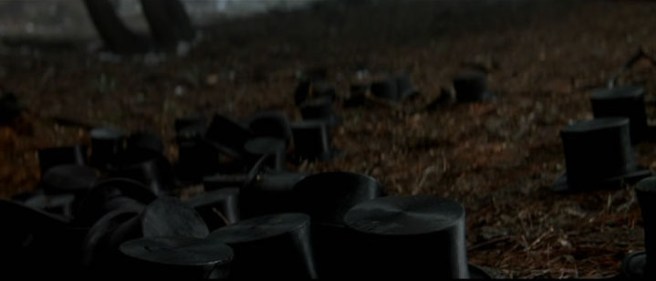
Beasts of the Southern Wild

Beasts of the Southern Wild. I loved this movie and recommend it to all living creatures. It’s about endings, and how we react to and prepare ourselves and others for the inevitable. What we leave behind. Best soundtrack of the year so far? I might have cried twice. YMMV.

Also, I read about aurochs after watching this and was intrigued to find the connection to the old rune Ur, which has also been used to mean water or rain. Cool!

LeBron James Is a Sack of Melons – NYTimes.com

James has always been harder to place. On the court, he’s a whole anthology of players: an oversize, creative point guard like Magic Johnson; a bodybuilder-style space-displacer like Karl Malone; a harassing, omnipresent defender like Scottie Pippen; a leaping finisher like Dr. J. He does everything that a human can possibly do on a basketball court; he is 12 different specialists fused, Voltron-style, into a one-man All-Star team.

Somehow this doesn’t quite track. Even as we admire James’s unique skill set, we’re always forced to think about the tension that holds all of the disparate parts together — the contradictory philosophies of the game that all of those different skills imply.

LeBron James Is a Sack of Melons – NYTimes.com

Online fraud: Blatancy and latency | The Economist

Blatancy is a means of weeding out all but the most credulous respondents. (…) A big cost for [spammers] is the time they spend coaxing fully into their net those who show initial interest. So they need to select the most promising targets, rather than timewasters or the wary. “By sending an e-mail that repels all but the most gullible, the scammer gets the most promising marks [victims] to self-select.”

Online fraud: Blatancy and latency | The Economist

The Believer – Beat Boutique

On library music and the idea of “selling out”.

“Are you OK with making compromises with your art, or is it just better off for you to have your big compromise be walking into an office every day and getting to do whatever you want?” she says, without a fleck of judgment in her voice. “I think there’s arguments to be made for both.”

The Believer – Beat Boutique

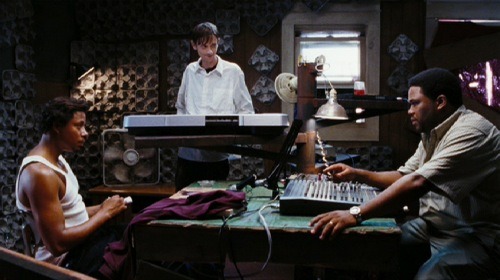
Hustle & Flow

Hustle & Flow. I was expecting a more formulaic rags-to-riches story, but got several wonderful surprises and setbacks in how this one played out. The main characters here are so, so, so well-done. Terrence Howard is great as he works through what’s basically a mid-life crisis. Damp, dumpy Memphis is the perfect backdrop and it’s just a generally nice change of scenery from most movies. Ludacris has a decent turn here as Skinny Black, but Big Boi’s menacing Marcus in ATL puts it to shame. Also, this one has Isaac Hayes.

The Prestige

The Prestige. Themes: obsession, sacrifice, craft, identity, showmanship, revenge, deceit, science as magic, etc. It’s a little mechanical and maybe overstuffed, but always interesting. Hugh Jackman is excellent. I expect viewers would either love or hate the ending, in which the inevitable is delayed while the story is re-told and all is explained. I kinda hate that, but I should have expected as much. I guess that’s Nolan’s own prestige moment? I get really annoyed when you watch a movie and then, near the end, the movie tells you about the story that happened that you didn’t know about. (Yeah, I know I complained about this recently.) Good twists are fine, but they always make me wonder how you could tell the same story in an engaging way while sharing more details with the audience up front. Isn’t it also fun when we know something the other characters don’t?

I’ve now seen all of Christopher Nolan’s feature-length movies. Here’s how they stack up for me right now:

  1. Memento (with a commanding lead)
  2. Batman Begins (I’d like to re-watch this soon)
  3. The Prestige
  4. Following (tied for third?)
  5. The Dark Knight
  6. Insomnia
  7. Inception

Life is, to some extent, an extended dialogue w/ your future self about how exactly you are going to let yourself down over the coming years

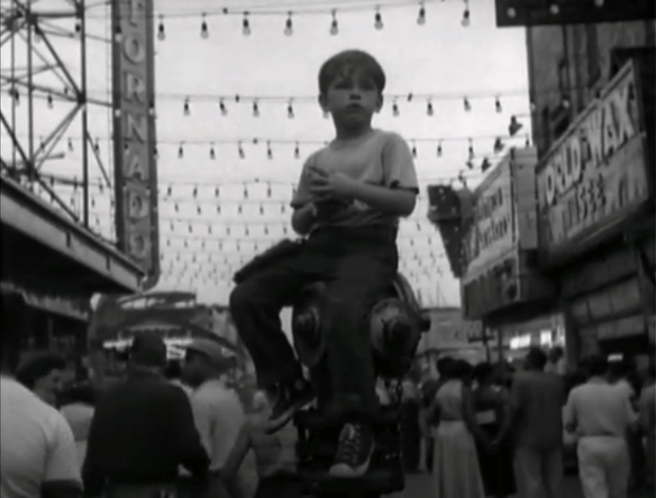
Little Fugitive

Little Fugitive. An adventure in 1950s New York City seen through a child’s eyes. It’s got some genuinely charming moments, though they’re more rooted in the nature of children than any wonders of plot or technique. The camera is low and so are the stakes, but it forces you to take the kid’s perspective. Nicely done for most of its 75 minutes. You can see the influence on the French New Wave that followed overseas.

Love

Love. Some parts I really loved, some parts I really did not. Such is the debut film experience. Excellent work on the sets and soundtrack.

markrichardson:

Calling this the funkiest bassline in the history of recorded music. After it kicks into the main groove at 1:30, an entire universe with a six-billion-year history opens up between the beat and the delayed third note Michael Henderson plays each bar.