“A blog that appreciates the art of the key change.” A blog after my own heart.
Small Talk | The Point Magazine
Exchanging small talk with people we’ve just met may be an unfortunate necessity, but with people we already know, it seems to suggest that they’re people to whom we have nothing to say. And yet if small talk is just talk that’s idle, insignificant and without stated purpose, then surely a substantial portion of the chatter that goes on between couples, friends and (or especially) families must count as small. Banality, however, need not always be insignificant. There’s nothing earth-shattering, usually, about missing the bus, what you ate for lunch or the new dress you just bought, but these are just the mundane tidbits that make up so much of the talk between intimates. In fact, such conversations about trivialities can arguably happen only with those close to us—only the members of our inner circle do we presume to burden with the minutiae of our lives.

I’m an ambivert—more introverted than extroverted but with some extraordinarily well-developed faking skills.

Nique-Bird: An Oral History. Never forget! Bird turning the corner at 7:50 is a heart-breaker.
Wherever a process of life communicates an eagerness to him who lives it, there the life becomes genuinely significant. Sometimes the eagerness is more knit up with the motor activities, sometimes with the perceptions, sometimes with the imagination, sometimes with reflective thought. But, wherever it is found, there is the zest, the tingle, the excitement of reality; and there is ‘importance’ in the only real and positive sense in which importance ever anywhere can be.
The Fast and the Furious
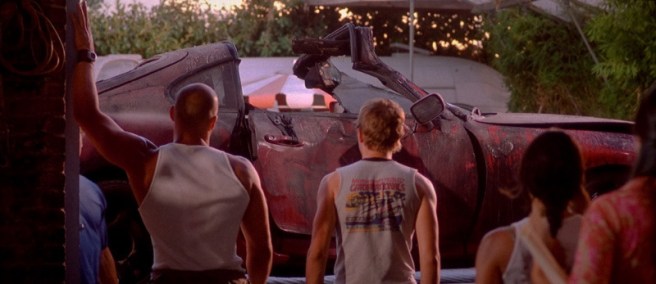
The Fast and the Furious. Almost exactly what I was expecting. One surprise, though: I figured there would be some fun, gratuitous style flourishes, but didn’t think it would be so cinematically interesting. The way they edited the racing scenes, the warps and perspective shifts, reminded me of the welding scene in Thief. It goes from a more neutral third-person observer perspective into this subjective-experience interpretive moment. Nicely done. It’s not high drama, but credit for making some gestures towards character-building, even though that’s not the point. And there’s a fun soundtrack. Two-Lane Blacktop is another good movie with itchy street racers.
Jealousy lives upon doubt; and comes to an end or becomes a fury as soon as it passes from doubt to certainty.

Queue Up: 20 Essential Music Documentaries | Pitchfork.
Classic or seldom-seen music films available to stream for free online.

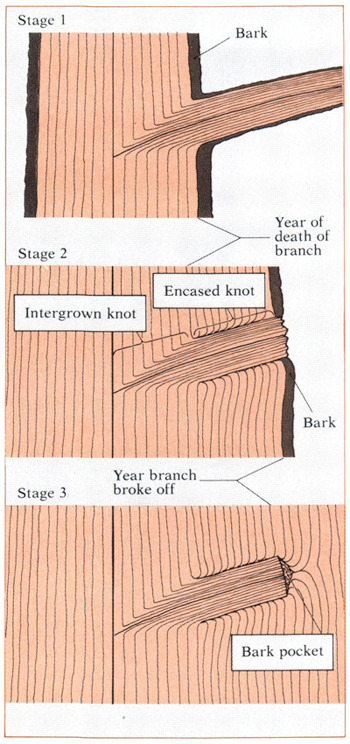
A knot is the basal portion of a branch whose structure becomes surrounded by the enlarging stem. Since branches begin with lateral buds, knots can always be traced back to the pith of the main stem.
Ah, this makes so much sense now. Excerpt from Understanding Wood at Cool Tools.
Why are we not much, much, much better at parenting? | Practical Ethics
Economics!
Humans are quite bad at estimating the results of different interventions, if the feedback only comes years later. One needs only to see the plethora of different parenting guides and opposed schools of upbringing thought. Such variety couldn’t maintain itself if it were easy for parents to see which methods worked and which didn’t. Thus parents are poor at knowing what they need, and hence make ineffective consumers from the economic perspective.
Also, “a lot of parenting techniques are procedural, rather than declarative.”
Why are we not much, much, much better at parenting? | Practical Ethics


Bret Dunlap Discovered Running and It Changed His Life | Runner’s World
Keep your tissues handy.
Bret Dunlap Discovered Running and It Changed His Life | Runner’s World
Nuptial Matters by Ruth Graham
How did reading poetry become an essential part of so many American wedding ceremonies—and why is it still so hard to choose a wedding poem of one’s own? […] It was around the early 1960s that some Protestant denominations began loosening the strictures of approved readings and music, according to Paula Treckel, a historian at Allegheny College who has written about the history of American weddings. The usual suspects were first to acquiesce: Unitarians, Congregationalists, and Presbyterians, responding to counterculture couples who wanted to make their wedding ceremonies their own. Suddenly, weddings were taking place in parks, and couples were writing their own vows. As the journalist Rebecca Mead writes in her 2007 book about contemporary weddings, One True Day, the modern idea is that “a wedding ceremony, like a wedding reception, ought to be an expression of the character of the couple who are getting married, rather than an expression of the character of the institution marrying them.”
Fascinating.
Despite our best attempts at uniqueness, we have generated a canon (as people do). And so what if the canon shifts over time (as canons do)? If, in 30 or 40 years, Cummings brands an early-21st-century wedding as indelibly as Gibran brands a 1970s wedding, well, so be it. Marriage means stepping into an ancient institution marked by hundreds of temporal particulars—everything from the cut of the bride’s dress to who is legally allowed to marry. We hope the marriage lasts forever, but we have to expect the wedding itself will age. Maybe we’ll all look back on our wedding poetry the same way we’ll look back on our wedding photos: with a fondness for those young, goofy people who had no idea how their tastes would change, or what was to happen to them.
A Scientific Search for the Most Remote Places in the United States – The Atlantic Cities
Pretty cool. Cf. the Arctic 1000 traverse from a few years back, which crossed through the most remote part of Alaska. Also reminds me of some of the issues and ironies that William Cronon brings up in The Trouble with Wilderness.
A Scientific Search for the Most Remote Places in the United States – The Atlantic Cities

Buckets of iron ore are transported to a major steelworks in Hunedoara, Romania, November 1975.
Photograph by Winfield Parks, National Geographic
The mood here made me think of Tarkovky’s Polaroids. Winfield Parks also took that great photo of the Turkish steambath.
The Thoreau Poison: Shane Carruth’s ‘Upstream Color’ : The New Yorker
This movie has prompted some really good writing.
The Thoreau Poison: Shane Carruth’s ‘Upstream Color’ : The New Yorker
It is not the young man who is most happy, but the old man who has lived beautifully; for despite being at his very peak the young man stumbles around as if he were of many minds, whereas the old man has settled into old age as if in a harbor, secure in his gratitude for the good things he was once unsure of.
Epicurus. So yeah, I accidentally started a retirement tag today.
Iron Man 3

Iron Man 3. I liked it more than Iron Man 2, maybe not as much as the original Iron Man, though I don’t remember it well at this point. This was definitely funnier than the first sequel, with some Kiss Kiss Bang Bang-ish genre awareness and biting humor. The villains, though, were a letdown, and the silly action spectaculars were kind of a mess. And yeah, it is kind of a feature-length damnation of wearable computing.
 Mark Larson