I know it would be a bummer to show 10,000 funerals in a summertime movie, but then maybe don’t kill 10,000 people while people are trying to have a good time?
The Mega-Death of Summer Movies – Richard Lawson – The Atlantic Wire
I know it would be a bummer to show 10,000 funerals in a summertime movie, but then maybe don’t kill 10,000 people while people are trying to have a good time?
The Mega-Death of Summer Movies – Richard Lawson – The Atlantic Wire

Girls on Film: Before Midnight and the evolution of one of cinema’s most dynamic women.
Yes, they are some of the most critically acclaimed cinematic romances in decades. Yes, they represent the “little engine that could” in a creative system in which only big-budget popcorn flicks tend to get multiple sequels. Yes, they are an enjoyable departure from the current standard of overly frenetic, quick-cut filmmaking. But they are also the only films that strive — and succeed — to create a detailed and ongoing look at the female experience.
I love the fact that I’m bad at [things], you know what I’m saying? I’m forever the 35-year-old 5-year-old. I’m forever the 5-year-old of something.
There’s no need for you to “decide” on one feeling. If we don’t allow ourselves multiple, confusing, even conflicting feelings, then how else do we learn to deal with people when the going gets gray?


MARTA could reduce average wait times and improve customer satisfaction by extending the Blue Line Train’s final eastbound destination from Candler Park to Indian Creek during rush hour.
As a frequent rider on the eastbound Blue Line train, I often wonder why MARTA runs a short train that terminates service at Candler Park instead of continuing on to East Lake, Decatur, Avondale, Kensington, and Indian Creek stations. This odd routing decision adds up to 7 minutes—not an insignificant amount of waiting time—to each one-way trip for riders traveling eastbound from Five Points to stations beyond Candler Park.
I’m often struck by how few people get on the “mini” train, but I figured I was missing something because surely MARTA would only do this extra level of service to customers headed to heavily used stations.
However, I took a look at the station ridership data…
Yep, the short route is kinda ridiculously empty in the mornings.
The consumer fallacy the tech-sector surrounds us with is that the progress we need comes in upgrades.
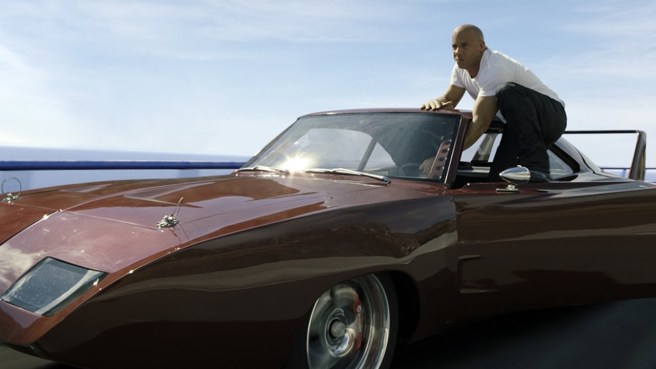
Fast & Furious 6. The best yet, no doubt. Two things help. One, it gets back to the roots a little bit (good drivers in fast cars going fast, car porn, bounteous stylishness). And two, it’s much, much better at what Fast Five tried to do (go bigger and more outrageous). I think I have to call it my favorite. Rankings:
3. Nights of Cabiria. I don’t know what to write. I just love this movie.
4. Yojimbo. I guess you have figured out by now that I am really not going to review any of the films that I picked.

Jorge Luis Borges takes a leak (via biblioklept)
They’re just like us! Background on the photo. Filed under: Borges.
Here is something I sometimes watch when there’s stressful news.
If you live near a coast of the US, you’ve probably seen many MH/HH-60/65 search and rescue helicopters in Coast Guard orange and white. They are nicknamed Tupperwolves by some crews: Tupper from Tupperware®, because they are more plastic than most aircraft, and wolf from the show Airwolf, which starred a heroic helicopter. These craft appeared in my childhood as fire trucks might have appeared in others’. YouTube provides us with many videos of them at work. They are full of danger but end happily through careful, altruistic collaboration.
The Coast Guard’s air-sea rescues are by teams of three: a pilot (including a basically inert co-pilot), who flies the helicopter, a flight mechanic/hoist operator, who raises and lowers the basket, and a rescue swimmer, who gets survivors into the basket. From this you can guess that the pilot must be a virtuoso, and the swimmer clearly a great athlete, but you might suppose that the hoist operator could be anyone who can push a lever. Not so. Watch a minute or two of the typical video above (you may skip at random; I particularly enjoy the part starting at about 2:10).
The hoist operator is the one doing almost all the talking, and she’s doing it because she’s the nexus of the whole operation. The pilot is indeed an expert, a real world-class hoverer, but he’s in a machine with a floor, and so, because he’s trying to stay over something drifting below him in heavy seas – instead of an abstract, GPS-defined point – he’s blind. He can act as a lookout for dangerous waves, and he can tell the hoist operator if she asks for something impossible, but basically the helicopter moves at her direction.
Meanwhile, the swimmer is generally off-radio because speakers and microphones don’t enjoy swimming without a facemask (and he would be inaudible in the spray and downwash anyway); he communicates with the hoist operator mostly by gesture. So running the hoist itself is really the least of her duties – probably the pilot could have the lever and she could give him directions. Her actual job is to have situational awareness of the entire rescue. She’s the one who integrates a picture of the whole operation (wave timings, the helicopter’s flight charactersitics, the swimmer’s actions, …) and makes the decisions about what’s going to happen next. She’s constantly handling ambiguity, making small plans, and ensuring that her partners have the information they need when they need it.
For example, one thing you start to notice as you watch these is that the hoist operators do a lot of subtle preventative work to avoid pendulum motions building up in the basket in the combination of wind and downwash. A swinging basket could destabilize the helicopter or slam the survivor against it when they came alongside, but the hoist operator’s only tools are the timing of their directions to the pilot and direct manipulation of the cable. This is enough: you never see out-of-control swinging.
This one has some after-the-fact remarks from the pilot (NVG means night-vision goggles).
I wasn’t being snide when I called the pilots world-class hoverers.
This one illustrates that a person standing among redwoods is still referred to as a swimmer on a deck, and that hoist operators often work lying prone.
At about 2:42 here, the pilot asks whether the swimmer is traversing, and from then on the hoist operator gives him updates on that. (Many survivors will be in shock or hypothermic, and thus behaving erratically while still looking and superficially sounding healthy.) Later, the hoist operator is concerned about cleanly breaking contact with the cliff – lifting too much from the inshore side would pull the swimmer and survivor along the rocks, but too much from the offshore side would cause a pendulum; as a complicating factor, downwash does strange things along irregular slopes.
Here we have the interesting twist of talking to the survivor on the phone.
Although it’s likely that this crew is merely operating briskly because of the good weather conditions, compared to the deliberateness of the other rescues it seems almost as if they’re in a hurry to get this rescue over with so they can run other minor errands in this one.
These help me when I’m feeling complicated about human nature, ethical intervention, the potential for good of various kinds of personal and organizational power, etc. I hope they might do the same for you.
Everyone now and then the internet gives you something you didn’t know you’d find fascinating. This is the best.
 These Aren’t the PRISMs You’re Looking For – Waxy.org.
I’m a little obsessed with the story that broke yesterday about PRISM, the NSA/FBI project to gather information from popular Internet services, including Facebook, Google, and Apple.
So, naturally, I’ve been doing a lot of digging about the story on *.gov websites. In the process, I realized that the U.S. government loves the “PRISM” acronym. There are literally dozens of projects and applications named PRISM at the state and federal level, many with delightfully goofy logos. Here are some of my favorites.

Frances Ha. I loved it. We’re all incomplete; this is about filling in the gaps. The way it treats deep friendship is so rare in movies. There’s a great California interlude with family that underscores the theme. Home can be so comfortable, but we leave it and we have to figure out how to find that support elsewhere. Other things I liked: Gerwig has a delightfully expressive face, and great timing. I thought the script was funny and loose – it didn’t feel have the volleyball bump-set-smash rhythm to the jokes, just kept rolling along through the bad ones and the good ones. And a good bit of the humor is cinematic, based on a cut/juxtaposition, or underscored with music and a lingering camera. The black-and-white photography and marvelous bursts of music throughout bring to mind Woody Allen + French New Wave. It doesn’t feel like an homage, but it’s similarly joyful. Good flick.
NOT THAT THERE’S ANYTHING WRONG WITH THAT.
by Elizabeth Cantwell
I love that [Elaine] eats on screen—a lot—and it’s so normal that she doesn’t even have to say a bunch of jokey punchlines about it. Liz Lemon is perhaps a good counterexample here—she’s also often portrayed eating, but whether it’s a donut or a pizza or a piece of cheese, the food is always the punchline to a joke. Because watching a cute woman eat a lot is just HILARIOUS to us, right? But Elaine, she just walks into Jerry’s kitchen and starts eating cereal—or ice cream, or muffins—while talking about the weather or about how she hates her roommate or about toupees. Not one word about the food. It’s almost as though she’s just eating because she’s hungry or even—gasp!—because she simply wants to. This is maybe the healthiest portrayal of a woman’s appetite I’ve ever seen on screen.
Man, I had the biggest crush on Elaine.
Okay, I’m not fooling anyone with the past tense there.
The full story is never as tidy as the one that starts with “Obviously . . .”

Valhalla Rising. I wonder if, seen in a different state of mind, I would call this brooding rather than plodding. So much slow motion and silence, which is punctuated by some astounding brutality. There are hints at good things, but just didn’t do it for me. I’m trying to catch up on the Refn filmography before Only God Forgives, and I definitely have to recommend Drive over this one.

Fast Five. My, my. This franchise has gone a long way from where it started. I’m struggling to keep up. More is more, but also more is not more. The movie warms up with bus-jacking followed by a high-speed train robbery. Street races feels so quaint in comparison. But it also means this movie doesn’t feel as idiosyncratic as the earlier ones in the series, and there’s more standard-fare crude language, violence, vulgarity. Exploding toilets? Come on, guys. Although, there was one scene where Walker had this goofy, exhilarated smile and just seemed so happy to be at the heart of all the destruction, and I’m like, yeah, I get that. The final tow-chase was legit.
This one also has the undeniable joy of a cast reunion and team chemistry. It’s heist time! (Downside: Sorkin-style teamsplaining the plot, and the inevitable camera that rotates around the planning table at HQ.) And alas, I couldn’t help but let out a resigned sigh when I saw the team’s bundle of new gadgets and spy-tech. Vin Diesel seems to have acquired superhuman strength, and a new rival in the no-nonsense fast-talking Dwayne Johnson (hints of TLJ in The Fugitive), and they get in a fight that’s not very interesting.
The family/togetherness theme was more upfront in this one than the others. “Money will come and go. We know that. But the most important thing in life will always be the people in this room.” And earlier, “Promise me we stick together.” It made me remember back to Tokyo Drift: “I have money. It’s trust and character I need around me. You know, who you choose to be around you lets you know who you are.” With that in mind, I think that’s why some of the best tension of the franchise isn’t in this film: for the most part, they’ve staked out their loyalties and they don’t have to wrestle with them very much.
Two last notes: One, I was disappointed to hear a greater reliance on fairly standard orchestral scores; I remember the earlier movies having more song-based soundtracks that were connected with locale. And two, I love how they did the subtitles, floating and fading out on the screen instead of hugging the bottom edge. Small touch, but it’s cool that they took the time to make it cool.

New York’s Hometown Paper Doesn’t Get How New York City Streets Work | Streetsblog New York City.
Spatial footprint of bikes, cars, and buses: In a city where street space is limited, you need to prioritize the most spatially efficient modes of travel, or else streets don’t work well for anyone.
Disclaimer: I don’t own a bike.
Stravinsky in a Conversation. This totally made my day. Stravinsky drinking Scotch with Nicolas Nabokov, talking about paparazzi, consulting his Russian-English dictionary (“diligent”), getting the camera crew to drink up, learning bad news about Cocteau. (via)

 Mark Larson