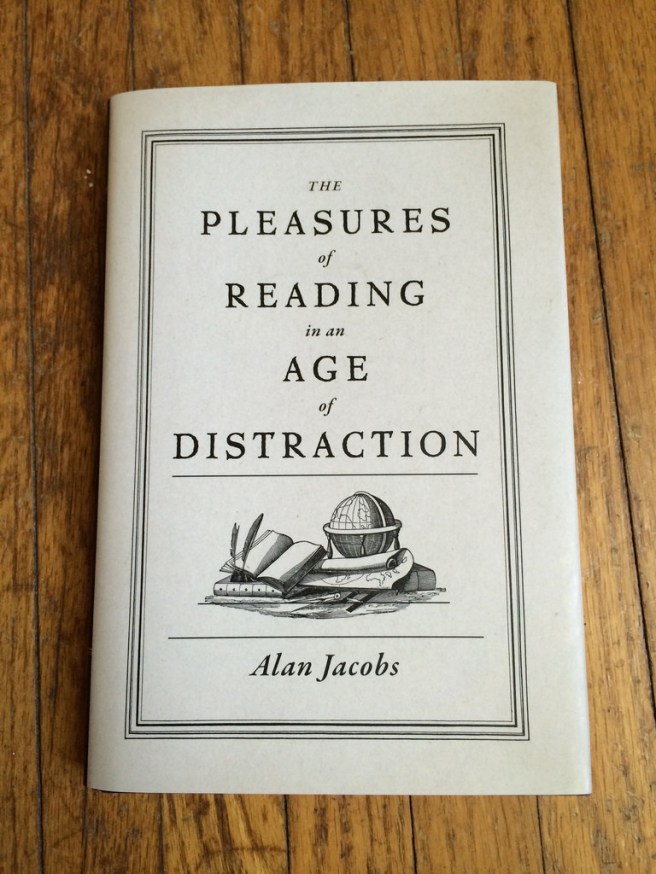
The Pleasures of Reading in an Age of Distraction (review)

“One dominant, overarching, nearly definitive principle for reading: Read at Whim.”

Somewhere around Christmastime I fell into a massive reading rut. What I was reading was no fun, and there was nothing better out there, and there never would be. Everything was in ruins. Then I read this book. And for the past couple months, I’ve been on one of those glorious hot streaks where just about everything I’ve read has been fun, and the stuff that wasn’t I dropped without second thought. Coincidence? I have to give some credit to leaving behind the cold, dark, depressing winter, and stepping into the golden light of springtime… but Alan JacobsThe Pleasures of Reading in an Age of Distraction definitely deserves some credit, too.

I like the tone of this one. It’s like your at a smart friend’s house, and he’s reclining in a chair and talking at length. Some favorite parts…

In an awesome footnote, relating to the “gateway drug” theory of lowbrow reading eventually leading to “better” books, an excerpt from Alex Rose:

“The only conceivable value of trashy books is the dubious but not unthinkable possibility that they might go some of the way towards engendering in young people a love of reading as an end in-itself, which in turn might whet the appetite for better books. For many, that’s the only way in. They’ll read Sweet Valley High or Twilight at thirteen, lose their taste for it by fourteen and demand something richer and more challenging at sixteen. Or so the thinking goes.

If the argument applies to one form of entertainment, though, it should apply to all. Why is it that when kids become enraptured by some idiotic program, no one says, “well, at least they’re watching TV?””

In hindsight, this is obvious, but it’s a really good, liberating reminder:

“If I set a book aside today I am not thereby forbidding myself to return to it later—nor am I promising to do so. To everything there is a season, and, by corollary, everything is sometimes *out* of season.”

Timing is everything. And along the same lines of releasing the pressure on yourself, we’re reminded that “Many books become more boring the faster you read them” and that “All books want our attention, but not all of them want the same kind of attention.”

I also liked this excerpt from Auden about thinking about how we evaluate the stuff we read:

““For an adult reader, the possible verdicts are five: I can see this is good and I like it; I can see this is good but I don’t like it; I can see this is good, and, though at present I don’t like it, I believe with perserverance I shall come to like it; I can see that this is trash but I like it; I can see that this is trash and I don’t like it.””

If you find yourself in a reading rut, maybe this one will help you get out, too. Recommended.
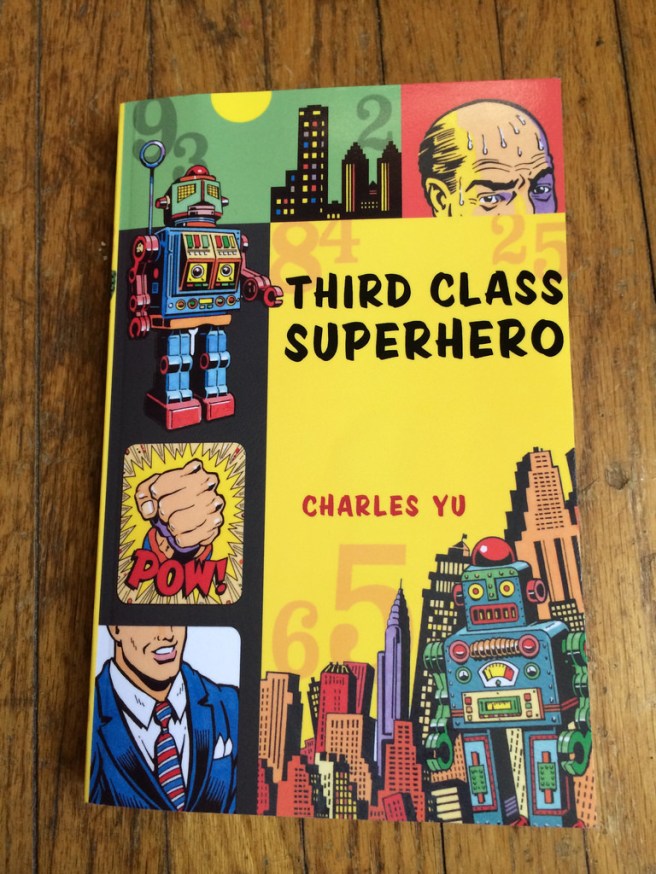
Third Class Superhero (review)

This is a pretty fun collection. Charles Yu’s Third Class Superhero has some good light scifi/speculative influences, along with a George Saunders-ian blend of dark but sympathetic takes on modern everyday life (cf. “the Capitalized Phrases, offering entry into an Exclusive Club for People Who Get It“). It’s fatalistic, but still curious.

Goofiness pops up in the title story (read an extended excerpt):

“Every morning, when I open my eyes, I think the same four thoughts:

1) I am not a superhero.

2) I have to go to work.

3) If I didn’t have to work, I could be a superhero.

4) If I were a superhero, I wouldn’t have to work.”

Ladies and gentlemen, Moisture Man. One of my favorite stories was “401(k)”, which has a tongue-in-cheek exploration of the treadmill of consumer society and life’s template.

“The Realtor is showing us our dreams. “Private, affordable, midrange,” he says. I never thought I’d have midrange dreams.”

And later in the same story, a sequence on aging:

“The thirties and forties. The long run. The lifelong conversation. Somewhere in here we’ll get incredibly lost, wander around in the desert, and get spit out on the other side of fifty-nine and a half, into the land of penalty-free-IRA-withdrawal, looking around like we just popped out of a quarter-century fun-park water slide tube, thinking, Where am I, how did I get here, can I do it again?”

Maybe my favorite bit in the whole book, a poke at how we think about travel:

“We plan a vacation. We want to see the Other. The travel agent sends us literature, glossies, video brochures. We choose a package deal with Authentic ExperiencesTM****. According to the brochure, there are five kinds of Experience: Urban, Rural, Semirural, Ethnic, and Ethnic with Danger. Standard Endangerment is Mild or Implied, but those in the know understand they may inquire discreetly about Actual Hazard—e.g., I’ve heard there might be something more?…”

This kind of writing – where skills of observation meet clever exaggeration – is just so fun:

“Five-year-olds are playing soccer nearby. More specifically, they are viciously kicking one another in the shins while a soccer ball sits unharmed in the vicinity.”

My other favorite story is probably “32.05864991%”, which explores “why men are such terrible emotional statisticians”, and the existing of two different Englishes – “the language of the wanted and the language of the one doing the wanting.”, and what exactly “maybe” means. I love this bit that touches on nervousness and superstition:

“He has two shirts left in the current dry-cleaning cycle and a pile of shirts on the floor and a pair of brand-new slacks with the tag still on that he doesn’t want to touch for fear that any deviations from his normal routine will affect something that happens during the day and turn “maybe” into “no.” In order to avoid disturbing whatever tension lines of cause and effect may be between him and Janine, he has to minimize perturbations in the system and allow chance to take him where it will.”

Good stuff.

In Defense of the Expert Review | Balder and Dash | Roger Ebert

When scientific experts criticize “Gravity” for failing to display an academic-level understanding of the laws of nature, they are missing the point. Nobody goes to “Gravity” for a physics lesson; they go to be entertained. But there are times when a fact-check of a film can provide necessary context and, especially if the film is based on true events, illuminate not just how a narrative deviates from the truth but why it does. At their best, expert reviews can even illuminate deeper truths, like how reality is an often unintended casualty of pop culture. Since mainstream movies only show us what we want to be true—almost by definition, a film that sells tens of millions of tickets does not challenge any widely-held perspectives—movie fact-checkers can show why a certain film felt the need to diverge from reality to tell a satisfying story.

In Defense of the Expert Review | Balder and Dash | Roger Ebert

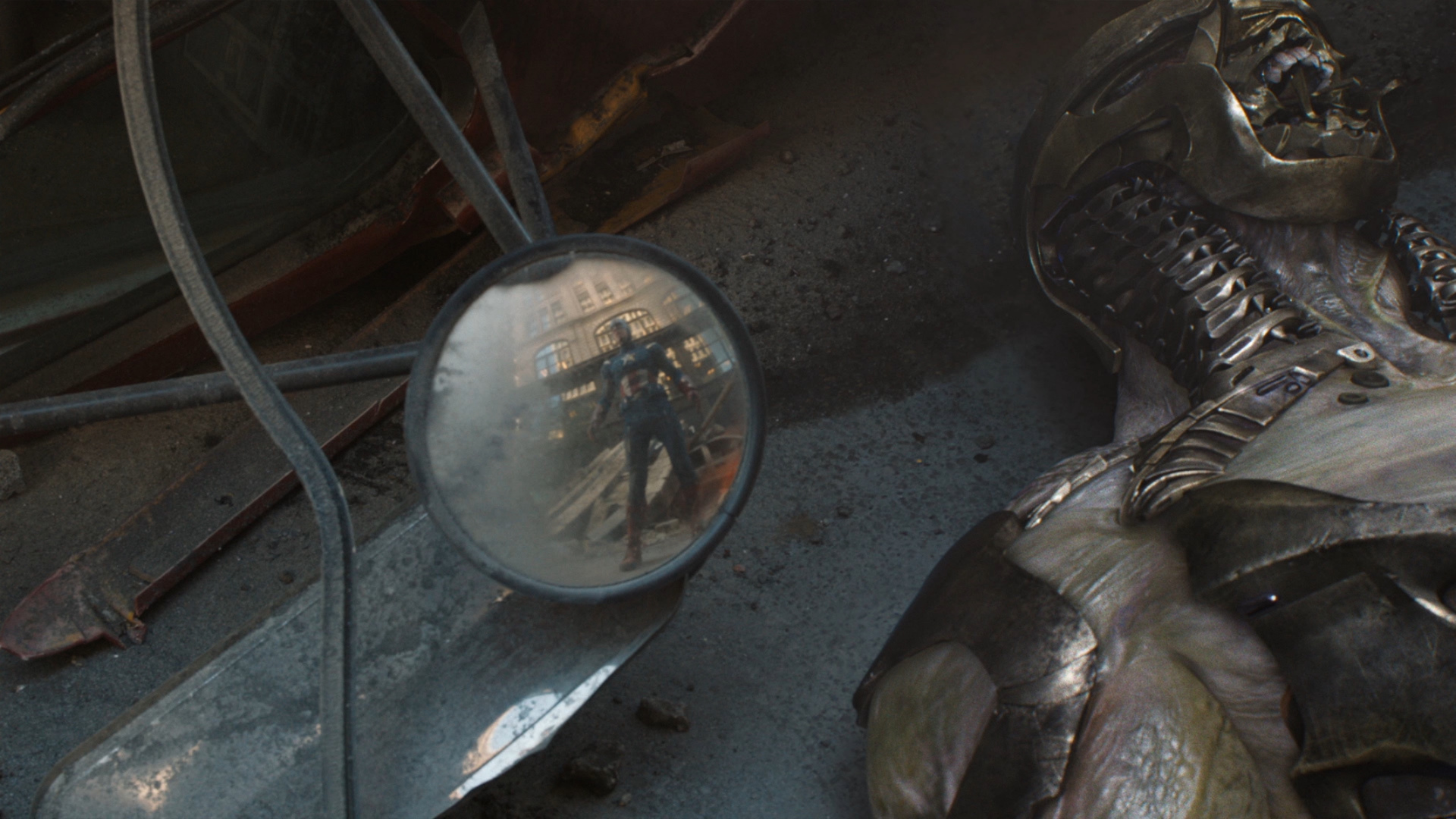
Captain America: The Winter Soldier

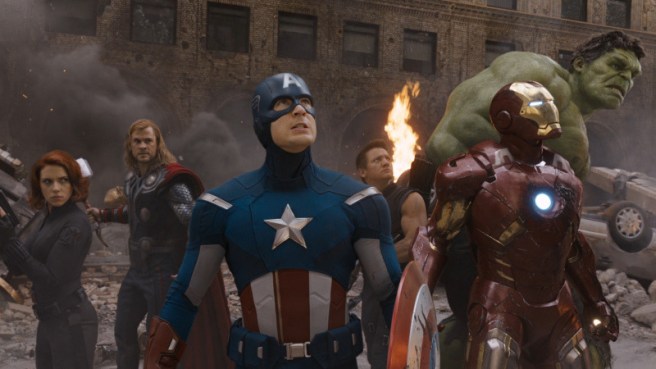
Captain America: The Winter Soldier. I had so much fun. Good action movies make you want to do the things you see on screen. Iron Man is fun to watch, but I don’t feel like I want to fly around and shoot beams out of my hands. But this? Yeah, I want to hold up a shield and run through locked doors. The First Avenger is still my favorite of the Marvel movies, but this is a nice elaboration and keeps the good drama/humor balance. Such a great character, becoming more suspicious, more wary of what he’s asked to do.

Deadfall

Deadfall. There’s some good northern winter noir here and there, but it’s not consistent. I wonder if a different, shorter edit would have worked better for me. The Place Beyond the Pines is a better exploration of family relationships + law enforcement. The Grey is a better snowbound film where the odds are stacked from the beginning. I should re-watch both of those.

Interesting villain-in-prison cliché to see popping up recently. Practical for shooting movies (nothing blocking your view), but then again, these days you can put a camera anywhere. Pairs nicely with a more paranoid, surveillance-oriented approach to war and policing. Can’t fight what you can’t constantly observe, or so they say.

One of my general rules is, if you’re on the fence about a movie/TV show/etc and you mull it over for a week, you liked it.

Matt Zoller Seitz. Also applies to books, concerts, paintings…. people?

https://www.tumblr.com/audio_file/mlarson/81773559834/tumblr_mwufvoBmWP1qld2xe?plead=please-dont-download-this-or-our-lawyers-wont-let-us-host-audio
http://mlarson.tumblr.com/post/81773559834/audio_player_iframe/mlarson/tumblr_mwufvoBmWP1qld2xe?audio_file=https%3A%2F%2Fwww.tumblr.com%2Faudio_file%2Fmlarson%2F81773559834%2Ftumblr_mwufvoBmWP1qld2xe

lacienegasmiled:

Demo of Beat It composed using only Michael Jackson’s voice

As Jackson couldn’t fluently play any instruments, he would sing and beatbox out how he wanted his songs to sound by himself on tape, layering the vocals, harmonies and rhythm before having instrumentalists come in to complete the songs.

One of his engineers Robmix on how Jackson worked: “One morning MJ came in with a new song he had written overnight. We called in a guitar player, and Michael sang every note of every chord to him. “here’s the first chord first note, second note, third note. Here’s the second chord first note, second note, third note”, etc., etc. We then witnessed him giving the most heartfelt and profound vocal performance, live in the control room through an SM57. He would sing us an entire string arrangement, every part. Steve Porcaro once told me he witnessed MJ doing that with the string section in the room. Had it all in his head, harmony and everything. Not just little eight bar loop ideas. he would actually sing the entire arrangement into a micro-cassette recorder complete with stops and fills.”

Reasons why I laugh when people say he wasn’t a real musician.

Dang. Dude was good.

#trainstagram

The first time I instagrammed a container car, it was because I was waiting on my commuter train to show up, and I was bored to death.

(click for superfluous historical facts!)

The second time, I was curious about the word “Maersk”.

(click again!) 
(click again!) 

The third time… yeah, in all honesty, I was just kinda trolling my friends.

(etc!) 
(etc!) 

But at least a handful of other folks saw the same appeal. I kept seeing the containers, and the each time I did a little more on-the-spot research, I learned how old and/or humongous these companies are.

Kinda cool that there’s a whole other part of the economy that’s just been chugging along, making the rest of it work a little more smoothly.

And there’s the novelty, like birding. I’ve seen, in passing, a bunch of other containers that I haven’t snapped or read about yet.

It’s not sexy at all, but there’s something compelling here. Some things are born interesting. Some things, given time or attention, become interesting.

The Sisters Brothers (review)

Who do you know that has faith in you?

Within the first 40 or 45 pages of The Sisters Brothers there’s a lethal spider bite, tough mercenaries marveling at the wonders of a toothbrush, a gyspy-witch, and a bear attack. The next 250 are just about as strong. It’s splendid.

The two lead characters–who aren’t really good people, by the way–are brothers, and there were plenty of family dynamics here that made me think of my own (“Our blood is the same, we just use it differently.”). And our narrator is smart and self-aware, and is constantly tossing out little observations and musings, like:

I could not sleep without proper covering and instead spent the night rewriting lost arguments from my past, altering history so that I emerged victorious.

And here, on booze:

When a man is properly drunk it is as though he is in a room by himself.

And here, on making a bozo move when he’s trying to get his flirt on:

My chest swelled like an aching bruise and I thought, I am a perfect ass.

And here, on waking up:

I thought, Why did I bring up God so soon after waking?

Funny, thoughtful, twisted, must-read. Thanks to Austin for the suggestion!