
Unforgiven. My second viewing. This time around I got to see it on the big screen and it’s glorious. Previously.
Deserve’s got nothin’ to do with it.
Filed under: Clint Eastwood.
Unforgiven. My second viewing. This time around I got to see it on the big screen and it’s glorious. Previously.
Deserve’s got nothin’ to do with it.
Filed under: Clint Eastwood.

I read some Selected Poems by Emily Dickinson, which is a good way to fill little pockets of time here and there. Some of my favorites:
If you’re hankerin’ for some Emily Dickinson set to music, check out John Adams’ orchestral piece Harmonium, which uses Donne’s Negative Love in addition to Dickinson’s Because I could not stop for Death and Wild Nights – Wild Nights!. It’s a phenomenal piece of music.
Not having an opinion means not having an obligation. And not being obligated is one of the sweetest of life’s riches.



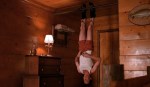
A spread from my forthcoming imaginary book, Hangin’ Out: Up-ending Masculinity in 1980s Cinema. Richard Gere in American Gigolo (1980). Josh Brolin in The Goonies (1985). Michael Keaton in Batman (1989). Kyle Machlachlan in Twin Peaks (1990).
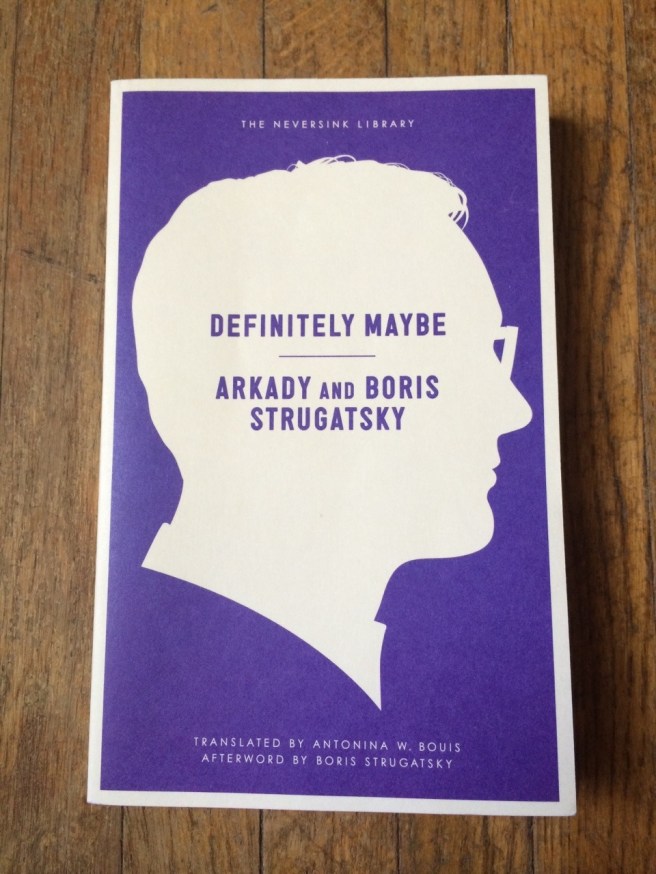
I read the Strugatsky Brothers’ book Definitely Maybe, and enjoyed its kooky Russian brand of paranoia. I love how transitions between scenes and chapters just drop off and pick up mid-sentence. I heard about this one from my buddy Will, book-devourer and publisher, who also tipped me off to that Solaris translation I wrote about a few weeks ago.

Collateral. My third viewing. (Ignore my comments after the second.) It feels like every time I watch a Michael Mann movie it becomes my new favorite of his.
This movie is seriously in love with LA, too. You almost never get this much richness in setting. The surfaces, the light, daytime and night. Passing scenes and shots of a Hispanic gas station, a Korean (?) newspaper, murals, traffic, strip malls, modest neighborhoods, airport boulevards. Crucial scenes in Latino and (mostly Asian) nightclubs.
This sense of place fits with one of the movie’s themes – presence. Our protagonists are Vincent (Cruise’s cool, decisive, efficient professional) and Max (Foxx’s daydreaming perfectionist). Max is dreaming miles into the future, but too hesitant or cautious (“It’s gotta be perfect.”) to do anything to get there. Vincent is skimming along the moment, zipping through assignments. (“We gotta make the best of it, improvise, adapt to the environment, Darwin, shit happens, I Ching, whatever man, we gotta roll with it.”)
Two early soundtrack moments underscore the contrast, too. Early on, Max enjoys the nostalgic, old-school vibes of Groove Armada’s Hands of Time as he cruises through the city. Soon after, we see some of Vincent’s subway/disconnection speech (foreshadowing!) backgrounded with a cool blues-y rendition of Bach’s Air on the G String. Pure sophistication. It’s not until (after the missed-opportunity soliloquy in the jazz club scene) Max is forced into impersonating Vincent that he starts to show some real agency.
On this viewing the humor came through much more for me, thanks to Cruise. Lines like “Promise not to tell anybody, right?” and “Don’t let me cornered. You don’t have the trunk space.” and “What? I should only kill people after I get to know them?”. I could go on. What a damn great movie.
Child in the womb,
Or saint on a tomb —
Which way shall I lie
To fall asleep?
The keen moon stares
From the back of the sky,
The clouds are all home
Like driven sheep.Bright drops of time,
One and two chime,
I turn and lie straight
With folded hands;
Convent-child, Pope,
They choose this state,
And their minds are wiped calm
As sea-leveled sands.So my thoughts are:
But sleep stays as far,
Till I crouch on one side
Like a foetus again —
For sleeping, like death,
Must be won without pride,
With a nod from nature,
And a lack of strain,
And a loss of stature.
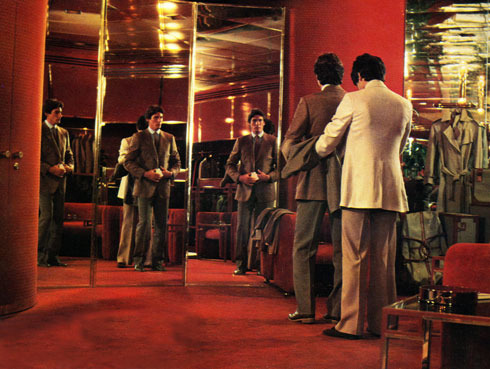
American Gigolo. Fantastic movie. One current is an electric crime drama (and the challenge of justice for outsider groups). Another is the steady melancholy, loneliness, and emptiness of the protagonist’s life. Awesome clothes. And OMG Lauren Hutton. Another good movie that explores the tensions between a criminal profession and desire for a normal life: Thief, of course.
Fame is a bee.
It has a song—
It has a sting—
Ah, too, it has a wing.

I read Virginia Woolf’s Flush, a biography of Elizabeth Barrett Browning’s cocker spaniel. We grew up with two cocker spaniels (first Nugget, then Rusty, and I still take pride in choosing such good names), so I was rooting for this one from the start. It’s short and breezy and completely charming.
The true philosopher is he who has lost his coat but is free from fleas.
I highly recommend subscribing to Matt Thomas’s NYTimes Sunday Digest:
Every Sunday since 2007 (that’s 346 consecutive weeks), I’ve posted links to and quotes from articles I thought were interesting in that day’s New York Times on my blog. I started doing it to give myself a Sunday…
I can’t reblog this hard enough.
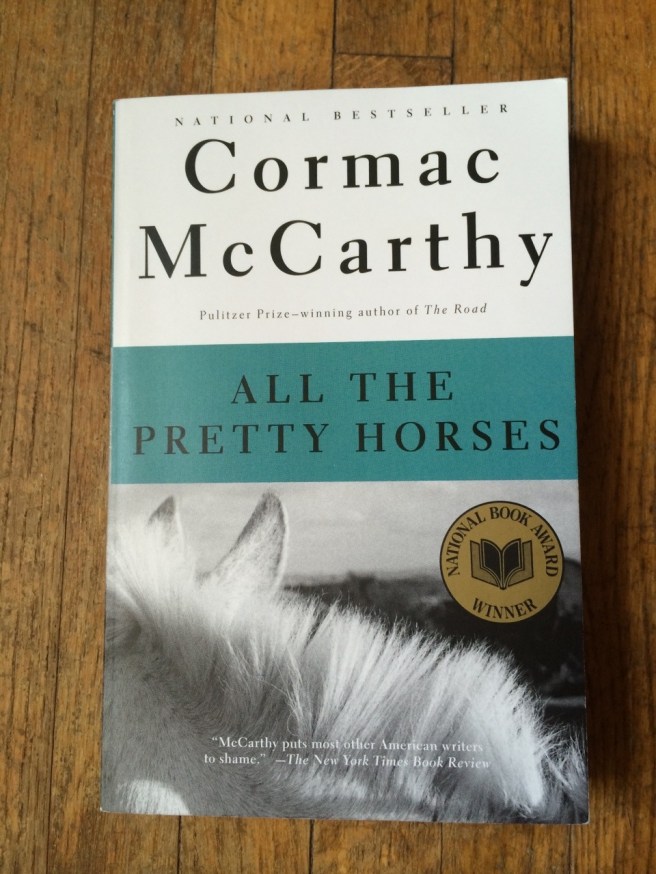
I read Cormac McCarthy’s All the Pretty Horses. I was disappointed that I didn’t learn a bunch of words like I did when reading Blood Meridian. I’m pretty sure No Country for Old Men is my favorite of his, followed by Blood Meridian and then The Road and then this one.

I read Grégoire Chamayou’s Manhunts. I may not have given it a fair shake – it has a way more academic bent than what I was in the mood for – but there are some neat ideas here. The most useful:
Every hunt is accompanied by a theory of its prey that explains why, by virtue of what difference, of what distinction, some men can be hunted and others not.
One of the better parts of reading this wasn’t the book itself, but how it related to other things I’ve come across. Manhunter, clearly, and how pursuit puts one’s soul at peril. Njál’s Saga frequently deals with banishment and outlaws, vengeance and vulnerability. Also the book Columbine and other events like the OKC bombing and Isla Vista, and how theories of exclusion always follow closely behind. Zero Dark Thirty, too.
Advice columns for men, however, seem not to have made the leap from proscriptive notions of rectitude to the smart-older-sister vibe of advice for women. In GQ and Esquire and even Maxim, which are full of Q&A-format advice for readers, situations are often posed in a joking tone and answered as if the writer were the dude from the Dos Equis commercials and the ultimate ethical standard is masculinity rather than humanity. “How to be a man” literature is the new conduct literature: it’s not that men haven’t cared about ideals of masculinity before now, but the idea verges on obsession these days, cf. everything from Shia LaBoeuf’s resignation note to the fact that someone greenlit How to Be a Gentleman. It’s a whole genre and evidently a popular one—but, while advice columns are the delicious and healthy snack of things to devour on the Internet, it matters for men and women alike that advice columns for men evolve, not by abandoning their gentlemanly tone but by choosing the right questions to answer.
That’s one reason why I read waaaaay more of Carolyn Hax than anything in men’s magazines.
My friend Mario Joyner has a funny line. It’s not something he does in his act, but he’s a brilliantly funny guy about life. The wedding gown, the celebration, the aggrandizement of the woman in this amazing outfit at the wedding—she’s telling the world “I got one of these motherfuckers to act right.”

Manhunter. Safe to call Michael Mann my favorite director now? So very good. I wish I’d planned it consciously, but I ended up unintentionally re-watching this around the same time I was reading Manhunts. Another recommended pairing: Matt Zoller Seitz’s reflections (heh) on the mirrors, doppelgängers, doubles, duality, etc. in this and Mann’s other works.

I read a lot of The Collected Stories of Amy Hempel, but not all of them. I liked the ones I read, and still think that previous collection, Tumble Home, is great. But I think I was becoming a little numb. Worth picking up again later.
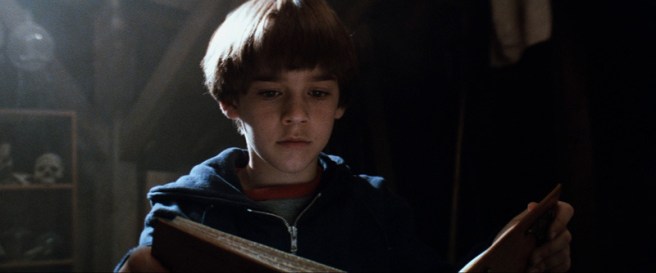
The NeverEnding Story. The handful of times I watched this as a kid I found it too baffling to grow any sort of attachment or fondness. I remembered only a few snapshots before re-watching: boy reading in attic, boy warrior in a terrifying bog, flying on a dogdragon, wolf with a twitchy nose, a young queen in distress. Good young actors in a dark, compressed allegorical movie about bullying, escapism, and the value of imagination. Let’s also take a moment to appreciate that the villain is called “The Nothing” and the rad electro soundtrack in the Swamps of Sadness. :( :( :(
In the Cut, Part I: Shots in the Dark (Knight). I really, really liked this dissection, by Jim Emerson, of a chase scene in The Dark Knight. I think the scene still communicates on a sequence-of-events level – chase goes underground, trucks smashes car, weapons are fired, Batmobile rams a dump truck – but there are definitely ways the editing makes it less spatially coherent or viscerally “real”. You can set aside whether that makes the scene good or bad, or whether it undermines or supports whatever Nolan’s intentions were. It’s still a nice primer and breakdown of how they communicate narrative through the frame, and how ignoring or adhering to visual conventions affects how you understand what you see.

Starting a new tradition with Ikea assemblies where I add the discussion had during the build into the instructions http://i.imgur.com/9LiM59y.jpg
 Mark Larson