The genius of this simultaneously simple and profound phrase comes from its naked embrace of the fact that some stories are too good to verify and must be shared as soon as possible.
Once Upon a Time in the West
Once Upon a Time in the West. Welp. It’s perfect. This was my second time seeing it all the way through (my first), and I was very lucky to catch it on the big screen. Two things that stood out for me more this time around….
One, the operatic heightening. Straight out of opera, each major character gets a leitmotif in the soundtrack, they’re all introduced in a different way to draw attention to their role, and they’re all pretty unambiguous archetypes: villain, hero, buffoon, hooker with heart of gold. And dang, that score.
Two, the recurring hints about time. The movie opens with a shot of a rail schedule, then shifts to a comically, absurdly extended introduction marked by dripping water and creaking windmills. The anxious father who wants to be ready for his beloved’s arrival. Watches checked, appointments made. A capitalist who wants to reach the Pacific coast before his death. A railroad station that must be built on a deadline. Fancy clocks in the financier’s railcar. The clockface in town during a shoot-out. And battles that the hero faces are a sort of countdown: three assassins, then two, then one.
Let’s fly: How to survive air travel
This is how you survive the airport:
Arrive early. Arrive early? Sounds simple. It is — let me show you.
I remember reading somewhere that if you’ve never missed a flight then you’ve wasted too much of your life waiting in airports. Fair point, maybe. But I have to agree, after a few recent flights, that arriving much much earlier than needed – giving over to what might first feel like inconvenience – can create some beautifully peaceful and productive time to work with.
When people say, “I’m the kind of person who,” my heart always sinks. These are formulas, we’ve all got about ten formulas about who we are, what we like, the kind of people we like, all that stuff. The disparity between these phrases and how one experiences oneself minute by minute is ludicrous. It’s like the caption under a painting. You think, Well, yeah, I can see it’s called that. But you need to look at the picture.
Adam Phillips. Filed under: Adam Phillips.
MOONRISE KINGDOM: Wes in Wonderland
I’m on record as not being a huge fan of this particular movie, but damn, Anderson is good at what he does. Cf. David Bordwell discussing The Grand Budapest Hotel. Filed under: Wes Anderson.
Solaris

I read Stanisław Lem’s Solaris (the new Bill Johnston translation, grade-A uncut straight from the Polish), and enjoyed it for the most part. Not available in paper, so I finally used this Kindle gadget thing.
This is a book for ideas. The writing isn’t too special on its own, on a sentence and paragraph level. I could have done with less of the spinning off into academic/history tangents, but I suppose they have their purpose. Reminds me of Borges a bit, that spirit of developing gobs and gobs of history and references. I think the spirit is more ironic here, underscoring how the knowledge of Solaris that humans gathered and theorized for generations really amounts to so little.
Now I really want to watch both movies again. I read a lot of this while listening to the soundtrack for The Fountain, which makes a good pairing.
Another Lem book I really, really liked was Imaginary Magnitude, which, as a collection of… stories?… offers a lot more variety and more opportunities to have your mind blown.
Dawn of the Planet of the Apes

Dawn of the Planet of the Apes. Really underwhelming. I was so fired up for this after re-watching Rise… and hearing good reviews. I think the best way to summarize this one is that there’s just not much to be curious about. Once you get the early outlines, you could finish the screenplay yourself. Bonus points, though, for good use of xylophone in the score. I also thought it was interesting that they only used a handful of locations for this movie: city, grove, dam, village, apartment. Reminded me of the clashing civilizations/neighbors in The New World. Took me the longest time to realize how I recognized Kodi Smit-McPhee: Let Me In.
Nicely Said: Writing for the Web with Style and Purpose (review)
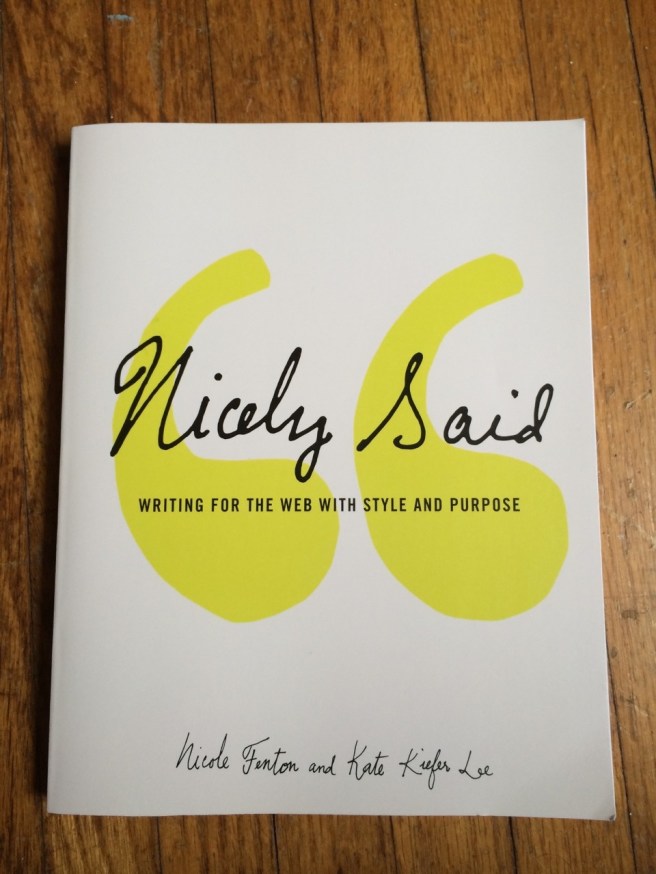
I read Nicole Fenton and Kate Kiefer Lee’s new book Nicely Said: Writing for the Web with Style and Purpose. Now that I think of it, that subtitle goes against just about everything this tumblr stands for. Good friendly guide, especially if you need advice more along the lines of project structure and how to think about what you’re doing, more so than nuts-and-bolts writing advice.
In Top Gun, it’s always magic hour for the best of the best
For a film that worships the military, and is in turn worshipped by the military, Top Gun seems perversely uninterested in the military—or foreign policy, or warfare—as anything other than a crucible that sweaty, shirtless, constantly showering men must endure on the route to über-awesomeness. The enemy is deliberately shadowy because the real enemy is self-doubt and moral weakness.
I like to read my poems, but I don’t like to hear other people read theirs.
Kay Ryan. Zing!
“I Like Things That Look Like Mistakes”: The Perfect Imperfection of Frances Ha
Energetic, prone to folly, and warmly sincere, Frances is perhaps the best illustrated character to come out of film in ages, both a perfect fit for the contemporary environment she inhabits and yet timeless in how human she is.
Nodding my head every other sentence. Really great appreciation. I, too, loved this movie.
They are closer than most friends, intimate emotionally with one another more than most people on screen are (unless someone is dying). But the fact that they exist as two separate people whose interests evolve is critical to understanding why Frances and Sophie work as a couple and why Frances Ha works as a film.
“I Like Things That Look Like Mistakes”: The Perfect Imperfection of Frances Ha
Snowpiercer

Snowpiercer. I keep thinking about this one. There are plenty of logical flaws, loopholes, heavy-handed messaging, whatever. But it’s so cool. The railroad car constraint lends to some great invention with sets and storytelling and form. Evans shows some range you don’t get to see in the Marvel movies. Swinton drives me nuts sometimes, but I really appreciated her role here for both evil and levity. I rank this highly among 2014 releases, in the good company of Edge of Tomorrow, The Grand Budapest Hotel, and The Lego Movie.
The Golden Spruce

I read John Vaillant’s book The Golden Spruce: A True Story of Myth, Madness, and Greed on Ryan Holiday’s recommendation. The writing was a bit too overstuffed/awestruck for my tastes sometimes, but there’s some good material in there about the history of the Pacific Northwest and the rise of the modern logging industry.
An even better book about man vs. nature: Vaillant’s The Tiger, which is absolutely incredible. I tumbled a couple good excerpts a few years ago.
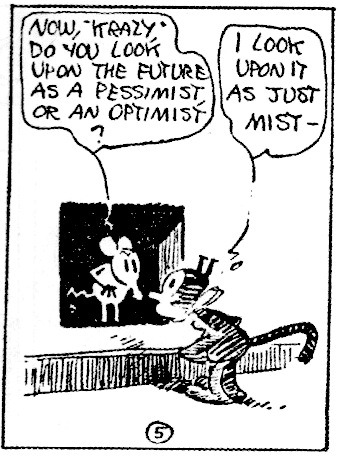

“Arguably literature’s basic charge is to describe being in the world—the Grainger catalog reveals just how extensively our writers have failed to document the varieties of work happening now, and the hyper-precise terminology surrounding that work.”
Dan Piepenbring on the wonders of industrial-supply catalogs.
Neat piece on the specificity of words and the specificity of tools, materials, and devices found in this mammoth catalog. This was a highlight, in his discussion of item descriptions:
“If ‘For sale: baby shoes, never worn’ counts as a story, then so, too, must ‘all-wood coffins store flat and assemble without tools. Can be stacked 3-high when assembled to maximize space in mass-casualty emergencies.’ Or: ‘High-visibility warning whips alert other vehicles of your presence.’ Or: ‘Stretch knit material covers head to protect from overspray.’
Two Ridiculous Headphones and a Pile of Schiit – Marco.org
Choosing an audiophile amp and DAC are difficult because audiophiles will tell you a great deal of unscientific wine-tasting descriptions of how each component sounds, then recommend whatever they bought.
Rise of the Planet of the Apes

Rise of the Planet of the Apes. A refresher viewing before the upcoming sequel. I liked it a good bit more than the first time I saw it. Now I appreciate more how the milder human performances help highlight the apes (backhanded compliment?). But wow the apes are great. Good heart in this one.
Pinboard Turns Five (Pinboard Blog)
Avoiding burnout is difficult to write about, because the basic premise is obnoxious. Burnout is a rich man’s game.
Recently I’ve been thinking that when you’re younger, you need to say yes to everything; then, when you’re older, you need to learn how to say no to everything. I don’t mean younger in age, but as a step in your profession.
The Raid: Redemption
The Raid: Redemption. This is an implausibly heightened* excuse for great choreography and fightin’. (*a pregnant wife; an innocent bystander who needs to deliver medicine to his bedridden spouse; an unauthorized mission without backup; corrupt leadership; sibling rivalry; etc.) I loved early parts of the movie, where there was more play with music vs. silence, shadow vs. light, when things felt more precarious. Once the shit hit the fan, it was still fun, but more predictable, and less interesting. Transitions got a bit awkward as the stories splinter and rivalries come a head, and people start talking more. I think I would have appreciated something leaner, and something that took more advantage of the architectural aspect like Die Hard. Good relentless fun, though. Two more things: 1) I am getting a bit too old and squeamish for gore, and 2) that moment when the camera drops through the floor (!!). Another movie that’s “pure gold when it comes to the art of moving cameras around moving bodies doing cool things”: Ninja.
 Mark Larson