
Nebraska. It’s good. Does it’s best work in the lighter moments, but that’s just me.
Nebraska. It’s good. Does it’s best work in the lighter moments, but that’s just me.
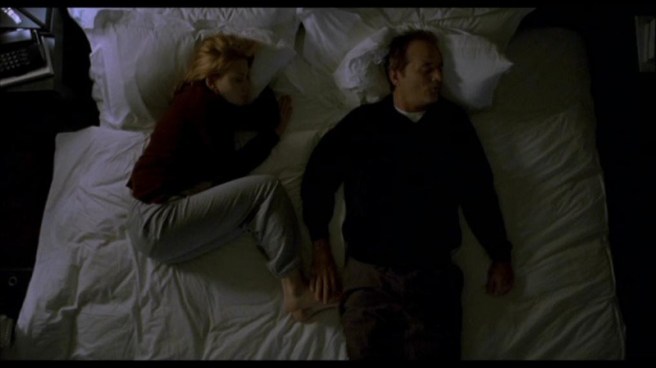
Lost in Translation. Bill Murray is the best. Johansson is really good, but I don’t see this movie working without him.

Top Five. Let’s see, a movie about an actor known for more mass-market-friendly work who’s anxious about trying his hand at something more serious. Sounds familiar, but worked so much better for me. I don’t follow the business side of movies very much, so I really hope this did well enough for Rock to do many more.

Nightcrawler. Second viewing, ditto everything I wrote before), and I loved it even more this time. This was the first of a handful I watched on a very long flight. Sorry not sorry for the deluge to come.
At first I was stirring it in a cup and then pouring the slurry into the AeroPress. Later on I learned that I could stir it right in the AeroPress.
I love that in the early, prototyping days even the inventor didn’t know how to use his invention.
First Alan Adler Invented the Aerobie. Now He’s Created the Perfect Cup of Coffee
To be told that a scene of mass death is the result of an accident or terrorism is to be given not only an explanation of the cause but also an idea of how to reckon with the consequence.

I love this so much:
[Point guard Jeff Teague] reported to training camp in September 2013 and couldn’t find his chair. “You’re over there now,” said reserve big man Gustavo Ayon, motioning to the spot between center Al Horford and forward Mike Scott. [Head coach] Budenholzer wanted players sitting next to one teammate they could influence and another who could influence them.


No Country for Old Men. Fourth or fifth time I’ve watched it, I think. Dear lord. There might be just a single-digit number of movies better than this one.
One of the lesser-appreciated joys of online shopping is that, in the process of streamlining and compressing the expressions of capitalism we call “retail,” it gives us a god’s eye view of market patterns. In one search on Amazon or Newegg you can see a category’s past, present, and near future: high-margin luxury options on one side, low-margin or out-of-date good-enough options from unlikely or unknown brands on the other. Then, in the big mushy middle, brands fighting over a diminishing opportunity. This is faintly empowering. To watch the compressed cycles of modern consumer electronics pass through your viewfinder gives a calming order to an industry that depends on the perception that it is perpetually exceptional. This perspective also helps to enforce realism about your relationship with consumer electronics. Whether you choose the luxury option, the commodity option, or something in between, you are buying future garbage.
I’ve had my dictaphone since the mid- to late ’90s. In my previous life, I used to record demos on it. Then I ran into some trouble with tendonitis and repetitive stress and it prevented me from writing at my laptop. I got really bummed about it, so I started speaking my scripts out into this dictaphone I had lying around. I realized it was really helpful for my creative process. Having a linear writing machine, where I couldn’t go back and hate myself and edit myself, allowed me to blast through drafts of scripts much more quickly and write from a much more instinctual, as opposed to intellectual, place. It’s a mess when it comes out, but the pacing is really good. So I have Radio Shack to thank for my entire creative process.
Mark Duplass. (via). And also:
For the first time in my life, I’m starting to make more money than I know what to do with. And it’s really weird. What it does is it kind of kills your god. Because your god, as an artist, is to try to find a way to make the art you want to make while being financially sustainable. And to have achieved that murdered my god. So now I look to Warren Buffett — the way he’s still actively excited about achieving career success and making money, and then he throws it all away on people who need it. That is the most inspiring thing that I can imagine.

Fargo. First off, how is this movie 19 years old now? Second, it’s great. Some of the gee-golly-dontcha-know Midwestern charm doesn’t age as well, but it does a wonderful job of nudging these great characters along, and switching between their scenes. McDormand and Macy are geniuses. I realized when watching this time that Stomare’s Grimsrud character is something of an early variation of Waingro, and anticipates their own rendition of Chigurh, too. As for the based on a true story part:
If an audience believes that something’s based on a real event, it gives you permission to do things they might otherwise not accept.
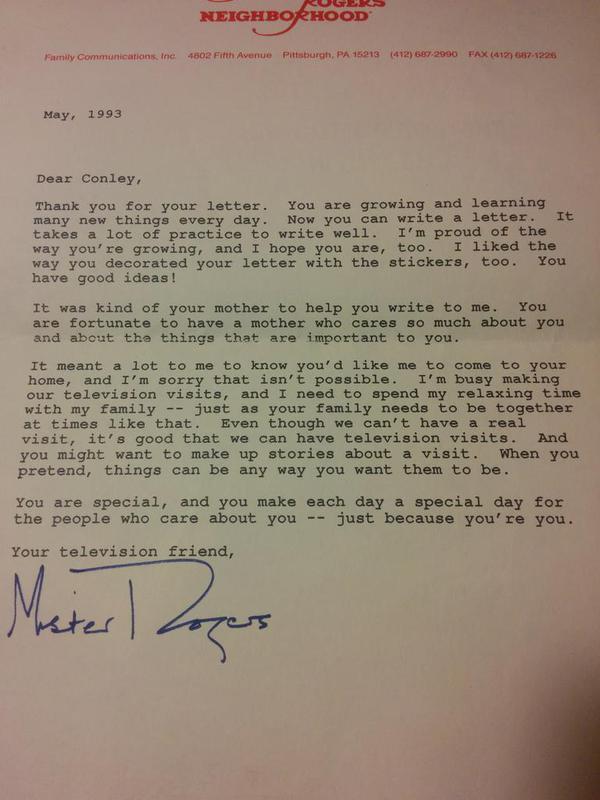
Conley Presler got a letter from Mr. Rogers.
You are special, and you make each day a special day for the people who care about you – just because you’re you.

That’s what’s so frightening. Because it feels wonderful. Sensory deprivation, when you need it most. It’s an off-switch from all that’s outside. And wherever you go, it stays with you.
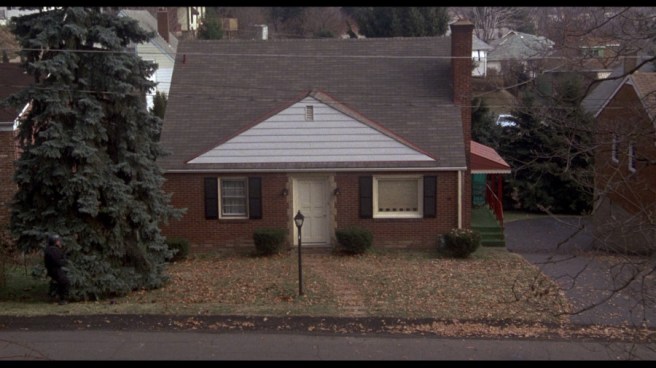
The Silence of the Lambs. Absurdly great movie. Its greatest strength is its exploration of institutional sexism and the constant, relentless challenge of demanding respect and getting her shit done without it. Combines some great slow-burn mystery/thriller tactics with occasional over-the-top violence and just enough sly humor. The pacing and the ties between scenes are brilliant. I also appreciate the small bits of foreshadowing and “warm-up” material (the view from the Belvedere, inkpen, creeper nightvision goggles, etc.) throughout.
If the experience is demoralizing and alienating, our community has squandered your potential. The tricky part is that the computer has no idea that you’re just a beginner.



 Mark Larson