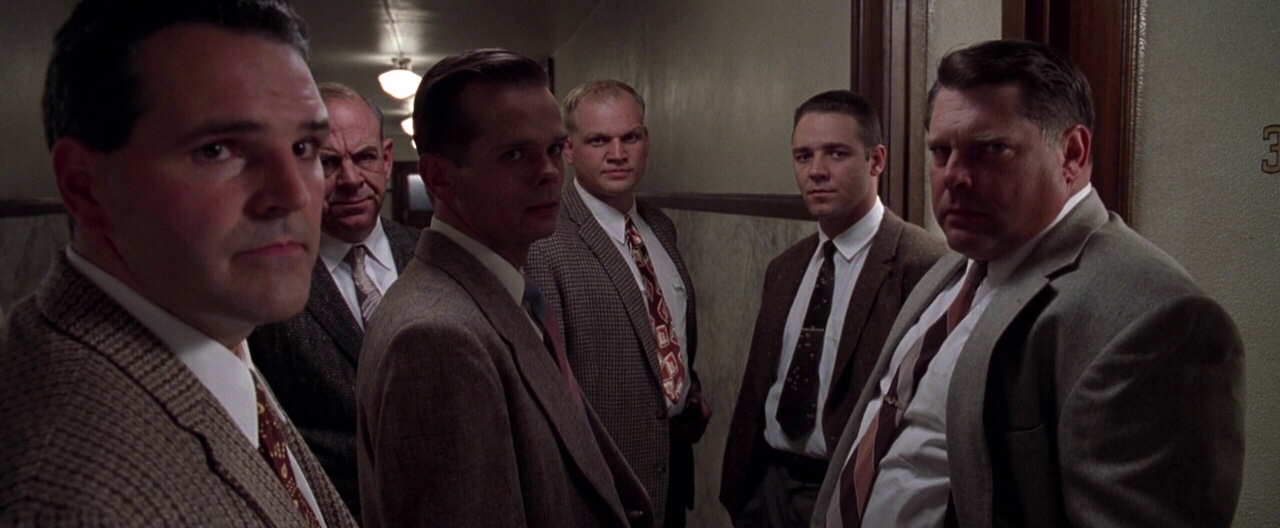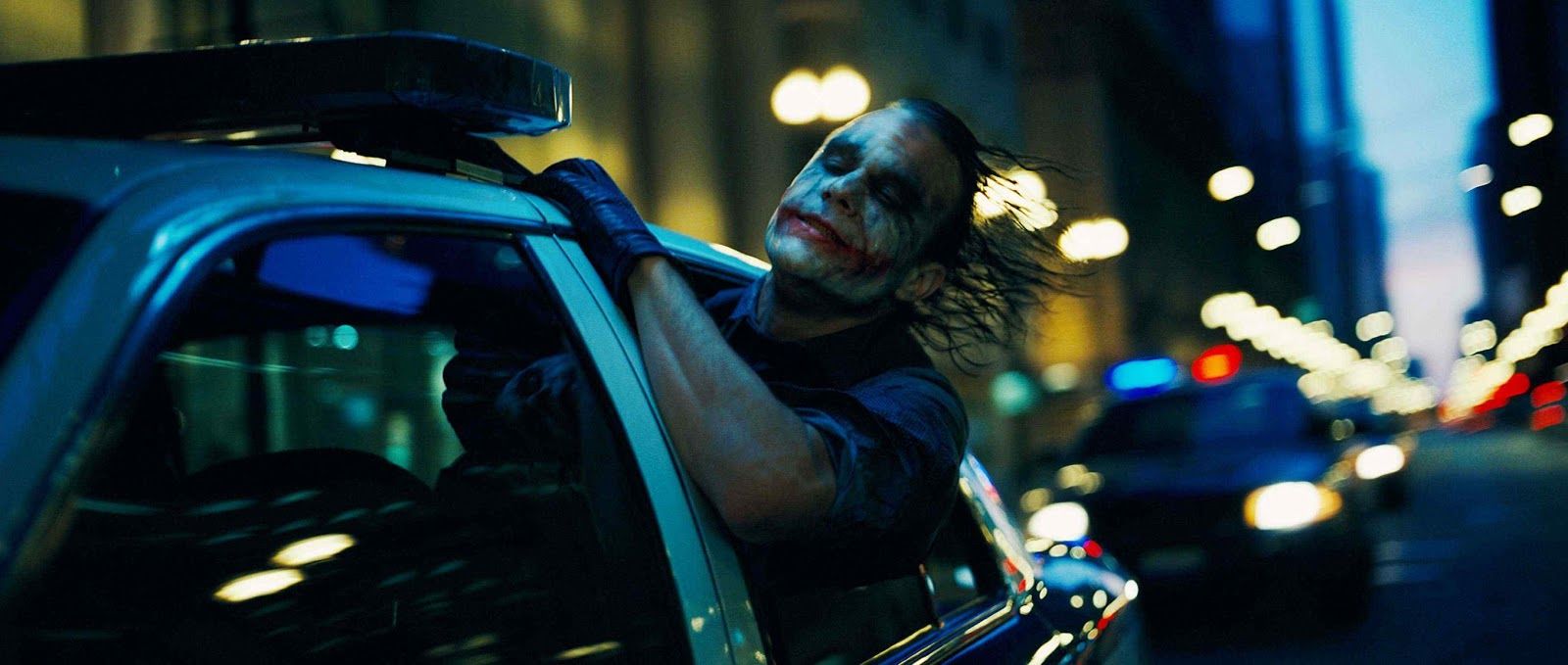
Heat. Fourth viewing. Can’t get enough of this movie. Filed under: Heat.
The Secret of Kells
The Secret of Kells. Gorgeous, but a little thin, story-wise. It focuses on Brendan, and hints at so many possibilities about creativity, religion, fear, duty, and so on… but only hints, and left me wanting more. Not sure there’s enough in here for kids, either, now that I think about it. Beautiful, though. I love that it embraces the frame and uses big chunks of the screen borders just for mood/decoration when it feels like it.
Sphinx
I read Anne Garréta’s Sphinx, and there’s a crazy Oulipian experiment going on here. Once you realize the constraint that makes this book strange and different, you can’t help but be impressed that it was 1) written and 2) translated well (shout-out to Deep Vellum). It’s a story of the narrator’s obsession and romance, “caught up in a love that was always uncompleting itself”. I enjoyed it.
The Inner Game of Tennis
I read Timothy Gallwey’s The Inner Game of Tennis, and really enjoyed it. It’s one of those “hub” books you come across every so often, where you realize there are spokes sticking out into a bunch of other stuff that’s been on your mind lately. Gallwey’s working theory here is about the internal dichotomy between “Self 1” and “Self 2” in performance. Self 1 is that voice inside, that part of you that “knows” how to do things, that instructs, urges, reprimands, exhorts. Self 2 is the one that does things. Given that Self 1 is so eager to “try hard” and correct and evaluate, successful practice and performance is about building trust for Self 2 and learning through practice and simple observation.
Letting go of judgments does not mean ignoring errors. It simply means seeing events as they are and not adding anything to them.
Mindfulness! There’s a flip side of that, too – Self 1 can be too pleased with itself when things are going well. Self-congratulations also takes you out of the moment. I really like this section, about avoiding criticism as we learn:
When plant a rose seed in the earth, we notice that it is small, but we do not criticize it as “rootless and stemless”. We treat it as a seed, giving it the water and nourishment required of a seed. When it first shoots up out of the earth, we don’t condemn it as immature and underdeveloped; nor do we criticize the buds for not being open when they appear. We stand in wonder at the process taking place and give the plant the care it needs at each stage of its development. The rose is a rose from the time it is a seed to the time it dies. Within it, at all times, it contains its whole potential.
Another interesting bit:
If you think you are controlled by a habit, then you will feel you have to try to break it. […] There is no need to fight old habits. Start new ones.
And I thought this was nicely phrased…
Natural focus occurs when the mind is interested.
Focus isn’t something we do, it’s something that results. I also like one final section on the games that people play aside from the actual game itself. We each tend to embrace different goals within the game: to be perfect, to be better than the other guy, to appear to be great, to bond, to learn, to be challenged, etc. Each of these motivations influence and contaminate and distract us from performance to some degree. Very highly recommended! Some other related posts around here: Never try to look cool and learn something at the same time. Nervous is good. Performance vs. editing. In order to have your best performance you have to be relaxed. That eye-on-the-object look. Reality not maybe is zen. Festina lente. Willing to be shit at things. Forever the 5-year-old of something. A good coach made you suffer in a way that suited you.
Carolyn Hax: A friend with seemingly everything still has time for fine whine
Classic Hax. You have to be pretty open-minded and self-aware to be able to sympathize with those who appear to be (and may objectively be) more fortunate than you are.
Or she’s genuinely unhappy. It can, of course, happen amid gaudy equity, lovely kids, an attentive spouse, a flexible career, stable finances and ambitious travel; just because these have societal value doesn’t mean they’re valuable to her. And just because the decisions were “very-thought-out” doesn’t mean they were the right ones for her. If a person’s baseline understanding of herself is a degree or two off, then her choices can lead her, over the years, hundreds of miles off-course.
Carolyn Hax: A friend with seemingly everything still has time for fine whine
Zen Mind, Beginner's Mind
I read Zen Mind, Beginner’s Mind, but it took me a while. When it’s good, it’s great. When it’s not, it’s a wispy, ambiguous snoozer. Seems like a book you really have to just vacuum up in one fell swoop… or save it and nibble every now and then. I took the slow route.
Crucial Conversations: Tools for Talking When the Stakes Are High
I re-read Crucial Conversations, a book I’d read for a previous job years and years ago. It’s proven its worth many times over. It’s all about creating safety when you need to hold people accountable, or have other awkward conversations where your counterpart’s defenses (and your own!) are going to be on high alert.
I was an undercover Uber driver
An interesting take I haven’t seen elsewhere. Plenty of stuff I’d never thought about before, like:
One way Uber has fewer costs than the taxi companies is that its drivers use their personal insurance policies as their primary coverage.
The companion piece has some interesting tips and tricks. Gotta know where the free parking and bathrooms are.
Predestination
Predestination. The brisk opening especially felt a little 1990s-ish, in a good way. I wish that pace had kept up. Reminded me of Dark City a bit. Love the costume and set details that keep you oriented. As with many labyrinthine movies, I’m curious about what the experience would be like if they told it straight, in one chronology. There’s so much story in this story that it sort of spoils itself, but… I liked it. How wrong can you go with time travel?
The Insider
The Insider. It’s awesome, like all the rest of Michael Mann’s stuff. He’s got such a great handle on momentum within and across scenes. Great cast across the board. Love the mini-breaks just to gaze and reflect and get in their heads a bit. (Filed under: Michael Mann).
Pitch Perfect
Pitch Perfect. A perfectly average and enjoyable modern musical comedy. So much of the humor is non sequitur. Anna Kendrick is a delight, as always. I won’t go out of my way to watch the sequel, though.
Grizzly Man
Grizzly Man. Second viewing. (The first.) I found myself less sympathetic and more disturbed and saddened the second time around.
A Girl Walks Home Alone at Night
A Girl Walks Home Alone at Night. Thrives more on effective mood and style and ambiance than narrative strength. Too cool for its own good, in both sense of the word (for my tastes), but it’s fresh, and I like the genre-blending across western, noir, and horror. Soundtrack.
The New Yorker’s Susan Orlean on the magic and mystery of writing
I also think if you’ve got writer’s block, you don’t have writer’s block. You have reporter’s block. You only are having trouble writing because you don’t actually yet know what you’re trying to say, and that usually means you don’t have enough information. That’s the signal to walk away from the keyboard, think about what it is that you don’t really know yet, and go do that reporting.
And also:
My father was really, really the author of my particular personality. He gave me a million different pieces of advice, but one that comes up all the time is: Anything that can be fixed with money isn’t worth crying over.
The New Yorker’s Susan Orlean on the magic and mystery of writing
Wolf in White Van
I read John Darnielle’s Wolf in White Van, but only 1/3 or so. Onward!
That Ominous Pulse
I’ve noticed a few recent movies with electro-ish scores that feature some sort of pulse or buzz or building waves of raw sound. Not especially melodic, just a persistent, engulfing motif that swallows you up.
From *Upstream Color*, one of my favorite soundtrack moments in recent memory, “As If It Would Have A Universal And Memorable Ending”:
From *Gone Girl*, “Consummation”:
And recently in *Ex Machina*, there’s the last minute or so of “Hacking/Cutting”:
The last two especially remind me of the opening few seconds of Yeezus. I’m sure I’m missing some other good examples?
True Grit
I read Charles Portis’ True Grit and was surprised how it manages to wring so much humor out of a pretty straight-shooting narrator. A quick read.
Ex Machina
Ex Machina. One of my favorites of the year so far. Oscar Isaac’s Nathan is awesome, flipping back and forth from intimidating to genial. He’s a brogrammer archetype. Excellent critique here of tech sexism and overreach. His overconfidence makes him too casual, flippant about the ethics. Domhnall Gleeson’s Caleb has his own blinders, about gender in particular. Some of the dialogue was tiresome. I wish they’d felt more courage to just let people talk, and let the audience get lost a bit (if needed) without preface and theory. On the other hand, I was pleasantly surprised how they handled the ending. I’d imagined something more traditional. Loved it. I’ve been listening to the soundtrack for a couple weeks now. Good stuff.
The Fault in Our Stars
I read John Green’s The Fault in Our Stars, and I was the guy wiping away tears and sniffling in public. Good one for all you softies out there. Recommended.
Why Everyone's Saying 'YAAAAAASSSSSS' Now
The word “yes” is an extremely dull way to express the varied sentiments of “yes.”