A book needn’t be an author’s life work; a squib of novel insight with supporting evidence is sufficient. If you are going to have something be your life’s work, let it be a book of your life’s wisdom. Some people have 300 page books devoted to trivial topics and blog posts devoted to their life’s wisdom; that seems ironic to me.
Tag: writing
I ended up in the Southwest because I knew that nobody had ever written about it. Besides Coca-Cola, the other thing that is universally known is cowboys and Indians. You can go to a mountain village in Mongolia and they’ll know about cowboys. But nobody had taken it seriously, not in 200 years. I thought, here’s a good subject. And it was.
People like to be educated about tragedies that they’ve never shaken their heads sadly over before.
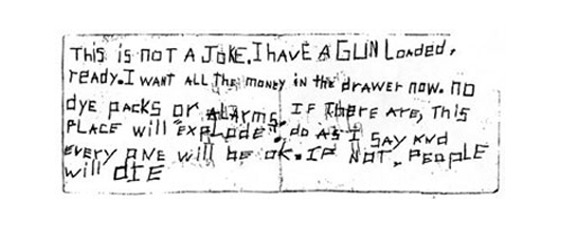
The Art of Persuasive Writing highlighting selections from Bank Notes. (via)
Writing as real-time performance « Snarkmarket
This is very interesting.
Think instead of a short story written with playback in mind. Written for playback. Typing speed and rhythm are part of the experience. Dramatic deletions are part of the story. The text at 2:20 tells you something about the text at 11:13, and vice versa. What appear at first to be tiny, tentative revisions turn out to be precisely-engineered signals. At 5:15 and paragraph five, the author switches a character’s gender, triggering a chain reaction of edits in the preceding grafs, some of which have interesting (and pre-planned?) side effects.
An Occurrence at Owl Creek Bridge
Classic short story by Ambrose Bierce.
Making the Clackity Noise

Dinner at El Bulli: The Greatest Restaurant in the World. I love the way photos and captions and videos are all blended together here, capturing a 30-course meal at El Bulli. It’s great storytelling + food porn.
It seems like the big distinction between good art and so-so art lies somewhere in the art’s heart’s purpose, the agenda of the consciousness behind the text. It’s got something to do with love. With having the discipline to talk out of the part of yourself that can love instead of the part that just wants to be loved.
David Foster Wallace, quoted in Greg Carlisle’s Liverpool Keynote Address on David Foster Wallace – Consider David Foster Wallace Conference, University of Liverpool, July 29-30, 2009
David Foster Wallace, on success
Bookselling This Week: What has been the most satisfying part about all your success?
David Foster Wallace: What do you mean by success?
BTW: Being accepted by a major publisher, all the acclaim.
DFW: Well there’s no better feeling than working hard at something and having it come out good, even before you put the stamp on it. But with all the public stuff… it’s sort of how you like people to be nice to your child. There’s so much bullshit to trying to get accepted – reading a mean letter from someone you don’t even know, getting rejected. I think you need to invest way more into how it feels when you are in a room writing by yourself.
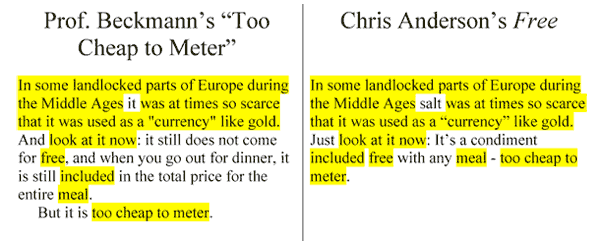
Chris Anderson’s Free Contains Apparent Plagiarism. Not sure what to make of the copying, but I like the presentation from the folks at VQR. Side-by-side comparison FTW!
It kind of puzzles me that people seem so keen on asking fiction writers straightforward interview-type questions, since if the fiction writers really thought interesting stuff could be talked about straightforwardly they probably wouldn’t have become fiction writers.
From an interview with David Foster Wallace. (via kottke)
35 Variations on a Theme from Shakespeare. Via Lined and Unlined, where you’ll find several cool pointers about the Oulipo literary group.
Oblivion (review: 4/5)

James Tanner’s Growing Sentences with David Foster Wallace is a nice parody of the writer’s style. A little absurd but kind of spot-on. Amusing for a little while, just like it always is when you’re watching someone else work. But if you get a chance to read a bit of Wallace (granted, I’m no expert—I’ve only got maybe 3-400 pages under my belt, but more is on the way), you get a sense of how crazy inventive this guy was, whether you like the stories or not.
In the stories in Oblivion, all these layers of ambiguity or inexactness juxtapose with excessive detail. I like the way the narrators/protagonists/Wallace zip around making associations and adjustments and corrections, sentences accumulating detail as you read. At its best it’s kind of like a mural with words. Everything, large, all at once.
Let me get fetishy with a couple sentences. My favorite bit in recent memory, from The Soul Is Not a Smithy:
I was often the first to register the sound of my father’s key in the front door. It took only four steps and a brief sockslide into the foyer to be able to see him first as he entered on a wave of outside air.
Four steps and a sockslide and a wave of outside air. Lord, that’s perfect. I’m willing to grant that I especially like that one because it makes me think of Dad, but I haven’t read something so compact but evocative in a long time. Here’s a funny bit from the opening story, Mister Squishy, mostly set in a market research office:
Attached to the breast pocket on the same side of his shirt as his nametag was also a large pin or button emblazoned with the familiar Mister Squishy brand icon, which was a plump and childlike cartoon face of indeterminate ethnicity with its eyes squeezed parly shut in an expression that somehow connoted delight, satiation, and rapacious desire all at the same time.
You can certainly read the verbosity as annoying and peacockish, but I can’t help but love seeing the product of a mind at work, like he’s been doing some serious thinking and noticing. Likewise, a couple dozen pages further into the story, some clever meeting room cynicism:
All that ever changed were the jargon and mechanisms and gilt rococo with which everyone in the whole huge blind grinding mechanism conspired to convince each other that they could figure out how to give the paying customer what they could prove he could be persuaded to believe he wanted…
I’d say Good Old Neon was the highlight for me, but the title story Oblivion gives it good competition. The first is imagined reflections before a suicide. The second a husband’s retelling of an ongoing dispute with his wife about his alleged snoring. Neither of those summaries do them justice. Read those two at least.
An interesting bit from a David Foster Wallace reading circa Infinite Jest:
I would go to halfway houses and just sit there. I lurked a lot. Nice thing about halfway houses is they are real run-down and real sloppy and you can just sit around. And the more you sit around looking uncomfortable and out of place, the more it looks like you belong there. Some of the people knew this [breaking and entering] stuff very well and they loved to talk about it. And nobody is as talkative as a drug addict who just had his drugs taken away.
It’s paired with a decent interview where he predicts the rise of curators and filters in internetland, and also mentions how important an editor is…
I, of course, get all wrapped up. ”I know. I’ll have an allusion to a Russian thing that’s half true and only people who speak Russian will know.” Great, you are now talking to exactly one person on the planet earth.
The last bit from a 1993 interview with David Foster Wallace [pdf] in Whiskey Island Magazine, some advice for young writers:
This is a long haul. Writing is a long haul. I’m hoping that none of the stuff that I’ve done so far is anywhere close to the best stuff I can do. Let’s hope we’re not fifty-five and doing the same thing. I’d say avoid burning out. You can burn out by struggling in privation and neglect for many years, but you can also bum out if you’re given a’ little bit of attention. People come to your hotel room and think you have interesting things to say. You can allow that to make you start to think that you can’t say anything unless it’s interesting. For me, 50% of the stuff I do is bad, and that’s just going to be the way it is, and if I can’t accept that then I’m not cut out for this. The trick is to know what’s bad and not let other people see it.
I wish I could find online Gerald Early’s essay, “Dancing in the Dark: Race, Sex, The South, and Exploitative Cinema”. It was far and away the best thing I read in Best African American Essays: 2009, but it looks like it’s hidden away in Issue 57 of the Oxford American, subscribers only.
In any case, Early talks about self-mythologizing Southern culture, American gothic, blaxploitation and sexual taboo. Case studies include D.W. Griffith films like The Birth of the Nation, His Trust, and His Trust Fulfilled; Gone with the Wind; I Spit on Your Grave; Free, White, and 21; Murder in Missippi; Black Like Me; and To Kill a Mockingbird. Read it if you can find it.
Robert Kennedy Saved from Drowning, a short story by Donald Barthelme.
From an interview with Jimmy Carter:
Q: You’ve written memoirs, a historical novel, a children’s book, poetry—all while running the Carter Center. How many cups of coffee do you drink a day?
A: Well, I get up early. (Laughs.) I’m a farmer, still. I get up around 5 o’clock in the morning when I’m home, so I have three hours of good time to think and write before the normal events start happening in Atlanta at the Carter Center.
Good news: back in October I wrote up my notes from Umberto Eco’s lecture on “How I Write”. That one and his other 3 Ellmann Lectures are now available on iTunesU.
 Mark Larson