“Pick up just about any novel and you’ll find a throwaway reference to a dog, barking in the distance.” (via)
“Somewhere a Dog Barked” – By Rosecrans Baldwin – Slate Magazine
“Pick up just about any novel and you’ll find a throwaway reference to a dog, barking in the distance.” (via)
“Somewhere a Dog Barked” – By Rosecrans Baldwin – Slate Magazine
Though it’s unlikely you’ll write something nobody has ever heard of, the way you have a chance to compete is in the way you say it.

Jack Kerouac: Essentials of Spontaneous Prose. 1958. (via walkwhilereading)
CENTER OF INTEREST Begin not from preconceived idea of what to say about image but from jewel center of interest in subject of image at moment of writing, and write outwards swimming in sea of language to peripheral release and exhaustion.
1. Scribbled secret notebooks, and wild typewritten pages, for yr own joy
2. Submissive to everything, open, listening
3. Try never get drunk outside yr own house
4. Be in love with yr life
5. Something that you feel will find its own form
6. Be crazy dumbsaint of the mind
7. Blow as deep as you want to blow
8. Write what you want bottomless from bottom of the mind
9. The unspeakable visions of the individual
10. No time for poetry but exactly what is
11. Visionary tics shivering in the chest
12. In tranced fixation dreaming upon object before you
13. Remove literary, grammatical and syntactical inhibition
14. Like Proust be an old teahead of time
15. Telling the true story of the world in interior monolog
16. The jewel center of interest is the eye within the eye
17. Write in recollection and amazement for yourself
18. Work from pithy middle eye out, swimming in language sea
19. Accept loss forever
20. Believe in the holy contour of life
21. Struggle to sketch the flow that already exists intact in mind
22. Dont think of words when you stop but to see picture better
23. Keep track of every day the date emblazoned in yr morning
24. No fear or shame in the dignity of yr experience, language & knowledge
25. Write for the world to read and see yr exact pictures of it
26. Bookmovie is the movie in words, the visual American form
27. In praise of Character in the Bleak inhuman Loneliness
28. Composing wild, undisciplined, pure, coming in from under, crazier the better
29. You’re a Genius all the time
30. Writer-Director of Earthly movies Sponsored & Angeled in Heaven(via Alabama Arkansas)
What writers have is a license and also the freedom to sit—to sit, clench their fists, and make themselves be excruciatingly aware of the stuff that we’re mostly aware of only on a certain level. And if the writer does his job right, what he basically does is remind the reader of how smart the reader is. Wake the reader up to stuff that the reader’s been aware of all the time.
“Bill Simmons has set a new and unbeatable standard by writing like a fan—just far better.”
I like #2: “Read people whose ideas or research you understand value.”
Five tips for writing non-fiction | The Undercover Economist | FT.com
Amazing archive of interviews with authors from the 80s and 90s. A must-bookmark.
Woah.
Lately, I’ve been wondering if sitting quietly in a café, pretending to read a newspaper, and not writing is the most earnest expression in our age: no echoes of language, nothing to reblog, just pure unmitigated self sitting with self. I might, after a time of blank staring, find myself constructing a sentences in my head, maybe a paragraph, simply letting the words roll around in my mind. I will not. I repeat. I will not write them down. They are my secret sentences, not yours.

Consider David Foster Wallace. Book due summer 2010, a collection based on critical essays from last summer’s conference. (via)
Archive of Salinger’s stories for the New Yorker. (via)
Good travel writing contends honestly and openly with presumptions of who is traveling and why… and it does not treat local people as though their lives were just incidental, conveniently or inconveniently producing conditions for others’ escapism.
Newspaper articles are too long.
The combinatorial agility of words, the exponential generation of meaning once they’re allowed to go to bed together, allows the writer to surprise himself, makes art possible, reveals how much of Being we haven’t yet encountered.
The central failure of these interviews, like so many, is that they operate from the proposition, “what would my readers find interesting?” instead of “what does my subject find interesting?”
And suddenly everything he had been doing stood up…
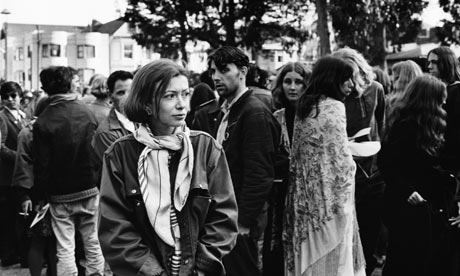
To shift the structure of a sentence alters the meaning of that sentence, as definitely and inflexibly as the position of a camera alters the meaning of the object photographed. …. The arrangement of the words matters, and the arrangement you want can be found in the picture in your mind. …. The picture tells you how to arrange the words and the arrangement of the words tells you, or tells me, what’s going on in the picture.

 Mark Larson