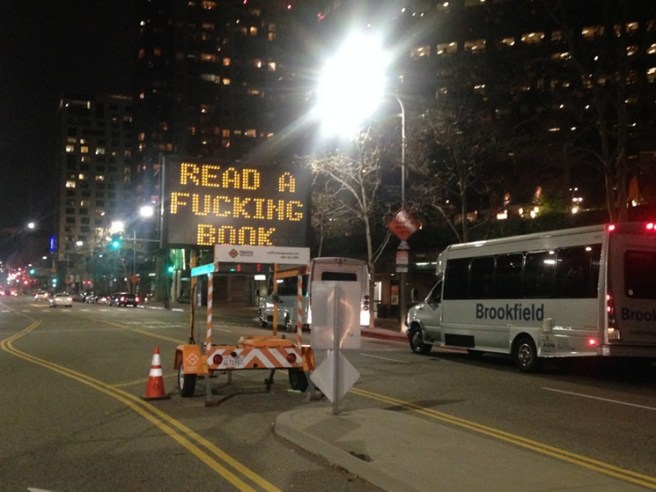
“READ A FUCKING BOOK” hacked LED street sign in downtown LA
According to the Paris Review, “Indie booksellers are reporting a noticeable uptick in sales.”
“READ A FUCKING BOOK” hacked LED street sign in downtown LA
According to the Paris Review, “Indie booksellers are reporting a noticeable uptick in sales.”
If you read a book, how many other related or similar books does it make you order? […] If you don’t end your read with some additional book orders, maybe you need to ask yourself what exactly went wrong.
And this is worth pondering:
How about a book review outlet which refuses to consider the books under consideration, but rather considers and evaluates what they will induce you to read next?
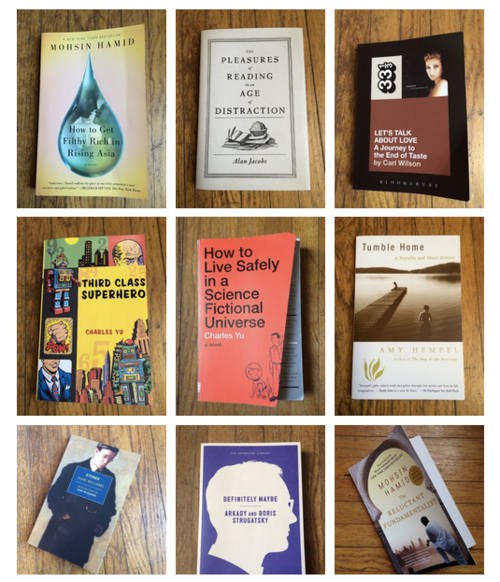
Well, there’s always 2015. What follows are the best of a pitiful 30 (?!) books I read in 2014, which is nowhere near previous glorious heights. These are in a very particular order – as more discerning readers will see – gently arranged for optimal reading pleasure. Don’t skim or jump around, or you’ll ruin the whole thing. All links are to my own notes on the books, such as they are.
I hope your year is filled with books you enjoy.
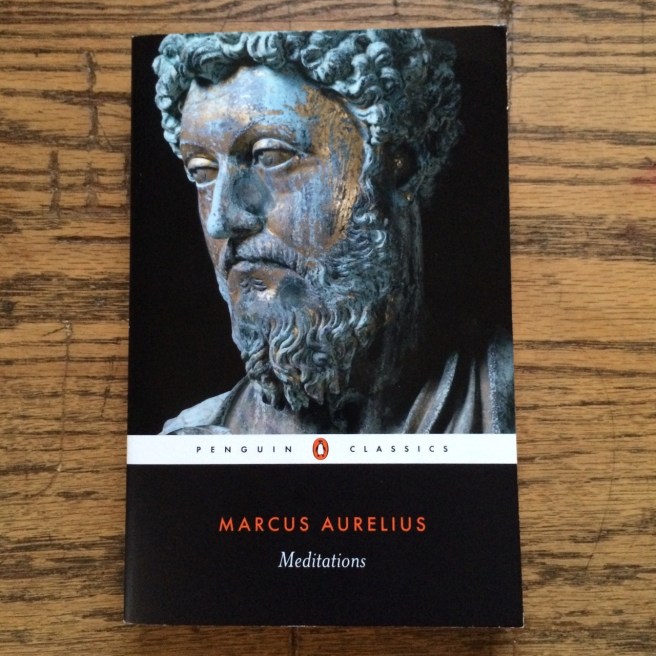
I re-read Marcus Aurelius’ Meditations a couple days ago, a New Year’s tradition. I also spent some more time digging in the appendices in this book, and comparing my notes from 2013. And, as I did last year, I tweeted some quotes and paraphrases that struck me as I read it this time around. A few of those, with book/chapter references:
Expecting nothing, shirking nothing, […] and a heroic truthfulness in all that you say and mean – then you will lead a good life. And nobody is able to stop you. (3.12)
Whenever you want to cheer up, think of the admirable qualities and virtues of your friends. (6.48)
That last one makes me think of Seneca, especially, and some other good stuff filed under my friends tag.
Do not be ashamed of being helped. […] It is human nature to love even those who trip and fall.“ (7.7 and 7.22)
Without frenzy, without apathy, without pretense. (7.69)
Prayer about things you want in the world < Prayer to be free from fear, desire, regret. (9.40)
Kindness is invincible. (11.18.9)
I appreciated his personal journaling this year as much as ever, but also felt like some things were missing – because, selfishly, he’s writing for himself and not for me specifically. But I take some comfort in seeing him grapple with his own shortcomings as I work on my own, and try to live well despite them.
Be sure to check out Austin Kleon’s thoughts from his own re-reading. I’ve got another re-read coming up shortly, just as soon as the postman delivers the Hays translation that Ryan Holiday recommends. Filed under: Stoicism.

I read a lot of Ben Bova’s Cyberbooks, but not all of it. There is a certain kind of joy in reading about science fiction that’s no longer fiction. In this case, ebooks and tablets and the future of publishing as seen from 1989. Ultimately it was a bit more light and meandering than I wanted. DNF.

I read John McPhee’s book A Sense of Where You Are. Short and sweet. Good line:
When he wastes time, he wastes it hurriedly rather than at leisure.
I wish McPhee would write about sports more often. Levels of the Game was also really good. Filed under: John McPhee.
On re-reading:
Reading and experience train your model of the world. And even if you forget the experience or what you read, its effect on your model of the world persists. Your mind is like a compiled program you’ve lost the source of. It works, but you don’t know why.
[…] Reading and experience are usually “compiled” at the time they happen, using the state of your brain at that time. The same book would get compiled differently at different points in your life. Which means it is very much worth reading important books multiple times. I always used to feel some misgivings about rereading books. I unconsciously lumped reading together with work like carpentry, where having to do something again is a sign you did it wrong the first time. Whereas now the phrase “already read” seems almost ill-formed.
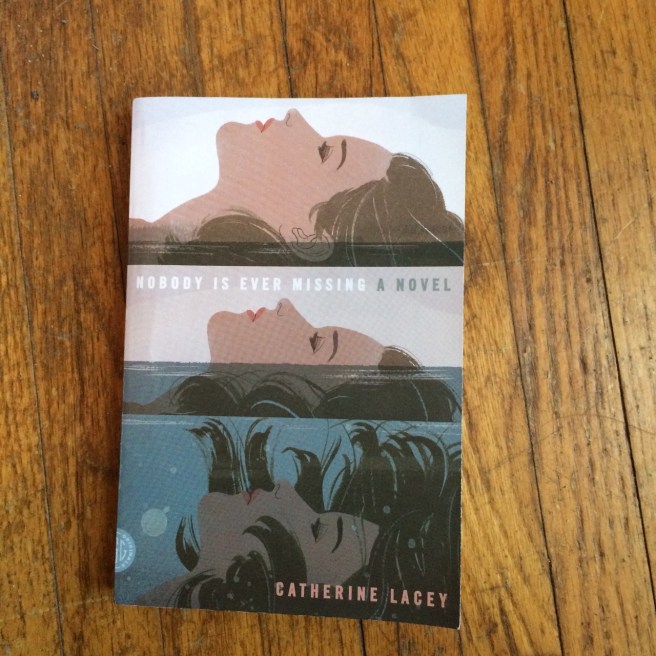
I read 2/3 or so of Catherine Lacey’s Nobody Is Ever Missing, but I didn’t finish. If I were in a different book zone, I’d probably appreciate more how Lacey plays with meaning, and the layering, rewinding, sentence-paragraphs that follow our hero’s thoughts.
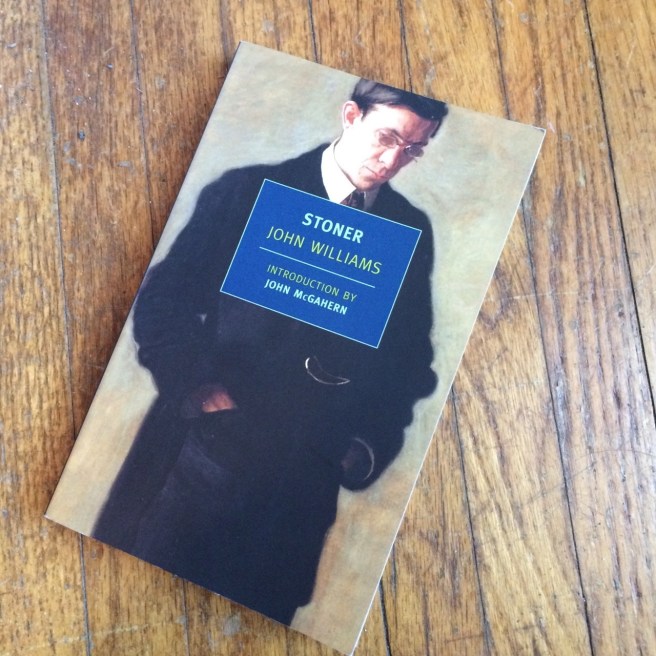
I read John Williams’ book Stoner, and found it strangely mesmerizing. So direct and plain and sturdy and beautiful. A couple lines that liked, that also capture something of its directness. At dinner with friends:
They became a little drunk; they laughed vaguely and sentimentally; they saw each other anew.
While the hero rehabs his house and office, the importance of the spaces we create:
As he repaired his furniture and arranged it in the room, it was himself he was slowly shaping, it was himself that he was putting into a kind of order, it was himself he was making possible.
Other smart people agree that this book is great. It was Dean Peterson’s write-up that gave me the final nudge to buy it. Got on my radar when I heard about it from Austin Kleon, Ben Casnocha, Steve Almond, Tim Kreider, et al.
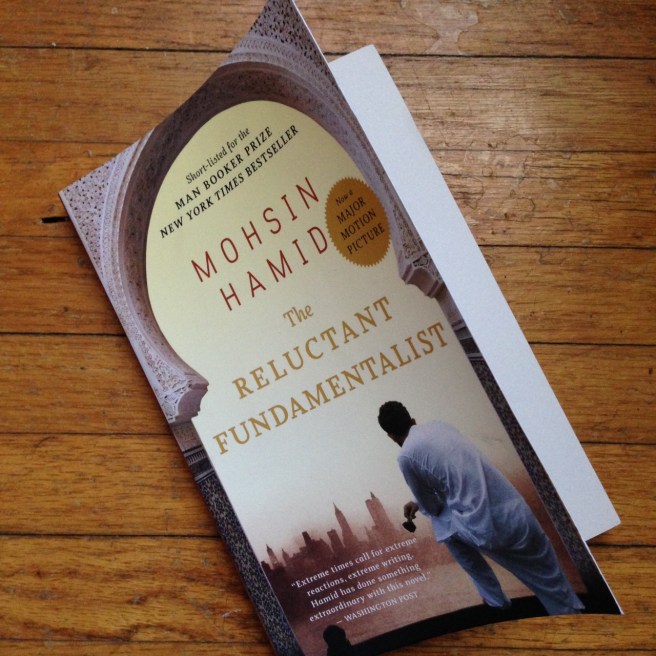
I read Mohsin Hamid’s The Reluctant Fundamentalist, and I’m still a bit dizzied by how great a writer this dude is. Earlier this year I stormed through How to Get Filthy Rich in Rising Asia, which “I loooooooved”. This one is more melancholy, but have to give high recommendations to both.

I read Dashiel Hammett’s book The Thin Man, and quite enjoyed it. Awesome story of a lovable couple casually working their way through a murder case that’s too amusing to ignore. Has some good droll observations about how people work, like the social boilerplate around saying goodbye:
We shook hands and make polite speeches all around and they went away.
Nice turns of phrase, like this bit after an underling compliments his boss:
“And what a hunch!” Flint exclaimed, practically top-heavy with admiration.
And I’m pretty sure this is one of the greatest paragraphs in the English language:
When we stopped at Reuben’s for coffee on our way home at four the next morning, Nora opened a newspaper and found a line in one of the gossip columns: “Nick Charles, former TransAmerica Detective Agency ace, on from Coast to sift the Julia Wolf murder mystery”; and when I opened my eyes and sat up in bed some six hours later Nora was shaking me and a man with a gun in his hand was standing in the bedroom doorway.
How could you read that, and not go immediately to the next chapter? I watched the movie right away, too, like I did with Gone Girl (movie, book). Both recommended.

I tried to read Gary Shteyngart’s Super Sad True Love Story, but it just didn’t sit right. DNF.
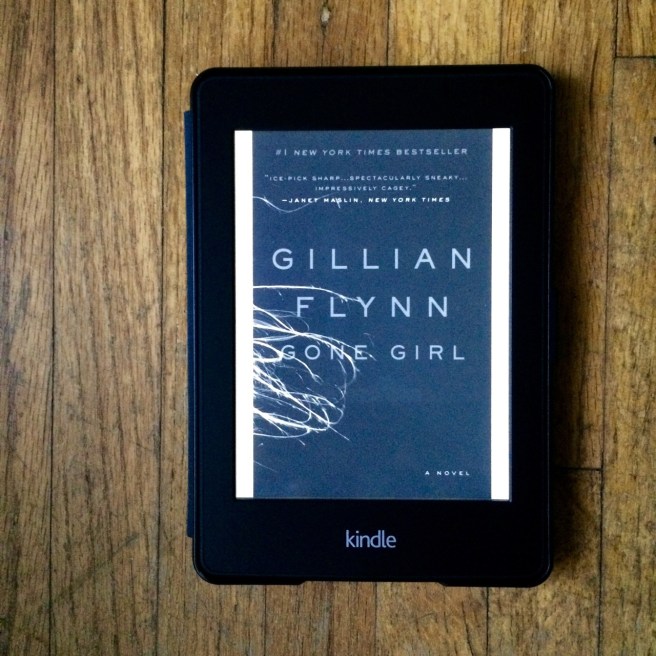
I read Gillian Flynn’s Gone Girl, and really really liked it. It was a welcome change of pace from some of the other recent reading drudgery I’ve put myself through. Just really compelling in its own right. I love when you find an addictive page-turn-y book, whatever the genre, and it just makes you want to read more in general.
I only read this book because I heard that David Fincher had his recent movie adaptation coming out. I made it about ~80-85% into the book, and I just couldn’t wait any more before I saw the movie. Kind of a fun way to experience this particular one. I knew nothing about the story, but always had Affleck and Pike’s faces in mind as I was reading, but none of their movements or mannerisms I know from the movie now. I was already well past one big turn in the story, but one climactic scene in the movie tops just about everything. Recommended.

I read Andre Dubus III’s book Dirty Love, but only up to page 100-something. DNF. Just not feelin’ the ennui/melancholy/disappointment thing right now.

I read Adam Phillips’ book Missing Out: In Praise of the Unlived Life, and I wish I’d enjoyed it more. I probably would have, if only I were more familiar with Freud and Shakespeare (King Lear and Othello are frequently discussed). I’ve read a couple of his others that I really liked (Going Sane and On Kindness).
This one a lot of “What does it mean when we say ____?” kind of stuff, and a good bit of historical/etymological looks at how our our language has developed ideas like “getting away with it” or “getting out of it”. The best recurring theme for me was the idea of omniscience, and how it relates to frustration (assuming we know what we need; reluctance to seek advice or try new things), escapism/prediction (assuming we know what we’re avoiding, or that we are in fact avoiding it), tyranny (false confidence about someone else’s needs), avoidance (“we mustn’t let knowing do the work of acknowledging”), etc.
It seemed a bit more impersonal and less psychological than what I remember of the other two. Still, some good stuff here and there, and Phillips has a knack for aphorism.

I read Charles Yu’s How to Live Safely in a Science Fictional Universe, and I loved it in the end. I might even say it changed my life in a few pointed ways. It’s a mildly science fictional story that pairs a good sense of humor with some great thinking on memory, nostalgia, wistfulness, and stories we keep telling ourselves.
Time does heal. It will do so whether you like it or not, and there’s nothing anyone can do about it. If you’re not careful, time will take away everything that ever hurt you, everything you have ever lost, and replace it with knowledge. Time is a machine: it will convert your pain to experience.
The writing is slightly distant and self-aware because it’s more fun that way. Like this heavily-footnoted passage, where he’s describing the time machine he lives/works in, which leads to a minor footnote on particle physics:
This unit, this phone booth, this four-dimensional person-sized laboratory, I live in it, but, over time, through diffusion and breathing and particle exchange, the air in here, the air that travels with me, it is me, and I’m it.* The exhaled carbon dioxide that gets recycle and processed by the pump, the oxygen-rich air that is piped back in, these molecules* move around me, and in me, and then back out, all* of it* the same matter.* I breath it* in, it* is in my bloodstream. Sometimes, they* are part of me, sometimes, I am part of them.* Sometimes, they* are in my sandwich,* […]
There are plenty of little aphoristic moments that come up, like…
Life is to some extent an extended dialogue with your future self about how exactly you are going to let yourself down over the coming years.
…or like this aside on growing up in a household with parents arguing and fighting:
Call it the law of conservation of parental anger […] bouncing around, some of it reflected, some of it absorbed by the smaller bodies in the house.
One of my favorite turns of phrase came up in one travel scene, picking up on that swelling, aching beautiful uplift you can feel when flying:
As the machine banks into its approach and we angle into our steep descent spiral, looking down into the city, I have, for a minute or two, some clarified sense of scale, the proper balance of awe and possibility, a kind of airplane courage […]
There’s also some clever meta-textual work relating to the physical book itself and some interludic commentary (like how people in recreational alternate universes can qualify as “protagonists” or even “heroes” in these fantasylands, or diagrams that clarify the plot, background sketches on history/setting, magazine tips for time travel, etc.).
I have to acknowledge that there’s a definite patch just after the halfway point where it dragged a bit for me. (You can see him getting carried away, piling ideas between commas.) But the opening half is so fun, and the final sprint led to a goosebumps ending for me. Very much recommended. Earlier this spring I also really liked Yu’s collection of short stories, Third Class Superhero.

I read Phil Jackson’s Sacred Hoops, and mostly liked the more biographical stuff. His tales of the early days (in a Pentecostal family in North Dakota) reminded me of my father and grandfather, devoted Christians growing up in the midwest and geeking about about basketball and eventually other spiritual traditions. One nice treat of reading books like this – recent history when there are always cameras rolling – is the ability to check YouTube for the highlights.

I read some Selected Poems by Emily Dickinson, which is a good way to fill little pockets of time here and there. Some of my favorites:
If you’re hankerin’ for some Emily Dickinson set to music, check out John Adams’ orchestral piece Harmonium, which uses Donne’s Negative Love in addition to Dickinson’s Because I could not stop for Death and Wild Nights – Wild Nights!. It’s a phenomenal piece of music.
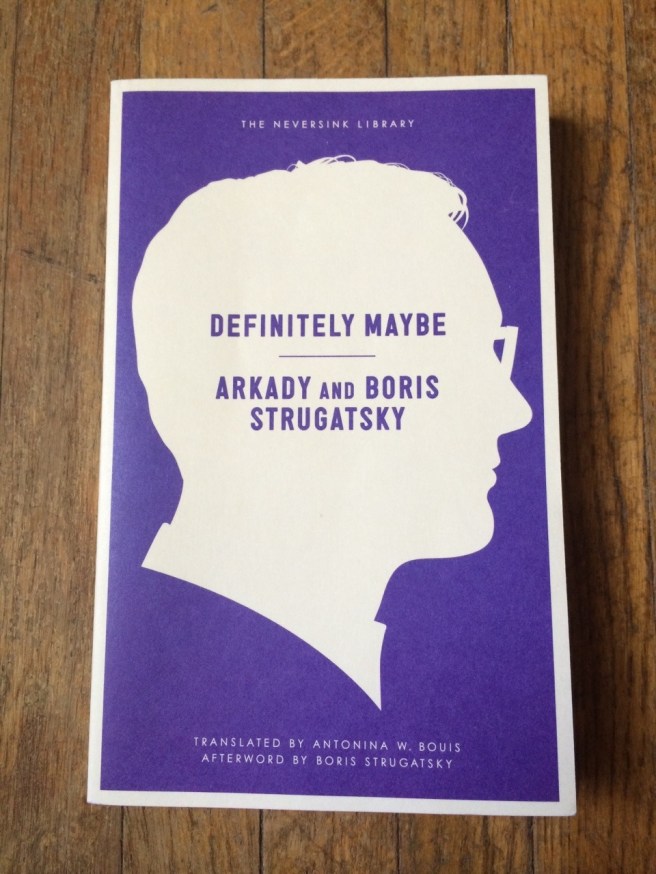
I read the Strugatsky Brothers’ book Definitely Maybe, and enjoyed its kooky Russian brand of paranoia. I love how transitions between scenes and chapters just drop off and pick up mid-sentence. I heard about this one from my buddy Will, book-devourer and publisher, who also tipped me off to that Solaris translation I wrote about a few weeks ago.
 Mark Larson