
I tried to read Gary Shteyngart’s Super Sad True Love Story, but it just didn’t sit right. DNF.
I tried to read Gary Shteyngart’s Super Sad True Love Story, but it just didn’t sit right. DNF.
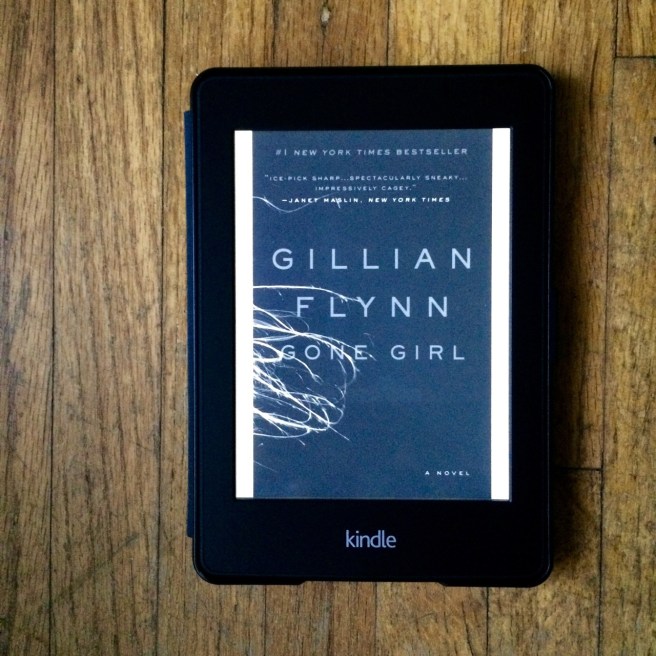
I read Gillian Flynn’s Gone Girl, and really really liked it. It was a welcome change of pace from some of the other recent reading drudgery I’ve put myself through. Just really compelling in its own right. I love when you find an addictive page-turn-y book, whatever the genre, and it just makes you want to read more in general.
I only read this book because I heard that David Fincher had his recent movie adaptation coming out. I made it about ~80-85% into the book, and I just couldn’t wait any more before I saw the movie. Kind of a fun way to experience this particular one. I knew nothing about the story, but always had Affleck and Pike’s faces in mind as I was reading, but none of their movements or mannerisms I know from the movie now. I was already well past one big turn in the story, but one climactic scene in the movie tops just about everything. Recommended.

I read Andre Dubus III’s book Dirty Love, but only up to page 100-something. DNF. Just not feelin’ the ennui/melancholy/disappointment thing right now.

I read Adam Phillips’ book Missing Out: In Praise of the Unlived Life, and I wish I’d enjoyed it more. I probably would have, if only I were more familiar with Freud and Shakespeare (King Lear and Othello are frequently discussed). I’ve read a couple of his others that I really liked (Going Sane and On Kindness).
This one a lot of “What does it mean when we say ____?” kind of stuff, and a good bit of historical/etymological looks at how our our language has developed ideas like “getting away with it” or “getting out of it”. The best recurring theme for me was the idea of omniscience, and how it relates to frustration (assuming we know what we need; reluctance to seek advice or try new things), escapism/prediction (assuming we know what we’re avoiding, or that we are in fact avoiding it), tyranny (false confidence about someone else’s needs), avoidance (“we mustn’t let knowing do the work of acknowledging”), etc.
It seemed a bit more impersonal and less psychological than what I remember of the other two. Still, some good stuff here and there, and Phillips has a knack for aphorism.

I read Charles Yu’s How to Live Safely in a Science Fictional Universe, and I loved it in the end. I might even say it changed my life in a few pointed ways. It’s a mildly science fictional story that pairs a good sense of humor with some great thinking on memory, nostalgia, wistfulness, and stories we keep telling ourselves.
Time does heal. It will do so whether you like it or not, and there’s nothing anyone can do about it. If you’re not careful, time will take away everything that ever hurt you, everything you have ever lost, and replace it with knowledge. Time is a machine: it will convert your pain to experience.
The writing is slightly distant and self-aware because it’s more fun that way. Like this heavily-footnoted passage, where he’s describing the time machine he lives/works in, which leads to a minor footnote on particle physics:
This unit, this phone booth, this four-dimensional person-sized laboratory, I live in it, but, over time, through diffusion and breathing and particle exchange, the air in here, the air that travels with me, it is me, and I’m it.* The exhaled carbon dioxide that gets recycle and processed by the pump, the oxygen-rich air that is piped back in, these molecules* move around me, and in me, and then back out, all* of it* the same matter.* I breath it* in, it* is in my bloodstream. Sometimes, they* are part of me, sometimes, I am part of them.* Sometimes, they* are in my sandwich,* […]
There are plenty of little aphoristic moments that come up, like…
Life is to some extent an extended dialogue with your future self about how exactly you are going to let yourself down over the coming years.
…or like this aside on growing up in a household with parents arguing and fighting:
Call it the law of conservation of parental anger […] bouncing around, some of it reflected, some of it absorbed by the smaller bodies in the house.
One of my favorite turns of phrase came up in one travel scene, picking up on that swelling, aching beautiful uplift you can feel when flying:
As the machine banks into its approach and we angle into our steep descent spiral, looking down into the city, I have, for a minute or two, some clarified sense of scale, the proper balance of awe and possibility, a kind of airplane courage […]
There’s also some clever meta-textual work relating to the physical book itself and some interludic commentary (like how people in recreational alternate universes can qualify as “protagonists” or even “heroes” in these fantasylands, or diagrams that clarify the plot, background sketches on history/setting, magazine tips for time travel, etc.).
I have to acknowledge that there’s a definite patch just after the halfway point where it dragged a bit for me. (You can see him getting carried away, piling ideas between commas.) But the opening half is so fun, and the final sprint led to a goosebumps ending for me. Very much recommended. Earlier this spring I also really liked Yu’s collection of short stories, Third Class Superhero.

I read Phil Jackson’s Sacred Hoops, and mostly liked the more biographical stuff. His tales of the early days (in a Pentecostal family in North Dakota) reminded me of my father and grandfather, devoted Christians growing up in the midwest and geeking about about basketball and eventually other spiritual traditions. One nice treat of reading books like this – recent history when there are always cameras rolling – is the ability to check YouTube for the highlights.

I read some Selected Poems by Emily Dickinson, which is a good way to fill little pockets of time here and there. Some of my favorites:
If you’re hankerin’ for some Emily Dickinson set to music, check out John Adams’ orchestral piece Harmonium, which uses Donne’s Negative Love in addition to Dickinson’s Because I could not stop for Death and Wild Nights – Wild Nights!. It’s a phenomenal piece of music.
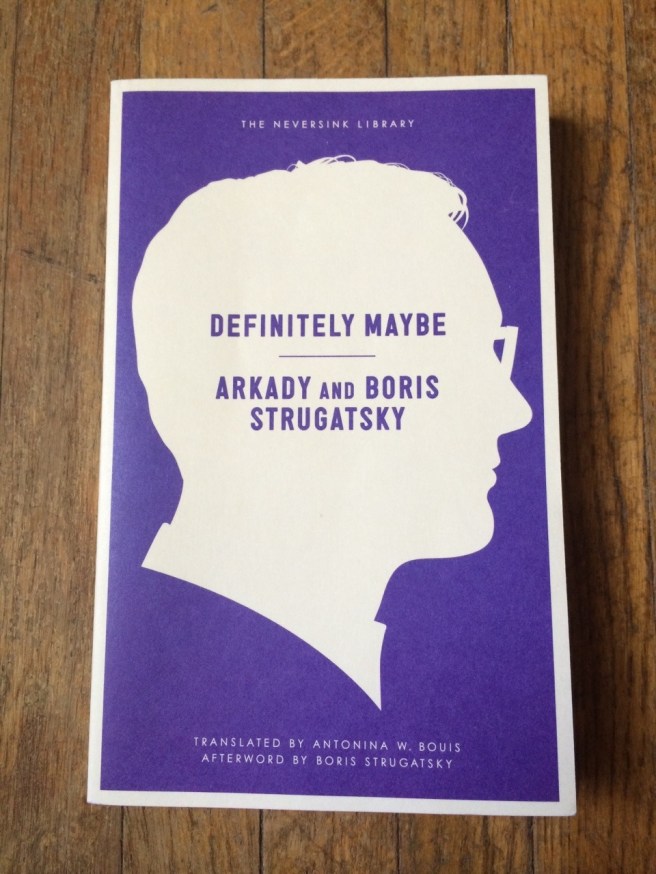
I read the Strugatsky Brothers’ book Definitely Maybe, and enjoyed its kooky Russian brand of paranoia. I love how transitions between scenes and chapters just drop off and pick up mid-sentence. I heard about this one from my buddy Will, book-devourer and publisher, who also tipped me off to that Solaris translation I wrote about a few weeks ago.

I read Virginia Woolf’s Flush, a biography of Elizabeth Barrett Browning’s cocker spaniel. We grew up with two cocker spaniels (first Nugget, then Rusty, and I still take pride in choosing such good names), so I was rooting for this one from the start. It’s short and breezy and completely charming.
The true philosopher is he who has lost his coat but is free from fleas.
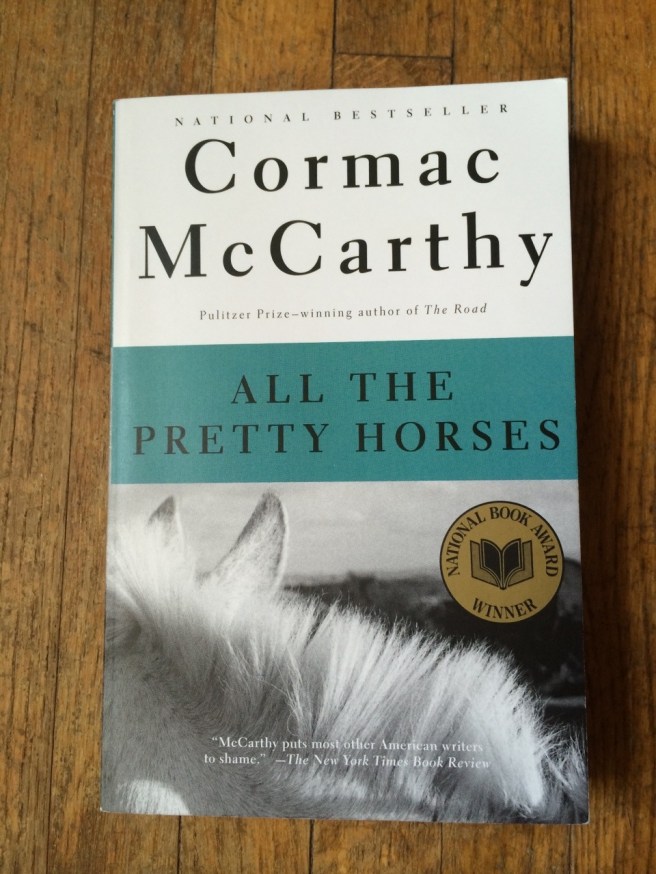
I read Cormac McCarthy’s All the Pretty Horses. I was disappointed that I didn’t learn a bunch of words like I did when reading Blood Meridian. I’m pretty sure No Country for Old Men is my favorite of his, followed by Blood Meridian and then The Road and then this one.

I read Grégoire Chamayou’s Manhunts. I may not have given it a fair shake – it has a way more academic bent than what I was in the mood for – but there are some neat ideas here. The most useful:
Every hunt is accompanied by a theory of its prey that explains why, by virtue of what difference, of what distinction, some men can be hunted and others not.
One of the better parts of reading this wasn’t the book itself, but how it related to other things I’ve come across. Manhunter, clearly, and how pursuit puts one’s soul at peril. Njál’s Saga frequently deals with banishment and outlaws, vengeance and vulnerability. Also the book Columbine and other events like the OKC bombing and Isla Vista, and how theories of exclusion always follow closely behind. Zero Dark Thirty, too.

I read a lot of The Collected Stories of Amy Hempel, but not all of them. I liked the ones I read, and still think that previous collection, Tumble Home, is great. But I think I was becoming a little numb. Worth picking up again later.

I read Stanisław Lem’s Solaris (the new Bill Johnston translation, grade-A uncut straight from the Polish), and enjoyed it for the most part. Not available in paper, so I finally used this Kindle gadget thing.
This is a book for ideas. The writing isn’t too special on its own, on a sentence and paragraph level. I could have done with less of the spinning off into academic/history tangents, but I suppose they have their purpose. Reminds me of Borges a bit, that spirit of developing gobs and gobs of history and references. I think the spirit is more ironic here, underscoring how the knowledge of Solaris that humans gathered and theorized for generations really amounts to so little.
Now I really want to watch both movies again. I read a lot of this while listening to the soundtrack for The Fountain, which makes a good pairing.
Another Lem book I really, really liked was Imaginary Magnitude, which, as a collection of… stories?… offers a lot more variety and more opportunities to have your mind blown.
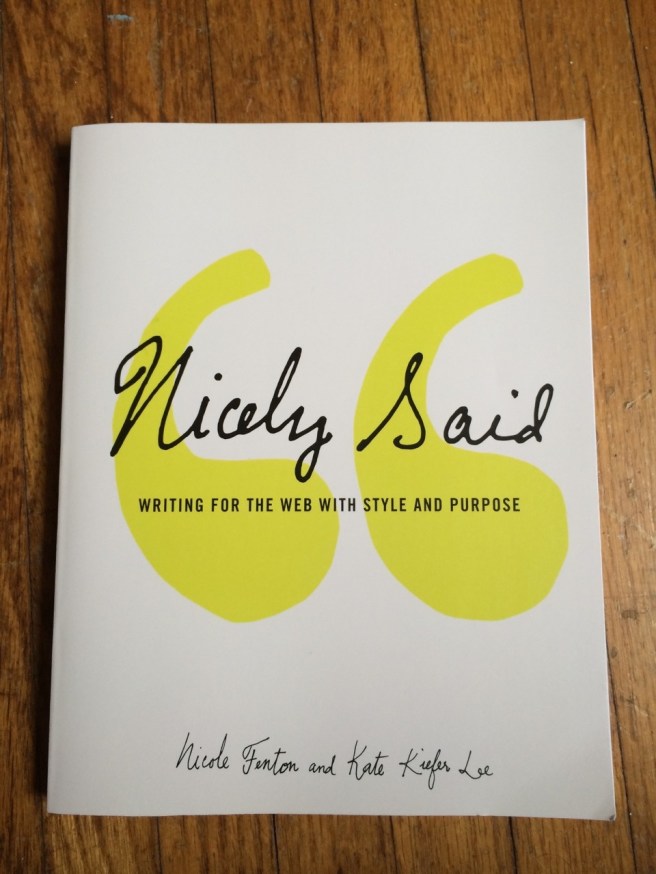
I read Nicole Fenton and Kate Kiefer Lee’s new book Nicely Said: Writing for the Web with Style and Purpose. Now that I think of it, that subtitle goes against just about everything this tumblr stands for. Good friendly guide, especially if you need advice more along the lines of project structure and how to think about what you’re doing, more so than nuts-and-bolts writing advice.

I read John Vaillant’s book The Golden Spruce: A True Story of Myth, Madness, and Greed on Ryan Holiday’s recommendation. The writing was a bit too overstuffed/awestruck for my tastes sometimes, but there’s some good material in there about the history of the Pacific Northwest and the rise of the modern logging industry.
An even better book about man vs. nature: Vaillant’s The Tiger, which is absolutely incredible. I tumbled a couple good excerpts a few years ago.
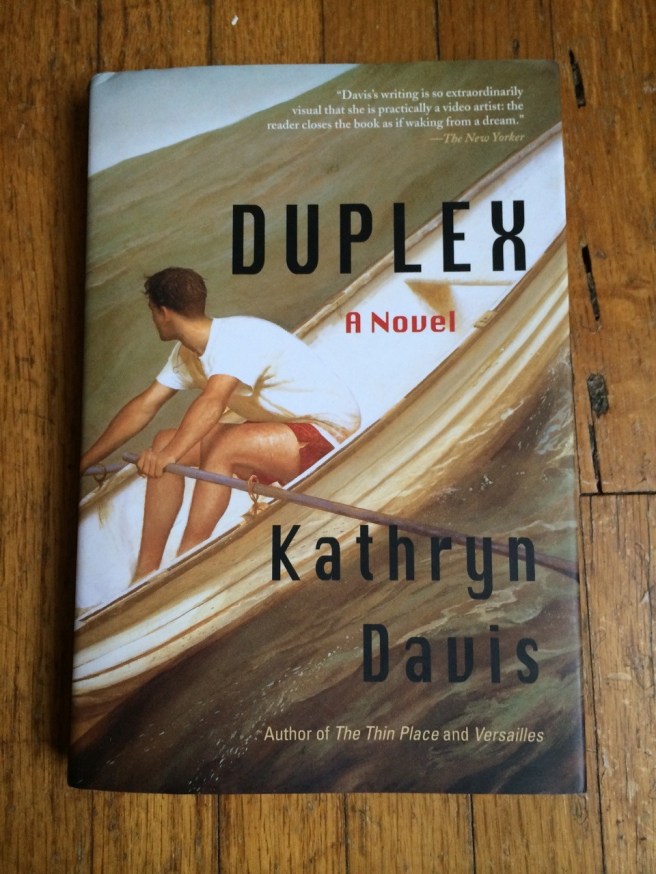
I read Kathryn Davis’ Duplex, but I didn’t finish. There’s some neat stuff in here – robots! sorcerers! – but the writing was a bit opaque for me this go-round. Readers with a bit more patience who are willing to re-read will probably be rewarded. (More recent reading.)

I read Ryan Holiday’s The Obstacle Is the Way, at least to the point that I realized it’d be better to peck at it here and there, else the pile-on of stories and reminders would become tedious just chugging straight through. If you’ve been paying attention to Holiday’s must-subscribe reading newsletters, you’ll see many of those works and people and themes resurface here. I’ll keep it nearby to knock off a few more chapters as needed.

I read Ursula Le Guin’s The Left Hand of Darkness because it’s regarded as one of those high points in the scifi canon. It’s about an envoy on an ambisextrous planet, which is a great start. I wish the political intrigue hadn’t been derailed by a particular journey toward the end, but still enjoyed most of it.
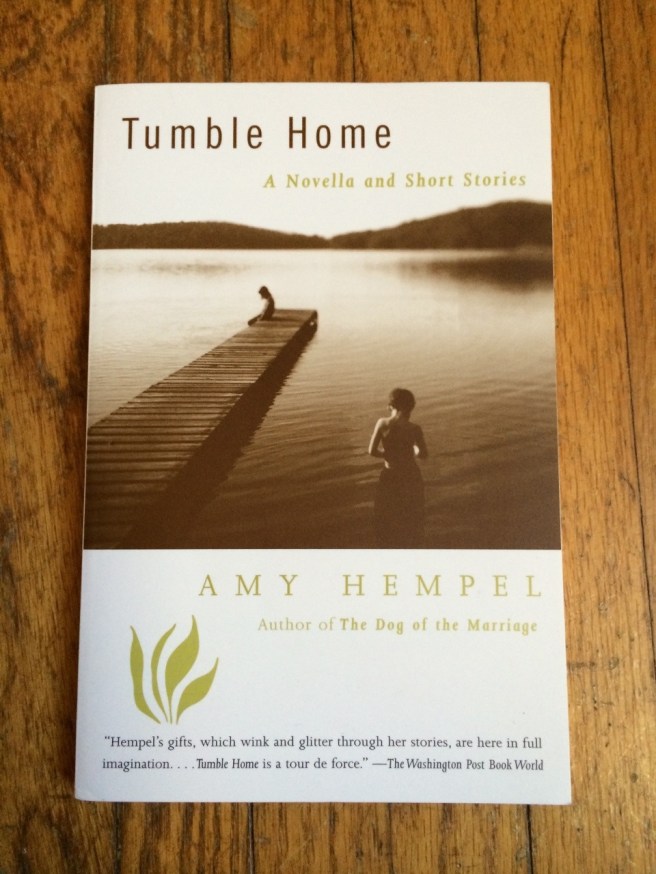
I read Amy Hempel’s Tumble Home. The title novella didn’t do much for me, but the short stories were so crisp and weird and vivid. From page 21, one of my favorite images of the year: “the halved-apple faces of owls”. Short and sweet.
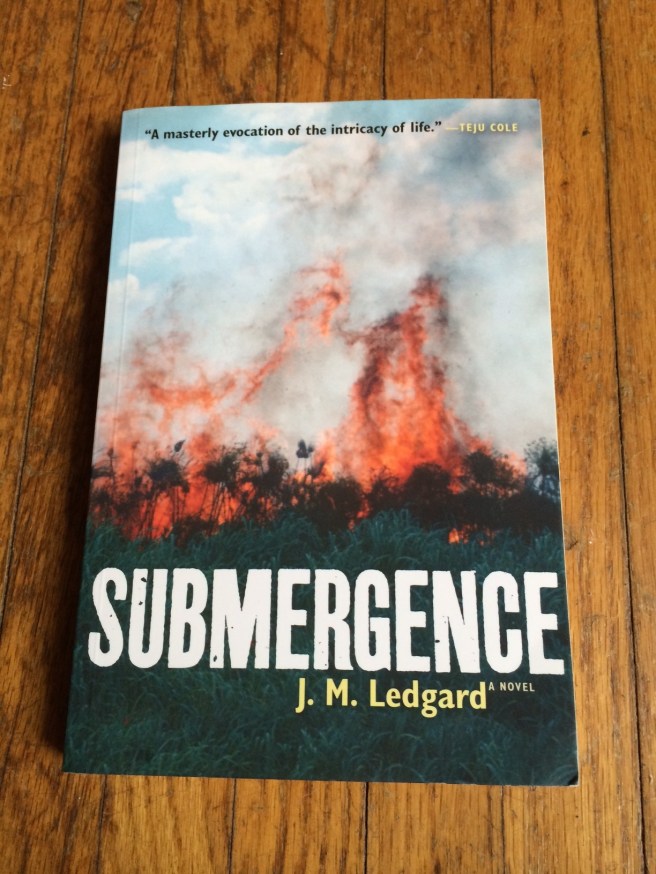
I read J.M. Ledgard’s Submergence, and while I was hoping for something more plot-y, I came to enjoy its vignettiness, bopping between two characters and their lives with terrorists, hostages, deep ocean science, deep reminiscing.
 Mark Larson