From the canvas to the cinema.
David Liu | 21 January 2013
The Return of the Prodigal Son (Rembrandt, 1669; oil on canvas)
Solaris (Andrei Tarkovsky, 1972)
In the end: a dog, a father and a son. Like the works of Rembrandt, Tarkovsky’s adaptation of Stanislaw Lem’s 1961 science fiction novel reveals a consummate humanist at work — an artist for whom the individual search for redemption transcends the realms of faith and waking consciousness.
Tag: art
What is art in the internet age? | Yale Insights
Q: What are the incentives you think artists are responding to?
Money and fame and sex—the same as always—but now there’s a difference. You can’t perfect your masterwork for 20 years. There’s a bit of a hurry. There’s a sense that things are changing. You can end up obsolete.
Q: How about from the audience perspective? How different is consuming art versus other consumption?
I think it’s changed enormously in the last 10 years. You see it in movie theaters, but it’s everywhere: people text or tweet and don’t pay full attention. They’re in some ways quite fussy. The attitude is, I’m already in control of my own informational life and entertainment. What else can you bring to the table? Not in a hostile way, but in an entirely legitimate “what have you got for me?” way. A lot of creators aren’t really up to it.
In every work of genius we recognize our own rejected thoughts; they come back to us with a certain alienated majesty.

Chuck Close photographed by Bill Jacobson, while Close works on “John, 1992, oil on canvas, 100 x 84”. (via) Featured in Lisa Yuskavage’s interview with Close:
I think of my work as what used to be called women’s work: knitting, quilting. Women were busy cooking, raising children, so they had to have an activity that they could pick up and put down. A quilt may take a year, but if you just keep doing it, you get a quilt. Or if you knit one and pearl two, and you believe in the process, eventually you’ll make a sweater. There’s some aspect of that in me.
Art.sy Is Mapping the World of Art on the Web – NYTimes.com
And they’ve got a tumblr.
If you missed “Shinobi Marilyn” at Emily Amy Gallery, here’s a walkthrough video I made!
How cool. If you missed this show, or you don’t happen to own a sweet Hokusai/Anderson “Great Wave” print, this seems like a good way to figure out what you missed. Have any other artists done walkthroughs of their gallery shows? Postcards and catalogs are nice keepsakes and all, but it’s not like being there. Maybe if there were an easy way to set up your own Google Street View gallery walkthrough…
(Source: https://player.vimeo.com/)
I know these are masterpieces, and you’re supposed to let their brilliance wash over you while you contemplate their significance, but I really couldn’t make myself stand there for more than a few seconds,” said museum-goer Vernon Bailey, admitting he spent more time reading the placards describing each painting than he did looking at the art itself. “They have all these Monets and Renoirs in there, but I made it through that entire wing in, like, five minutes. By the end I was just blowing past these iconic works—Nighthawks, American Gothic, that really famous pointillist one—and thinking, ‘Okay, done, done, done.’ What’s wrong with me?

Great Wave Off Kanagawa by Ashley Anderson. Cf. Hokusai. I knew I wanted this print the second I saw a sample at Artlantis a couple months ago. Got a big print. Finally got it framed. My walls are killing it right now.

Campbell Soup Company is tapping Andy Warhol for another 15 minutes of fame. I’m not surprised that Target is involved in this.
AUSTIN KLEON: Bob Ross’s rivalry with his mentor, Bill Alexander: “He betrayed me!”
This is so awesome.
So here’s something you don’t hear about a lot — Bob Ross, the famous afro-ed host of The Joy Of Painting, was taught his famous “wet on wet” fast painting technique by a German expatriate painter named Bill Alexander, who, believe it or not, had his own PBS painting show calledThe Magic of Oil Painting, that ran from 1974-1982.
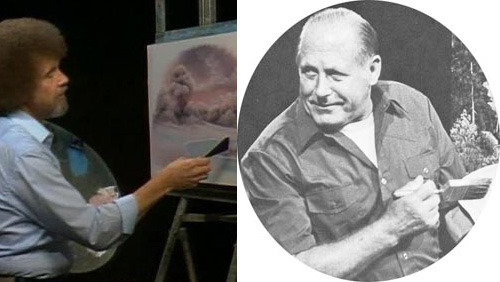
AUSTIN KLEON: Bob Ross’s rivalry with his mentor, Bill Alexander: “He betrayed me!”
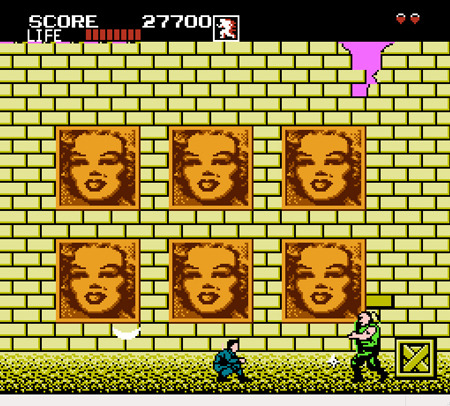
BURNAWAY » From Picasso to Warhol to Sega: Ashley Anderson’s Shinobi Marilyn. I’m a proud owner of one of Anderson’s other prints, and I’m so excited for this art show this weekend. Geeking out:
I love how Marilyn and 20th Century Fox never knew some artist in New York would buy a photo made to promote Niagara and turn it into some of the most famous art of the last 100 years. I love how Warhol died never knowing a game designer in Japan would inject his work into a video game (I think he would have loved it). I love how the game designer in Japan never knew his work would end up archived on the internet, found 25 years after the fact by some guy in Atlanta who would then turn the imagery right back around from the electric into the physical! It’s crazy!
Cf. Robin Sloan on the flip-flop. Atlantans: get thee to the Emily Amy Gallery this weekend.

I would not mind having this in my house. Crochet chair designed by Marcel Wanders. This prototype is on display in the High Museum right now.
The Believer – Beat Boutique
On library music and the idea of “selling out”.
“Are you OK with making compromises with your art, or is it just better off for you to have your big compromise be walking into an office every day and getting to do whatever you want?” she says, without a fleck of judgment in her voice. “I think there’s arguments to be made for both.”
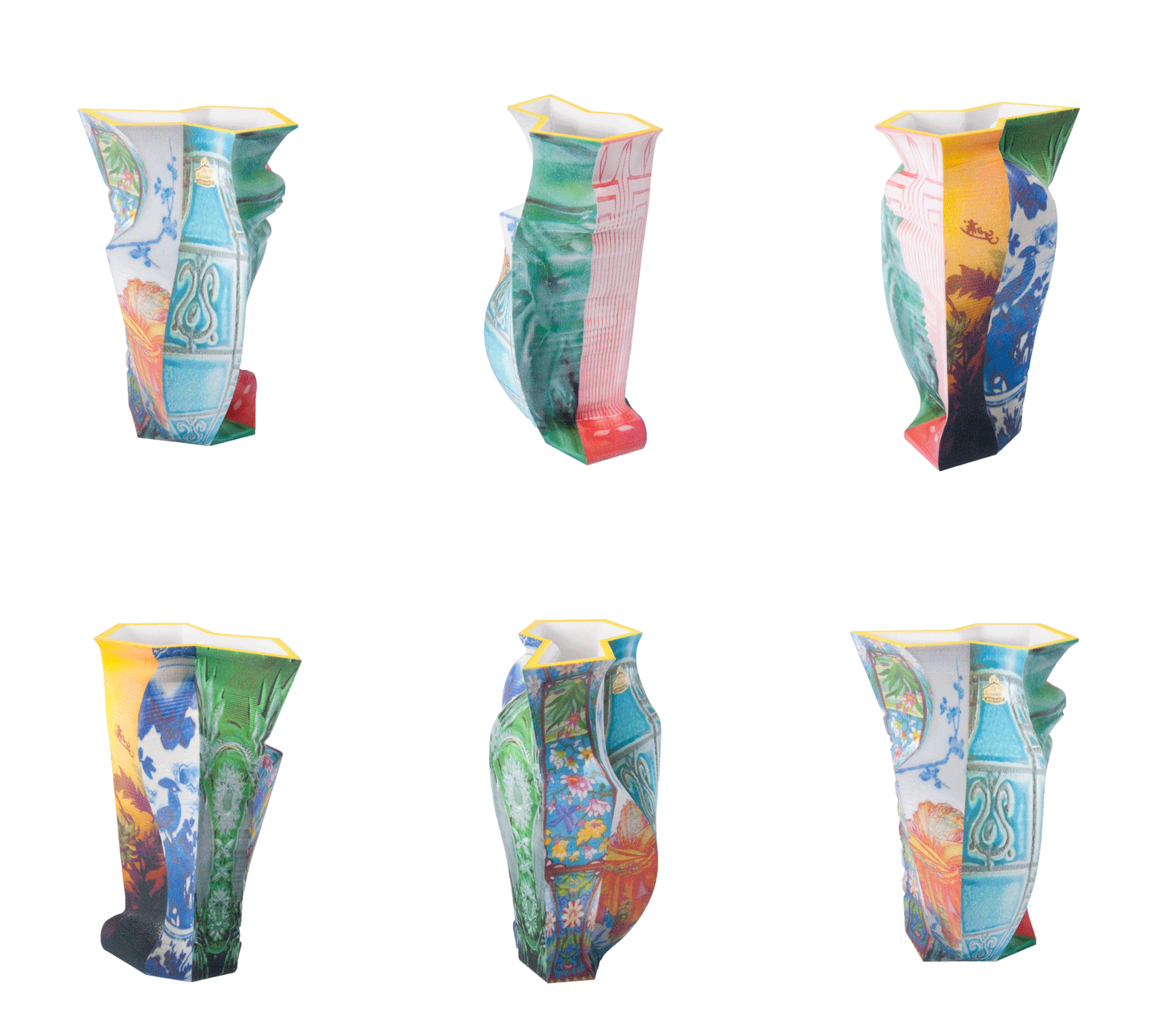
Dance the flip-flop – Robin Sloan.
the flip-flop (n.) the process of pushing a work of art or craft from the physical world to the digital world and back again—maybe more than once
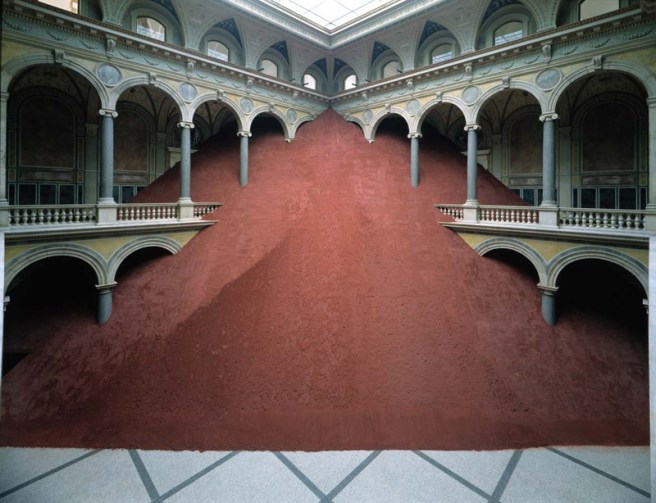

Chris Glass » Vorontsov & Livadia Palaces. That floral relief is incredible.
Rhizome | A Conversation with Jonathan Lethem
Lethem on art and identity and betrayal:
We are so prone to feeling betrayed by the artist in some way. Because the art does something so extraordinary to us that then we find out some detail. “Oh! He stole that from Willie Dixon.” “Oh! He beat his wife.” “Oh! He picks his nose in public.” “Wait a minute. He made that thing that changed my life. This is incongruent. I don’t like it!” That’s why we get so betrayed by the knowledge of appropriations, because we’re holding art to this very weird standard where it is actually about us. It’s about our own lives.
On T.S. Elliott and art that lets you cite:
T.S. Elliott has this appendix to The Wasteland where there are all these citations. We’ll put aside the fact that probably no one ever bothers to read that. But it’s there. He tried. It’s right there. But if a painter makes a canvas, it does not have room for footnotes on it. And a lot of art, the form doesn’t invite the same kinds of embrace of transparency. The specific gestures just don’t work. So what do you do? There might be follow-up. You could speak in an interview, you could make a gesture. But you know what? Not everyone wants to do that. Not everyone wants to be interviewed about their work at all. They want to just make it. And that’s okay.
On Led Zeppelin and Willie Dixon vs. Paul Simon and Graceland, and the axes of judging appropriation:
There are sort of two primary axes on which we make the individual judgment. One is: degree of transformation and the other is degree of transparency and or citation. In other words, how much do they really make something different out of what they appropriated? And how much did they make it easy to see that there was someone else’s gesture behind their own?
Art for Everybody by Susan Orlean
From an October 15, 2001 profile of Thomas Kinkade in The New Yorker:
We believe that the walls of the home are the new frontier for branding.
If it’s common now for men and women to be friends, why do we so rarely see it in popular culture? Partly, it’s a narrative problem. Friendship isn’t courtship. It doesn’t have a beginning, a middle and an end. Stories about friendships of any kind are relatively rare, especially given what a huge place the relationships have in our lives.
William Deresiewicz. Alexander Nehamas talks about this in his Philosophy Bites interview (also in the book):
It is close to impossible, for example, to recognize that a painting depicts two (or more) friends without a title to that effect or some similar literary artifice or allusion. The reason is that friends can be doing anything together and no single event is ever enough to indicate the presence of friendship.
He goes on to make useful analogies with the arts in general. You come to know a friend like you recognize a painter’s style: you can’t predict them necessarily, but you can see how things fit the pattern, once the friendship has “time to develop in the first place and time to flourish.” There’s also the idea that friends, and art, are things we use to become our individual, differentiated ourselves. Like Deresiewicz said elsewhere,
Introspection means talking to yourself, and one of the best ways of talking to yourself is by talking to another person.
Via Matt Thomas’ weekly NYT Digest, for which I am always grateful.
The bogus religiosity which now surrounds original works of art, and which is ultimately dependent on market value, has become a substitute for what paintings lost when the camera made them reproducible. Its function is nostalgic. It is the final empty claim for the continuing values of an oligarchic, undemocratic culture. If the image is no longer unique, and exclusive, the art object, the thing, must be made mysteriously so.
John Berger, Ways of Seeing (via jenbee). Okay, two things here. One, it brings me back to The Authenticity Hoax again (I wrote about why you should read it). Andrew Potter:
Can you see what is happening here? It is the return of the aura, of the unique and irreproducible artistic work. Across the artistic spectrum, we are starting to see a turn toward forms of aesthetic experience and production that by their nature can’t be digitized and thrown into the maw of the freeconomy. One aspect of this is the cultivation of deliberate scarcity, which is what Alec Duffy is doing with his listening sessions. Another is the recent hipster trend to treat the city as a playground—involving staged pillow fights in the financial district, silent raves on subways, or games of kick the can that span entire neighborhoods. This fascination with works that are transient, ephemeral, participatory, and site-specific is part of the ongoing rehabilitation of the old idea of the unique, authentic work having an aura that makes it worthy of our profound respect. But in a reversal of Walter Benjamin’s analysis, the gain in deep artistic appreciation is balanced by a loss in egalitarian principle.
And two, made me think of any time someone writes a “Why ___ Matters” essay. See: swan song.
 Mark Larson