One of my general rules is, if you’re on the fence about a movie/TV show/etc and you mull it over for a week, you liked it.
Matt Zoller Seitz. Also applies to books, concerts, paintings…. people?
One of my general rules is, if you’re on the fence about a movie/TV show/etc and you mull it over for a week, you liked it.

The Risks Worth Taking – Austin Kleon.
Believe me, when I quit my day job almost two years ago, it was not an act of bravery, and if it was a risk, it was an extremely calculated one.
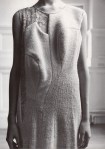


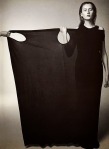
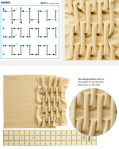
Quick shout-out: The Cutting Class is one of my favorite tumblrs. It is a true joy to stumble on writing like this, where someone smart points out things that you’d never notice and makes you aware of a whole other world of smarts that you’d otherwise never know about.
There are days when postwar art history starts to sound like a Classic Rock radio station.
Dana Gioia:
The modern assumption that writers and artists are dreamy, impractical people is both odd and quite insulting to creative people. Sophocles was a general, Goethe a scientist and statesman. Shakespeare was the most successful entertainment entrepreneur of Renaissance England. I had no particular interest in business, but I had to make a living, and I realized that I had a talent for managing enterprises such as literary magazines and films series. So I took the plunge and went to business school. I found the business world very demanding but also a good place for hard-working and talented people—better, I think, than the university.
I let absolutely no one at General Foods know that I was a poet. I kept my two lives entirely separate. It wasn’t until years later when Esquire featured me in a special issue of “Men and Women Under Forty Who Are Changing America” that my secret life was revealed to my colleagues. I didn’t enjoy the sudden celebrity. It only complicated my life. Never underestimate the advantages of anonymity.
Dana’s brother Ted Gioia:
If you asked me to sum up my view of music in one sentence, I could do it: music is a change agent and a source of enchantment. When people start understanding the arts in those terms, you don’t need to sell them on culture. They come out of curiosity, desire, and self-interest. Teachers can help spur this process, but it’s a different kind of teaching than you find in most classrooms
The Arts – Agents of Change and Source of Enchantment | Catholic World Report
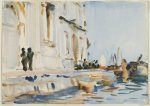

Kanakaweb: Sargent: All Ava Maria. So awesome. (via)
Below the original is my attempt to copy Sargent’s painting. I’ve been thinking a lot recently about how people learn to paint. I’m starting to think that maybe copying paintings you like is a good way to study other people’s paintings technique while forcing yourself to learn some basic skills along the way. I gather that this is how students learned to paint back in the day, so it seems like a good thing to try in my spare time.
The painting took about an hour to complete, but I feel like I learned a lot in that time. Here are my random notes in case you are interested…
This entire thing is fantastic.

Winners of Chimpanzee Art Contest Announced – The Humane Society of the United States. Art is subjective and all, but this one is definitely the best. Also, I’m feeling a lot of mixed emotions about many aspects of this.
There was a time when just about anything — dumb commercial entertainment, ugly clothes, the weird dishes your grandmother used to serve — could be appreciated and appropriated in quotation marks. Strained pulp is not quite that — its celebration of the formerly marginal and disreputable is serious and sincere. The condescension is not overt but is latent in the desire to correct and improve the recipes retrieved from the past, to finish vernacular artifacts with a highbrow glaze. We’re going to make ’em — movies, cocktails, regional dishes, zombie novels, garage-rock anthems — just the way they used to, but a little bit better. This strikes me as a form of snobbery. But then again, maybe I’m the snob.
One enduring feature of the art world is that a given piece will sell for much more in one context rather than another. The same painting that might sell for 5k from a lower tier dealer won’t command more than 2k on eBay, if that. Yet it could sell for 10k, as a bargain item, relatively speaking, if it ended up in the right NYC gallery (which it probably wouldn’t). Where does Amazon stand in this hierarchy? It doesn’t look promising.
It’s basically recursion. You start with a problem that spits out an answer. You feed the answer back into the problem and get another answer, which you put right back into the problem.
There’s this dispute in Minnesota where an artist couple has been claiming tax deductions to keep doing their various art things. Trouble is, in the eye of the law, you can’t claim deductions unless you’re (on the way to) running a business that makes profit. Years and years of losses or minimal profit are just asking for an audit. Hilarity ensues.
I moved to Atlanta in 2007, which was pre-WonderRoot, pre-Dashboard, pre-Living Walls, pre-Glo, pre-Flux and plenty of other stuff. And then WHAM, everyone’s doing stuff. That’s in a period of five-and-a-half years. That’s insane—good insane. And we’re all still very much learning what each of us does, galleries are closing, capital is moving around, new artists are constantly showing up, communities are reacting—there’s whole lotta shakin’ goin’ on. Beats the hell out of how it was when I moved here and it’s a light years better than what little was going on in the last city I lived in. Keep going everyone, and bless the haters as you climb over them.
This, for me, is the real reason that tech types don’t buy art: they’re busy investing in each other’s startups instead. Being an early-stage investor is in many ways just like being a contemporary art collector: you’re very unlikely to make money at it, even though the potential and anecdotal returns can be enormous; and it’s used in large part as a way of supporting your friends and being seen as being important within a very small world.

Lit Hum: Jorie Graham on Caravaggio’s Supper at Emmaus. Gonna go right ahead and do a mega-quote here:
I often teach a painting of Caravaggio’s, Supper at Emmaus. Christ is sitting before us in an alcove against the “back wall” of the painting. We face into a dinner table covered with things for the meal. We are quite sure that the edge of this table is identical with the absolute front of the canvas. But then one undergoes a troubling sensation. The basket of fruit, the edge of the wicker basket, sticks out into our “actual” space, our here and now. The host suddenly recognizes the stranger at his table as Christ and throws open his arms, like this. [Gestures.] His left hand comes out, beyond the border—further than the sacramental grapes in their wicker—out here into the same air that you (and I) are breathing in the National Gallery. At the same time, his right hand penetrates the crucial illusionistic space, the alcove in which Christ sits. What he does, by going like this, is enact what it is to be “taken” by surprise, to be, suddenly, in that spiritual place where the otherness of the world, of possibility, “turns” one’s soul—taking one off the path of mere “ongoingness” onto the other path of “journey.” At any rate, the host’s gesture connects that immortal-because-imaginary space Christ occupies, with the mortal one of the gallery in which I am standing breathing my minutes—and you suddenly realize Caravaggio has activated what I call the “sensation of real time”: the time of the painting’s represented action has crossed over into the time in which my only days are taking place. So you cannot read the painting without being inside the terms of the painting, which are these graduating degrees of temporality: mortal time, immortal time, represented time, actual time, the “time” of process. The activity of the painting is to do that. The host is crucified in this position—a position the artist is also in—saying, You reader and you subject (God, Christ), I have put you two together. It’s my job. That’s what the meal is. That’s what we eat.
Boom. Art, man.
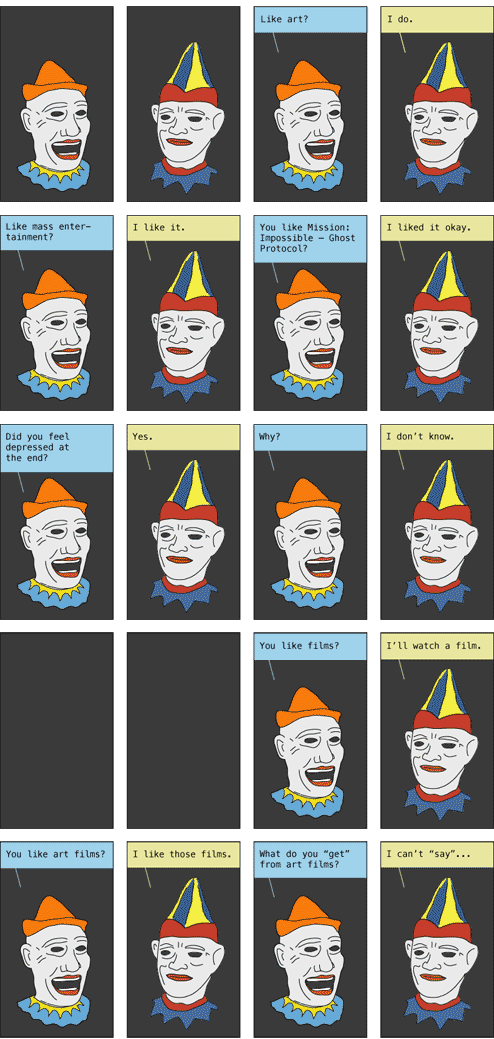
Essay Daily: Take One Daily and Call Me Every Morning: “Two Clowns on Tarkovsky”: Mark Ehling. This is awesome. Filed under: Tarkovsky.


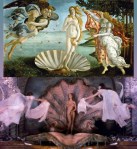

When Film Imitates Art
Edward Hopper’s Nighthawks and Herbert Ross’ Pennies from Heaven
Leonardo da Vinci’s The Last Supper and Robert Altman’s MASH
Edgar Degas’ Dancers Lace Their Shoes and George Cukor’s A Star is Born
Sandro Botticelli’s The Birth of Venus and Terry Gilliam’s The Adventures of Baron Munchausen
Henry Fuseli’s The Nightmare and Ken Russell’s Gothic
“That’s all any of us are: amateurs. We don’t live long enough to be anything else.”
—Charlie Chaplin, LimelightMy wife and I have been talking so much lately about “authenticity” and “honesty” online — this insane idea that you can really tell who or what someone is and how they are doing just by what they show you of themselves on the internet. That social media is somehow a more “authentic,” or more “human” way of presenting yourself, warts and all, to the world. (As if it weren’t, in fact, making it easier to invent more perfect, alter egos — as if we aren’t all carefully selecting and choosing the bits and pieces of our life to show each other — and as if, “IRL,” we didn’t already choose what bits and pieces to show our friends when they came over to dinner [“Sweep that mess into the closet! Do the dishes! Put away the embarrassing records!”]) And how, inevitably, you start measuring your own life against what you see of the lives of others. (cf. “Keeping Up With The Joneses” and “The Referendum” and my friend Paige’s “Why Facebook Makes Us Miserable.”)
This used to happen to me with other artist friends of mine who I follow online, but actually, it was a positive thing. I would see that so-and-so had been on a drawing tear, posting tons of really interesting drawings, and some of them would be really good, and it would get me wanting to draw. Only later, when talking to them in person, would it turn out that they were just as lazy and uninspired sometimes as I was. The myth contained in the images, in a way, did me good, because it made me push myself. But I wondered, for other aspiring artists who aren’t as driven or delusional as me, if the opposite wouldn’t be true, and they would feel discouraged.
This quandery got ratcheted up a bit more after our son was born. I started thinking about how fundamentally unprepared I was for the experience of caring for a newborn. It was simultaneously the best and worst thing that ever happened to me. (As I like to say, even the best baby in the world can still be a complete fucking monster.) I remembered how people told me it was tough, but nobody told me how fucking distressed and insane sleep deprivation would make me, how absolutely full of despair I would feel for that first month, how it would dredge up feelings I hadn’t felt in years, etc.
And yet, there I was, feeling pretty fucking dark, Instagramming perfect photos of my cute kid sleeping, my wife looking like an angel, etc. And there were my friends doing the same, even though I knew, after a drink at the bar, their struggles were mostly the same as mine.
I was talking about this with my friend Steven, and I suggested that there should be a kind of “shadow gallery” on Instagram — a place where you post pictures of your kid at his worst. He said I absolutely had to do this. (He had a friend whose first move after giving birth was to call all of her girlfriends who were moms and swear them out for not being honest with her.)
And then, of course, I thought of a “shadow gallery” for artists — places where they post their work at their worst, where they acknowledge, that they are, in fact, not natural-born geniuses. A blank Microsoft Word screen. A terrible, sloppy drawing. Their Google search histories…
(You’d think someplace like Dribbble would accomplish this — but every work-in-progress I’ve ever seen a designer post there has been borderline perfect. Things organized neatly…)
Then last night my wife sent me this post my a mommyblogger, acknowledging that the reason she seemed so productive is that she has a nanny.
Why are we, as women, so reluctant to talk about the people we hire to help us so that we can do what we do? What are we afraid of? People thinking we CAN’T do it all?
Well, duh.
We fucking can’t.
So what’s this big secret we’re trying to keep and who do we think we’re fooling?
And what is it doing to people who read our blogs and books and pin our how-tos and think that all of these projects are being finished while children sit quietly on the sidelines with their hands in their laps.
What is it doing to you?
We write disclosure copy on posts that are sponsored, giveaways that are donated. We are contractually obligated to label and link but where is the disclosure copy stating how we work from home with small children? How we shoot videos and meet deadlines and go to meetings and travel around the country attending conventions and conferences.
We have help, that’s how!
People have asked me, over the years, how I’m able to do so much. (My first thought is always, “So much? Boy, do I have you fooled.”) Now, I’m thinking of this idea of an Artist’s Disclosure. (Brian Eno had one in his Diary: “one of the reasons I am capable of running three careers in parallel is because I married my manager.”) I’m thinking about what my disclosure might look like, and whether I have the guts to share it, and whether it’d really do anyone any good, including me.
Reminds me: one hiker I met on the Appalachian Trail made sure to take pictures of himself during the worst days on the trail. Tired, cold, rain-soaked, heat exhaustion, dehydrated, muddy, cranky, whatever. It’s a way to remind yourself of the price of admission, and a reminder that you did, in fact, keep doing this cool thing despite the occasional suckiness.
On disclosures, Instagram photos of your kids, and the “artist as genius” myth


 Mark Larson