What good are touchstones in an era where consensus seems to actively annoy people?
All any of us want on our graves is “HERE LIES THE PERSON WITH THE UNIQUEST OPINIONS.”
DC Pierson. I love my opinions tag so much.
The Believer – Beat Boutique
On library music and the idea of “selling out”.
“Are you OK with making compromises with your art, or is it just better off for you to have your big compromise be walking into an office every day and getting to do whatever you want?” she says, without a fleck of judgment in her voice. “I think there’s arguments to be made for both.”
The Medication Generation: Teenagers and Antidepressants – WSJ.com
In my own case, talk therapy was vital. Though it didn’t make the pain go away, it did enable me to do something medication hadn’t, which was to talk and think about myself. It gave me a chance to have someone else confront my pain not as disorder but as part of the human experience. And that made it bearable.
The Medication Generation: Teenagers and Antidepressants – WSJ.com
The IRL Fetish – The New Inquiry
We are far from forgetting about the offline; rather we have become obsessed with being offline more than ever before. We have never appreciated a solitary stroll, a camping trip, a face-to-face chat with friends, or even our boredom better than we do now.
Hustle & Flow
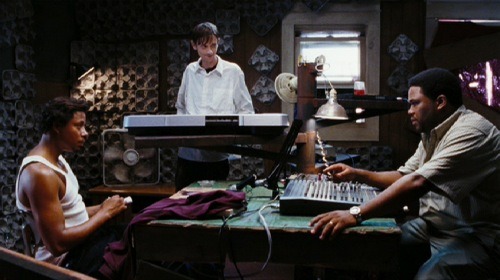
Hustle & Flow. I was expecting a more formulaic rags-to-riches story, but got several wonderful surprises and setbacks in how this one played out. The main characters here are so, so, so well-done. Terrence Howard is great as he works through what’s basically a mid-life crisis. Damp, dumpy Memphis is the perfect backdrop and it’s just a generally nice change of scenery from most movies. Ludacris has a decent turn here as Skinny Black, but Big Boi’s menacing Marcus in ATL puts it to shame. Also, this one has Isaac Hayes.

Dance the flip-flop – Robin Sloan.
the flip-flop (n.) the process of pushing a work of art or craft from the physical world to the digital world and back again—maybe more than once
The Prestige
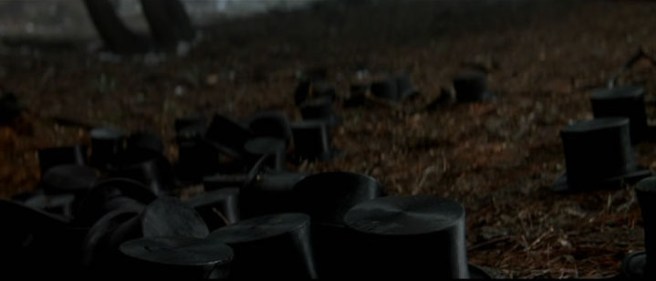
The Prestige. Themes: obsession, sacrifice, craft, identity, showmanship, revenge, deceit, science as magic, etc. It’s a little mechanical and maybe overstuffed, but always interesting. Hugh Jackman is excellent. I expect viewers would either love or hate the ending, in which the inevitable is delayed while the story is re-told and all is explained. I kinda hate that, but I should have expected as much. I guess that’s Nolan’s own prestige moment? I get really annoyed when you watch a movie and then, near the end, the movie tells you about the story that happened that you didn’t know about. (Yeah, I know I complained about this recently.) Good twists are fine, but they always make me wonder how you could tell the same story in an engaging way while sharing more details with the audience up front. Isn’t it also fun when we know something the other characters don’t?
I’ve now seen all of Christopher Nolan’s feature-length movies. Here’s how they stack up for me right now:
UC Berkeley Classics Department: 2009 Commencement Address by Daniel Mendelsohn
What can it mean to devote oneself to a discipline that likes to think that it is timeless, that it has cheated the centuries, the millennia?
UC Berkeley Classics Department: 2009 Commencement Address by Daniel Mendelsohn
What Nora Ephron Taught Me About Love In The Movies : Monkey See : NPR
Have you never said that “the rest was history,” which implies that a moment happened, and then history just followed, like you were letting out the kite string but the wind was doing the work?
I love that image.
What Nora Ephron Taught Me About Love In The Movies : Monkey See : NPR
It Happens – David Fleming – ESPN.com
Do I stop? Or go?
Life is, to some extent, an extended dialogue w/ your future self about how exactly you are going to let yourself down over the coming years
Little Fugitive
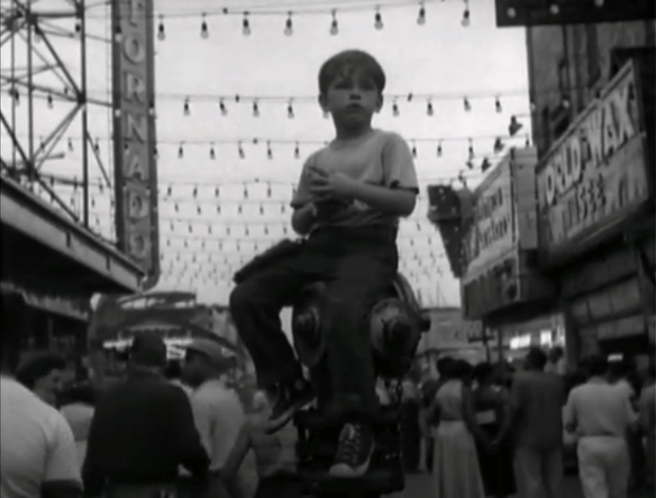
Little Fugitive. An adventure in 1950s New York City seen through a child’s eyes. It’s got some genuinely charming moments, though they’re more rooted in the nature of children than any wonders of plot or technique. The camera is low and so are the stakes, but it forces you to take the kid’s perspective. Nicely done for most of its 75 minutes. You can see the influence on the French New Wave that followed overseas.
Love

Love. Some parts I really loved, some parts I really did not. Such is the debut film experience. Excellent work on the sets and soundtrack.
Calling this the funkiest bassline in the history of recorded music. After it kicks into the main groove at 1:30, an entire universe with a six-billion-year history opens up between the beat and the delayed third note Michael Henderson plays each bar.
(Source: http://www.markrichardson.org/)
Does Wes Anderson hate dogs?: The New Yorker
Maiming and death are just as central to Anderson’s vision of things as are all the precise costumes that his characters wear. Misfortune comes just as suddenly to dogs as it does to humans. By including the beloved dog in this condition of life, he reminds us that no one is safe. […] Another way to look at it is that these dogs are most often punished as collateral damage of the moral and practical ineptitude of adults.
Religion for Atheists (review)

Alain de Botton’s Religion for Atheists has a simple, reasonable, open-minded premise: whether or not you believe in God/Jesus/Heaven/afterlife/salvation/etc., religions can still be interesting, useful, and consoling. The idea here is to explore function rather than truth. Religious institutions are some of the most successful, influential, widespread, long-lived things that humans have ever done, so there’s a lot to learn.
There’s the idea of community, for one. “Religions know a great deal about loneliness” de Botton writes. And if you’ve been to mass with any frequency, you know how often things like poverty, sadness, failure, and loss come up—because the church “sees the ill, frail of mind, desperate, and elderly as aspects of humanity and ourselves that we’re tempted to deny.” But acknowledging these things can bring us closer, or at least make us more humble.
De Botton talks about this sort of groundedness again later. There’s an earthly pessimism that comes with some religious belief. Hopes are ascribed to the next life, not this one. For this one you just try to do right, be generous, and get by as best you can. This pessimism deflates our hopes a bit, but helps to balance those needy, absorptive, consuming, ever-optimistic desires that come in everyday life. Christianity is sober, where perhaps the secular world is too optimistic, or maybe too cowardly, to face life’s hard facts. I like this line where de Botton summarizes all secular arguments:
Why can’t you be more perfect?
Luckily, “sermons by their very nature assume that their audiences are in important ways lost.” We need teaching, and religion’s insistence on that is pretty useful.
Christianity concerns itself with the inner confused side of us, declaring that none of us are born knowing how to live; we are fragile, capricious, unempathetic, and beset by fantasies of omnipotence.
The ever-seeking nature of secularism can also lead to lack of gratitude. Religions bring us back to the basics. A prayer of gratitude before you eat. Marking the passing of the hours with prayer or the seasons or harvests with celebrations. We need reminders of the transcendent, of our smallness. We need rituals and practices that put us in our place.
Art could do this, perhaps—“We need art because we are so forgetful”. De Botton has a great section on the opportunities that modern museum culture misses out on.
We tend to enter galleries with grave, though by necessity discreet doubts about what we are meant to do in them. […] It would take a brave soul to raise a hand.
Museums have a hard time explaining why they’re valuable. Education, sure. They’re not made for prayer or worship, really. We end up with buildings about history of art-ness. But what about something more ambitious? There’s an opportunity to meet our own psychological, emotional needs. We see placards on the walls about style and era and medium and influence. But just like churches aren’t made to teach us about the history of theology, necessarily, museums need not teach us about art history (exclusively). Why don’t we see an exhibition about Death? Or Parenting? Loss? Courage?
De Botton makes similar arguments about secular education, which is fairly impractical. Things like accounting and psychology are useful, yes, but where are the classes about tensions in marriage, or dying gracefully, or the struggles of friendship? (Of course, a philosopher would argue for these things, of course.)
Topics aside, there’s also the structure and etiquette of the modern class to consider. Lector, desks, students, whiteboard. Boring. Contrast with a vibrant church where the attendees are shouting “Amen” and “Preach on!” and “Thank you, Jesus.” You can’t underestimate the value of rapture and assent and an active audience. Teaching is a kind of performance, too.
What purpose can possibly be served by the academy’s primness? How much more expansive the scope of meaning in Montaigne’s essays would seem if a 100-strong and transported chorus were to voice its approval after ever sentence.
There’s also the idea that religious education isn’t, well… it’s not all that new. But the lack of novelty is a blessing in its own way. It makes room for reflection. The church hasn’t had big discoveries or breakthroughs. But it does a fantastic job for structure, schedules, repetition, and reinforcement of its long-held ideas.
A Catholic lectionary, for example, outlines everything you’ll be reading over the course of three years, with readings matched to season and occasion in the church calendar. If you’re devout and interested, there’s a plan there for you to follow. Even if you’re a casual but regular churchgoer, you’re going to cover a lot of material, and it’ll be appropriate to the season. But what’s the best way and context for me to revisit Marcus Aurelius’ Meditations? Is there a good calendar for reflecting on Leaves of Grass, if that’s your thing? How can you carve out a space for secular reflection in your life? It’s not just a scheduling thing. It’s knowing what to do when the time comes. Church attendance is a kind of rehearsal for life outside its doors, and inside its doors you know exactly what’s going to happen.
Another favorite passage:
An absence of religious belief in no way invalidates a continuing need for “patron saints” of qualities like Courage, Friendship, Fidelity, Patience, Confidence, or Skepticism. We can still profit from moments when we give space to voices of the more balanced, brave, generous–and through whom we may reconnect with our most dignified and serious possibilities.
Again, whether or not Mary gave virgin birth, or whether or not Jesus was also God, or whether or not Saint So-and-so really bled from her hands and levitated? Make your own call. The truth is secondary to De Botton’s argument. The function of these beliefs is to get you to be a better person.
This is one of the best books I’ve read in 2012 so far. Very highly recommended.
Great Air Conditioners | The Wirecutter
I don’t need a window air conditioner, nor do I expect to, but I’ll be damned if this isn’t worth reading anyway. Cf. The Wirecutter is on to something good.
The Four Deadly Fallacies, Pathetic and Otherwise
Age and experience will slowly whittle away at your dreams, so don’t do that to yourself. Let other people do that to you.
 Mark Larson