Edge of Tomorrow

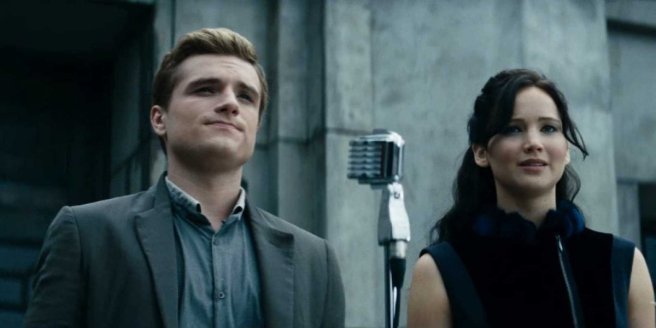
Edge of Tomorrow. THIS. This is the kind of genre action film we need. Superheroes can suck it. The best Cruise performance in a good while, and his character has a great arc from coward to competence (always likeable, though). I love the film’s learning curve, too. Just enough to string you along, while not weighing you down with unnecessary repetition. For 2014 releases, I have to put this up there with The Lego Movie and The Grand Budapest Hotel.

Godzilla (2014)

Godzilla (2014). This movie precisely met my expectations, which is kind of a treat in itself. I like how you end up rooting for the big guy. That said, I’m not sure I can describe how tired I am of seeing monsters roar at the screen. We’ve worn it out. The HALO jump scene is one of my favorites this year. Elizabeth Olsen is criminally under-featured. No good reason to waste all that talent, unless you’re also doing it with Watanabe, Binoche, Hawkins, Strathairn, Cranston… This movie is probably better overall, but Pacific Rim had better fightin’. I liked it.

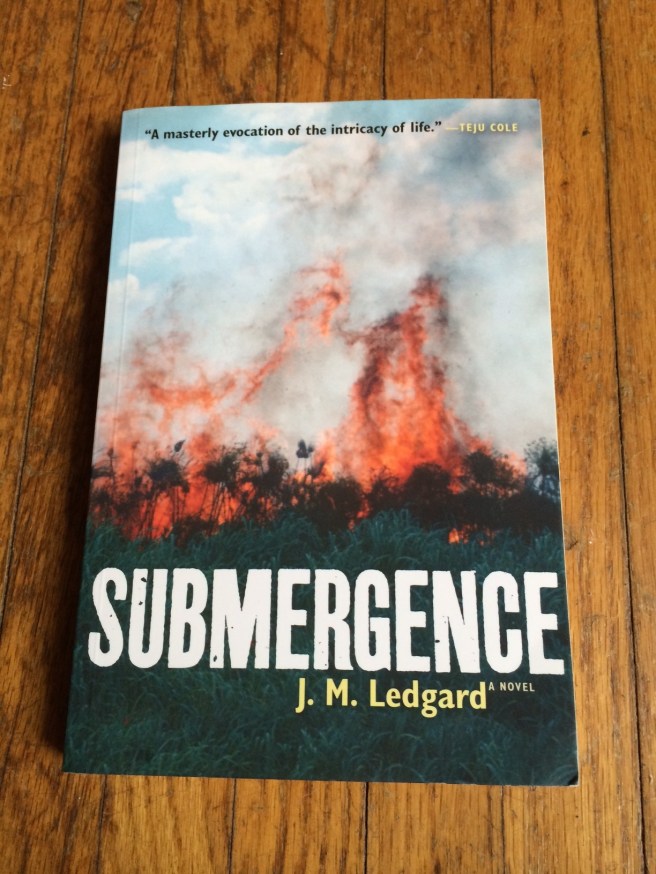
Submergence (review)

I read J.M. Ledgard’s Submergence, and while I was hoping for something more plot-y, I came to enjoy its vignettiness, bopping between two characters and their lives with terrorists, hostages, deep ocean science, deep reminiscing.

heidisaman:

“The less money you take, the more freedom you have. I’ve never made a film where I don’t have final cut. And I can’t imagine doing that. That just seems like it would be turmoil. I edit because that’s where you learn how to direct, really. All the answers of what you should have done are in the editing. I miss out on being able to be in a conversation with someone, and I can see where that can be a really valuable thing—to have someone with more of a distance to be having a dialogue with. You write alone, and scouting is really lonely. Then you do this really intense thing with a lot of people. Afterwards, I usually feel like I want to hide away with my film again and go through the process of making sure that every possible thing has been tried. I’m a big believer in letting your film be bad for a while, and not trying to get to a good cut too quickly. I just want to be involved and I want that process, because it makes me think of what lens I should have used or what I should have done. It’s such a learning experience that I hate to miss out on it.”

— Kelly Reichardt on why she edits her own films

Still from Wendy and Lucy (2008, dir. Kelly Reichardt) 

Emphasis my own. I love that.

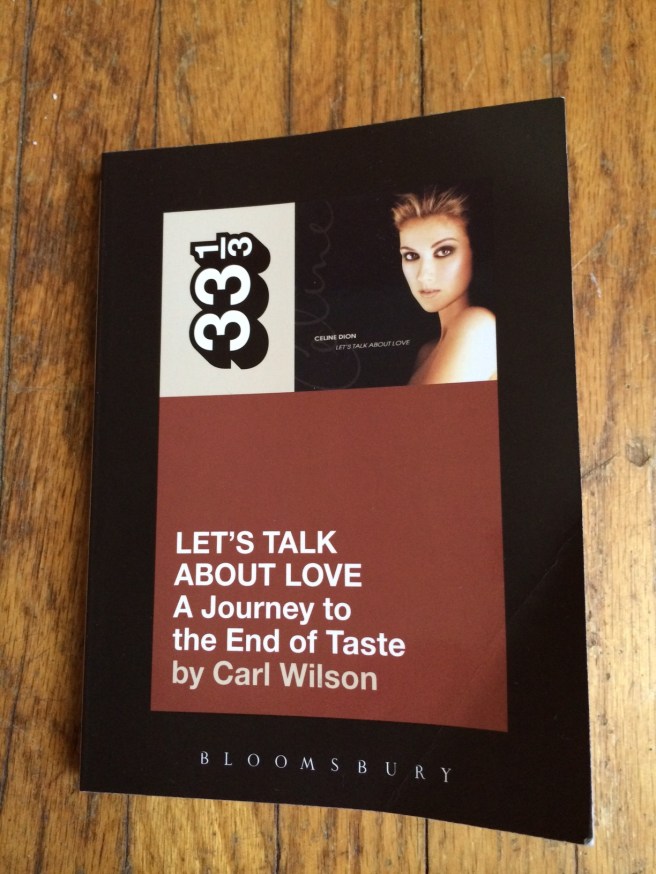
Let’s Talk About Love: A Journey to the End of Taste

I read Carl Wilson’s Let’s Talk About Love: A Journey to the End of Taste, and it’s probably my favorite book of the year so far. Like Wilson, I never cared that much for Céline Dion’s music, and hadn’t tried to care, but I came away with a new appreciation for where she came from and some of her shrewd business moves. But it’s not just about the music and industry angle, the good stuff is how he uses Dion as the pivot to talk about taste, and all the baggage that informs our opinions.

Much of this book is about reasonable people carting around cultural assumptions that make them assholes to millions of strangers.

So this is right in my wheelhouse, as taste and opinions are two of my favorite tags here. Some favorite parts…

On pop criticism and critical reevaluation:

If critics were so wrong about disco in the 1970s, why not about Britney Spears now? Why did pop music have to get old before getting a fair shake?

And later, trying to fight your instincts and keep an open mind:

If guilty pleasures are out of date, perhaps the time has come to conceive of a guilty displeasure. This is not like the nagging regret I have about, say, never learning to like opera. My aversion to Dion more closely resembles how put off I feel when someone says they’re pro-life or a Republican: intellectually I’m aware how personal and complicated such affiliations can be, but my gut reactions are more crudely tribal.

On the acknowledged fakeness of shows like American Idol:

For all the show’s concentration on character and achievement, it is not about the kind of self-expression critics tend to praise as real. It celebrates […] “authentic inauthenticity”, the sense of showbiz known and enjoyed as a genuine fake, in a time when audiences are savvy enough to realize image-construction is an inevitability and just want it to be fun. “Authentic inauthenticity” is really just another way of saying “art”, but people caught up in romantic ideals still bristle to admit how much of creativity is being able to manipulate artifice.

On conformity of opinion:

The bias that “conformity” is a pejorative has led, I think, to underestimating the part mimesis – imitation – plays in taste. It’s always other people following crowds, whereas my own taste reflects my specialness.

On middlebrow:

Middle brow is the new lowbrow – mainstream taste the only taste for which you still have you say you’re sorry. And there, taste seems less an aesthetic question than, again, a social one: among the thousands of varieties of aesthetes and geeks and hobbyists, each with their special-ordered cultural diet, the abiding mystery of mainstream culture is, “Who the hell are those people?”

In a section that ties in the work of Pierre Bourdieu, a bit on class and the varieties of capital:

One of Bourdieu’s most striking notions is that there’s also an inherent antagonism between people in fields structured mainly by cultural capital and those in fields where there is primarily economic capital: while high-ranking artists and intellectuals are part of the dominant class in society thanks to their education and influence, they are a dominated segment of that class compared to actual rich people. This helps explain why so many artists, journalists and academics can see themselves as anti-establishment subversives while most of the public sees them as smug elitists.

I love this section on the double-standards about the emotional content of music, especially when it comes to things like sentimentality, tenderness, etc.

Cliché certainly might be an aesthetic flaw, but it’s not what sets sentimentality apart in pop music, or there wouldn’t be a primitive band every two years that’s hailed for bringing rock “back to basics”. Such double-standards arise everywhere for sentimental music: excess, formulaism, two-dimensionality can all be positives for music that is not gentle and conciliatory, but infuriated and rebellious. You could say punk rock is anger’s schmaltz.

In a section talking about all the ways we can love a song, a reminder:

You can only feel all these sorts of love if you’re uncowed by the questions of whether a song will stand the “test of time”, which implies that to pass away, to die, is to fail (and that taste is about making predictions). You can’t feel them if you’re looking for the one record you would take to a desert island, a scenario designed to strip the conviviality from the aesthetic imagination.

And another one:

When we do make judgements, though, the trick would be to remember that they are contingent, hailing from one small point in time and in society. It’s only a rough draft of art history: it always could be otherwise, and usually will be. The thrill is that as a rough draft, it is always up for revision, so we are constantly at risk of our minds being changed – the promise that lured us all to art in the first place.

While I’m wrapping up, I should mention two things those excerpts don’t capture well: 1) the long, smooth, winding essay feel, as it all snaps into place so nicely, and 2) a lot of fascinating detail on Céline Dion herself. She’s a pro.

This book would pair really nicely with two other books I’ve loved: Highbrow/Lowbrow: The Emergence of Cultural Hierarchy in America, a sort of historical/sociological exploration of class and taste, and The Age of the Infovore, which runs with the idea of open-mindedness and how we’re all so damn lucky to have so much culture at our fingertips.

M: Roger Angell, A Hall-of-Famer at 93

I don’t go for nostalgia. I try not to. It’s so easy to sentimentalize the good old days, but I don’t ever do that. I’m aware that things have changed, but I try not to go there. It’s very easy, and you get sort of a mental diabetes.

I also liked this:

If you do enough reporting, then you don’t have to gush about the emerald field, the white streak of the ball, and that.

M: Roger Angell, A Hall-of-Famer at 93

The Interrogative Mood

I read Padgett Powell’s The Interrogative Mood: A Novel?, which is one-of-a-kind. Easy to pick up and chew a few lines at a time, or just surf along the steady waves of questions. Here’s an idea of what you’re in for:

Is there enough time left? Does it matter that I did not specify for what? Was there ever enough time? Does the notion of “enough time” actually make any sense?

Or maybe this:

Have you ever watched bats come out of a wall? How the soft, friendly things keep pouring silently out of the brick? How they have focus, and mission, and you do not?

Not the most representative sample, but I’m not sure there is one. Good stuff. Thanks to Austin Kleon for the glowing recommendation.

So…

Essentially, “So…” is the universal shorthand for, “I’ve given this a lot more thought than you have and will now proceed to refocus the conversation in a way that interests me and highlights my personal file card on this particular topic.”

The New Face Of Literary Publishing In Dallas | Art&Seek

My buddy Will Evans is starting a publishing house called Deep Vellum, and I’m so stoked. And now I remember one of the classic economic arguments for reading works in translation…

Tyler Cowen, the economist, advises readers to “snap up foreign fiction translated into English, if only because the selection pressures are so severe”: in order for a publisher to think a work of fiction worth the risk of translating and promoting to a foreign audience, its quality has on average to be higher than the average for homegrown work.

Or, as Colin Marshall puts it: “Snag the stuff that had to see hell to get to to you, no matter where you may be.”

The New Face Of Literary Publishing In Dallas | Art&Seek

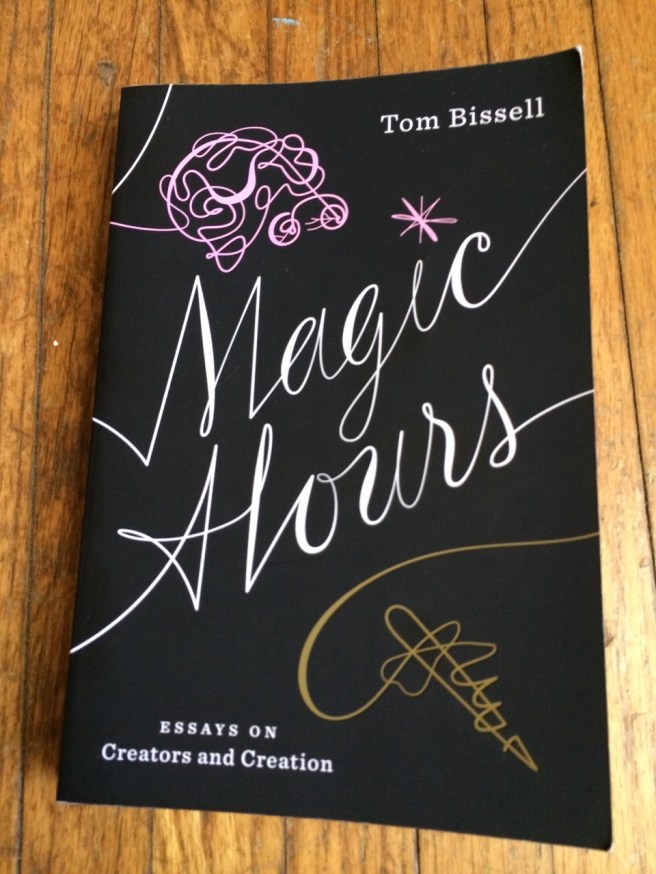
Magic Hours

I read Tom Bissell’s Magic Hours, a good collection of nonfiction. Just gonna pull out a few parts I really liked. On small towns:

In a small town, success is the simplest arithmetic there is. To achieve it, you leave – then subsequently bore your new big-city friends with accounts of your narrow escape.

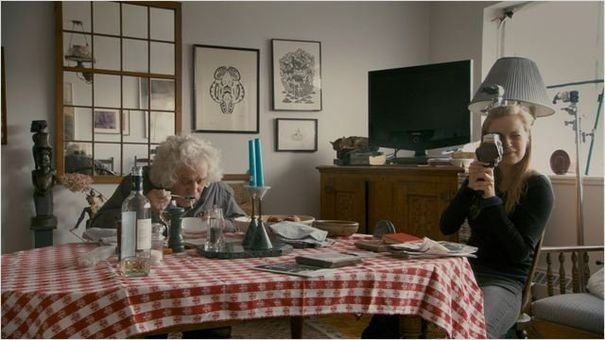
Thinking about Stories We Tell last night reminded me of this, on documentaries:

Explanatory impotence is not unique to the documentary but in some ways is abetted by the form. Inimitably vivid yet brutally compressed, documentaries often treasure image over information, proffer complications instead of conclusions, and touch on rather than explore. When a documentary film […] charts the mysteries of human behavior, an inconclusive effect can be electrifying.

Along the same lines, later, on nonfiction…

In the end, great nonfiction writing does not necessarily require any accuracy greater than that of an honest and vividly rendered confusion.

Overall, I enjoyed most of it, but not nearly as much as I liked his more focused, and somewhat more personal book Extra Lives.

Body my house
my horse my hound
what will I do
when you are fallen

Where will I sleep
How will I ride
What will I hunt

Where can I go
without my mount
all eager and quick
How will I know
in thicket ahead
is danger or treasure
when Body my good
bright dog is dead

How will it be
to lie in the sky
without roof or door
and wind for an eye

With cloud for shift
how will I hide?

May Swenson, “Question” (via malevichsquare)

I’ve come back to read this a dozen times.