Here’s how I think you can get your confidence back, kid: Work hard, know your shit, show your shit, and then feel entitled.
Song of the Sea

Song of the Sea. From the same crew that brought you The Secret of Kells. This one is lighter, and more of a mess. It is heart-stoppingly gorgeous at times, and I love the sound design. I also love how much the story was told visually. The direction tunes us in to the acting, their moods, what’s they’re interacting with, where they are, guiding us along as they meet their new challenges. That’s all lovely. But there’s a lot of mythology and plotting and tasks that got in the way for me, and when the climax came around, I just wasn’t invested enough to revel in it. I think The Secret of Kells is the stronger of the two.
When Did Feminism Get So “Sneaky”?
There’s a nefarious, Mobius strip quality to “sneaky feminism” as a piece of rhetoric. If the point of using it is to satisfy readers that the product in question is ideologically sound, but also chill (Lean in! Not too far!), then this ostensible attempt to make feminism palatable is rather anti-feminist, if sneakily so. That’s because one of feminism’s foundational goals has always been to release women from their disproportionate obligation to show tact, delicacy, and sweetness—to say their piece without being aggressive or annoying about it. Yet we’re asking feminism itself to shimmy through a window and creep down a corridor dancing between laser beams before whispering its claims in the cultural ear.
The Guest

The Guest. It’s a really satisfying little thriller. Love that they cut out whatever dumb backstory explains this guy, and just ran with it. Sort of like Jack Reacher, with a drifter passing through town, getting mixed up with some teens that are waaaaay out of their depth. Love the creepy pumpkins and jack o’lanterns other spooky mood bits throughout. Gotta be one of the last movies to work CDs into the plot. Killer soundtrack.
Q&A: Kobe Bryant talks retirement, playoffs and life after basketball
“They see me workout. They see me train. They see the effort I put in. But I’m always Dad to them. If I try to show them how to make a move, they are like, ‘Dad, seriously?’ [Like] I don’t know what I’m talking about. I’m just Dad. It’s awesome.”
Q&A: Kobe Bryant talks retirement, playoffs and life after basketball
Three Colors: Red

Three Colors: Red. Third and last in the Three Colors Trilogy. This one felt more natural than Blue (and less of a drag), and not as zany as White. So balanced and sure. I dig it.
The Anthropoid Condition – The Los Angeles Review of Books
This is one of the best interviews I’ve read in recent months. I could feel my brain stretching and warping throughout. Thanks to @mattthomas for recommending it. Some good morsels, unapologetically out of context:
My modus operandi in general: to try to be as precise and informed as possible while also taking metaphors seriously as paths to insight.
And:
Since mortals cannot read (or write) very many books, I think an author should thank the reader for choosing your book by not wasting their time.
And:
The history of media theory from McLuhan to Kittler was always also an implicit theory of gender. What if the philosophy of technology focused on birth as much as death? What if we appreciated container technologies as much as power technologies, or labor on life as much as work on things? What if we took domestication not as lost vigor but as the site of the hardest and greatest work? The book doesn’t answer these questions at length, but suggests they are essential to any future philosophy of media.
And:
It would take a lot of thought to detail my research techniques but they include the following imperatives: write early in the morning, cultivate memory, reread core books, take detailed reading notes, work on several projects at once, maintain a thick archive, rotate crops, take a weekly Sabbath, go to bed at the same time, exercise so hard you can’t think during it, talk to different kinds of people including the very young and very old, take words and their histories seriously (i.e., read dictionaries), step outside of the empire of the English language regularly, look for vocabulary from other fields, love the basic, keep your antennae tuned, and seek out contexts of understanding quickly (i.e., use guides, encyclopedias, and Wikipedia without guilt). As to tools, the body is the writer’s essential tool, and I have not quite resolved the question of how to write and read and have a body at the same time.
His new book sounds great.
I run a university. I’m also an Uber driver.
Instead of getting a glimpse into the new economy, I was getting full exposure to the burdens of the old economy — specifically, how hard it is for regular working people to make it from their home or apartment to a job every day.
Trainwreck

Trainwreck. Gonna sound like a total old man, but this is a mess. I walked out of the theater thinking, “Okay, that was fun here and there”, and as the week went on I got more and more annoyed. Vulgarity can be fun, but it’s not enough. There’s some super lame homophobic/racist stuff. The main character seems to despise her sister’s child and husband for no good reason. Surprisingly frosty relationship. Interesting that it opens up with strong resistance to anything resembling slut-shaming… and then tells a story leading to a very traditional redemption and triumph. Acting-wise, Schumer is better than I expected. Hader every bit as good. LeBron is magnetic, but his character is just weird. Better writing would have helped him shine. In general, the celeb cameos are lame. There is some lovely physical comedy, though. Like early on, walking down a shitty sidewalk in heels, and a triumphant moment on the boat. And later one, putting an average person next to pro perfomers, and seeing how they compare. That’s great stuff. But the scene exists as a dance ex machina (sorry), and doesn’t work. Where did she find time for that? No idea why Ezra Miller exists in this story. Blah. Cf. The Age of the Jokeless Comedy
The best way to communicate your needs clearly is to trust them, vs. spinning them in the most favorable way or second-guessing your own normalcy.
The Place Beyond the Pines

The Place Beyond the Pines. This was my second viewing (cf. the first), and I really really liked it. The whole thing hung together for me better this time. One thing I noticed the second time around that I appreciated: the movie opens with the sound of Gosling’s breathing prominent; the second main chapter opens with Cooper’s. I would watch a feature film made entirely of those tracking road shots.


Blackhat
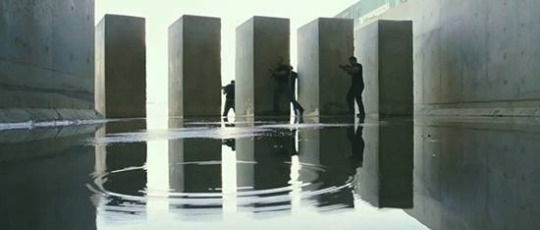
Blackhat. Some really cool moments and scenes, but a bit underwhelmed the second time around. (The first.) Updated Michael Mann rankings:
Selfish

I read Kim Kardashian West’s book Selfish, and can’t help but like her more. (I’ve never watched the TV shows, and only know the bare sketches of her bio and place in culture at the moment.) I think any book of portraits of just one subject would have a similar effect. Just another human gettin’ by.
Haven’t seen the whole fireside chat, but had to dig up the source when came across this great Jeff Bezos wisdom around 4.5 minutes in, on anticipating future business needs:
I very frequently get the question, “What’s going to change in the next ten years?” And that is a very interesting question. It’s a very common one. I almost never get the question, “What’s not going to change in the next ten years?” And I submit to you that that second question is actually the more important of the two. Because you can build a business strategy around the things that are stable in time. In our retail business, we know that customers want low prices. And I know that’s going to be true ten years from now. They want fast delivery. They want vast selection. It’s impossible to imagine a future ten years from now where a customer comes up and says, “Jeff, I love Amazon. I just wish the prices were a little higher”. “I love Amazon. I just wish you’d deliver a little more slowly.” Impossible. And so the effort we put into those things, spinning those things up… we know the energy we put into it today will still be paying off dividends for our customers ten years from now. When you have something that you know is true, even over the long term, you can afford to put a lot of energy into it.
There’s a life metaphor in there somewhere.
(Source: https://www.youtube.com/)
Give me file hierarchies, or give me chaos.
When it’s time to get dressed in the morning, I don’t throw myself into a giant room full of clothes. I pull socks from my sock drawer and shirts from my shirt drawer. I’ve been doing this since I was five years old. It’s not a challenge.
Koji Kondo’s Super Mario Bros. Soundtrack
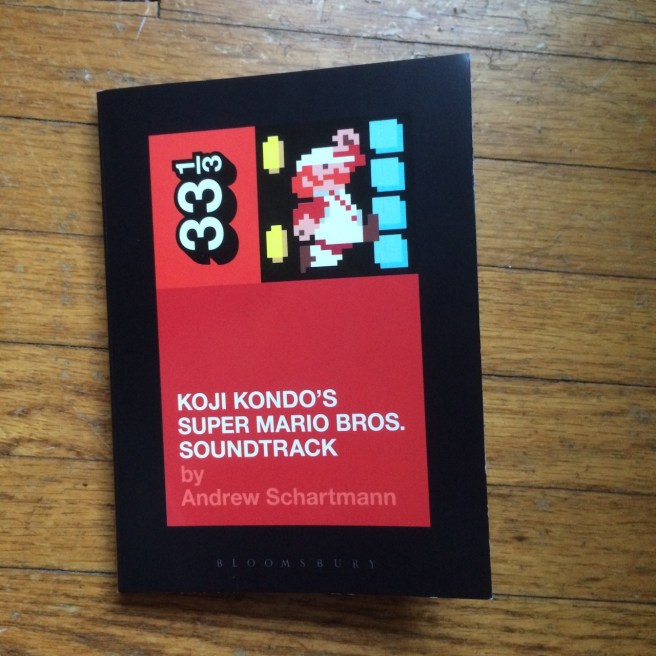
I read Koji Kondo’s Super Mario Bros. Soundtrack and had felt many feelings. Overall a bit dry and academic. If you were obsessed with games of the era (I’m guilty), you probably know too much industry history to find anything new here in the first half, and you’re already sold on the cultural import. The second half focuses more on the music itself, and digs into music theory a bit more… but if you know a good bit about music already, it also feels like… just not enough. It still made me very nostalgic, though, and for a while I convinced myself I need to buy a Wii U or something.

The Spy Who Came in From the Cold

The Spy Who Came in From the Cold. Gotta admit I didn’t follow this one very well. I liked it, though.
 Mark Larson