austinkleon:

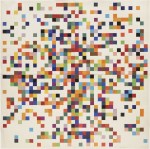
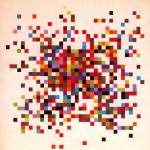
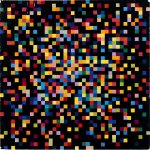
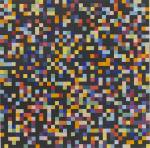
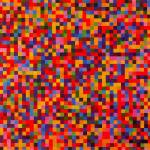
Ellsworth Kelly, Spectrum Colors Arranged by Chance I—VIII

From The Philadelphia Museum of Art:

While in Paris between 1948 and 1954, Ellsworth Kelly explored many new artistic strategies. Seeking to abandon figuration for abstraction, in 1950 he seized upon the randomness of collage made of cut-up pieces of his drawings. In a further effort to remove any semblance of a figurative image from his work, the next year he arranged collaged elements by chance on the systematic form of the grid. The fortuitous discovery in a Paris stationery shop of a stock of gummed papers in twenty colors led to eight collages entitled Spectrum Colors Arranged by Chance; the present composition is the first in the series. With a method both systematic and random, Kelly took the small squares of colored paper and arranged them quickly and intuitively on the grid, as if by chance, using no system or scientific method except to proceed progressively from the grid’s lateral sides toward the center. As a result of Kelly’s instinctive and playful method of composing, try as one might, there is no scheme or pattern to discover in the arrangement of the colors in this vibrant collage. Innis Howe Shoemaker, from Philadelphia Museum of Art: Handbook of the Collections, 2009.

From an interview at the Tate Museum:

Christoph Grunenberg: Did you use a mathematical system with the early works?

Ellsworth Kelly: It was a chance system for the placement of colours on a grid. Numbered slips of paper each referred to a colour, one of eighteen different hues to be placed on a grid 40 inches by 40 inches. Each of the eight collages used a different process.

Christoph Grunenberg: Did you make conscious references in the arrangement of these works to the aesthetics of the colour chart?

Ellsworth Kelly: I never thought of colour charts at all when I was working on them. They were really an experiment. I wanted to show how any colour goes with any other colour. Above all, I wanted to learn about colour relationships. Many of the works of this period start from chance encounters, such as shadows on a staircase, the reflections of the sun on the River Seine and the exposed sides of buildings that showed the abstract black patterns where the chimneys had been. After the experiments with arranging colours by chance came my first works using the actual colour spectrum as a source (Spectrum I, 1953).

via Socks. Filed under: Ellsworth Kelly, color

I really love these. Pixel art before pixels were a thing.
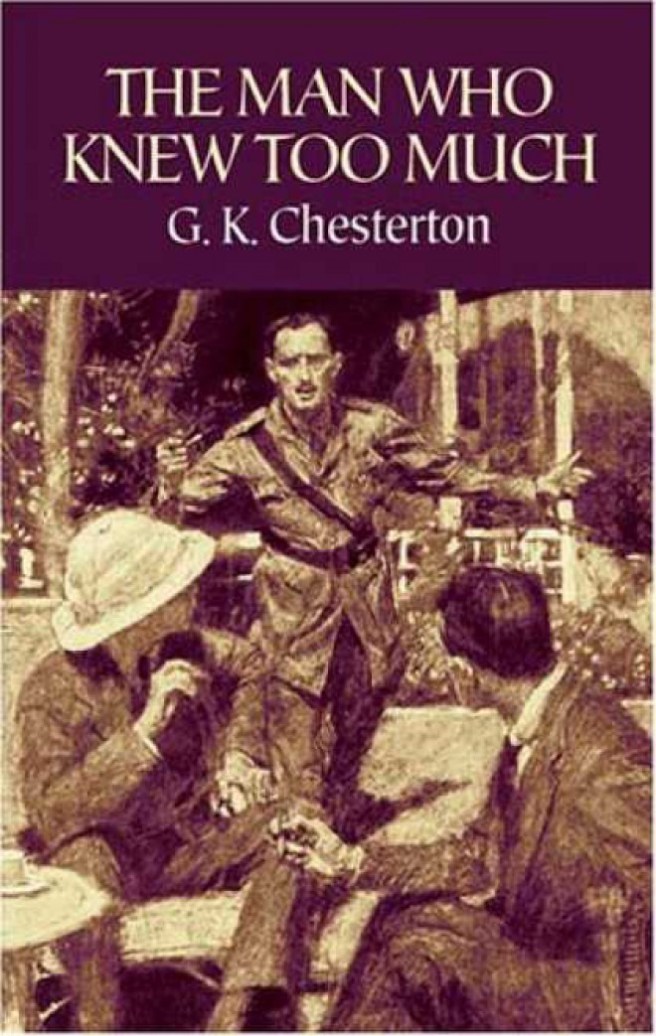
The Man Who Knew Too Much

I read GK Chesterton’s story collection The Man Who Knew Too Much, and it was a lifesaver. I picked this book on instinct right before I took off on a flight. When I was doing my final packing the morning of my trip, none of the books on my nightstand felt right. All the books at the airport looked dumb. It was a crisis. Then I remembered Project Gutenberg. I skimmed through some of the top/popular lists, clicked on some names I recognized, and a few seconds later I had a handful of options ready for travel. A good collection of fun, cynical mysteries, usually with some laconic or mordant humor. There’s usually some corruption at the heart of things. If you ever find yourself in a pinch, Gutenberg has you covered.

BLDGBLOG: Ghost Streets of Los Angeles.

I love the idea that the buildings seen here take their form from a lost street—that an old throughway since scrubbed from the surface of Los Angeles has reappeared in the form of contemporary architectural space. That is, someone’s living room is actually shaped the way it is not because of something peculiar to architectural history, but because of a ghost street, or the wall of perhaps your very own bedroom takes its angle from a right of way that, for whatever reason, long ago disappeared.

Chi-Raq

Chi-Raq. This one made me wonder if other movies are even trying to be interesting. Some parts I didn’t love, some I actively kinda disliked, but man there’s so much good stuff. So many different moods and shifts. It’s a little bit of a mess but I’d much rather feel that investment, alternately cackling with pleasure and rolling my eyes, than settle for a placid, sated indifference for two hours.

Equilateral

I read Ken Kalfus’ Equilateral, and thought it was worthwhile. A 19th century engineer coordinates the construction of a giant continent-spanning triangle built as a signal to Martian civilization. There’s a faint kinship with Euphoria (which I loved), in its blending the romance, science, and exploration.

Creed

Creed. Loved it. Loooooooooooved it. I’d put it up there with the original. Jordan and Thompson leads radiate young beautiful blackness. There’s nothing new in the plotting of their story, but I love how they grow together. They each have their own thing cooking, neither one gives it up, and they find a way to show up for each other. Stallone – and I love how these movies can’t help but be autobiographical – is solid, that ideal Balboa mix of tough and noble and vulnerable. Interesting naming of Jordan’s lead. I was thinking Adonis complex, but rather than driven by misperceived appearance, it’s a deeper shame from ancestry, or maybe even just existing in the first place. Also ties in with rebirth pattern you see in the myths: the son and the franchise. Love the camera tracking in the first big fight, and its willingness in calmer scenes to sit back and bit and not shove faces in your, uh, face. Also dig the fun details like the stat cards for rival boxers. Why not? Even the triumphantly corny moment with the biker kids taps into something so local and specific you can’t argue with it. I was ready to fight. One of my favorites this year.

I started using Day One last fall. Today makes 365 consecutive days with at least one entry, most with several sets of notes and a photo or two. Think I might get those 600-something pages printed and bound and read everything I forgot. I guess I could have been putting this on paper all along, but y’know, whatever helps you build the habit…

Structured Procrastination: Do Less & Deceive Yourself

Procrastinators often follow exactly the wrong tack. They try to minimize their commitments, assuming that if they have only a few things to do, they will quit procrastinating and get them done. But this goes contrary to the basic nature of the procrastinator and destroys his most important source of motivation. The few tasks on his list will be by definition the most important, and the only way to avoid doing them will be to do nothing. This is a way to become a couch potato, not an effective human being.

cough. Filed under: procrastination.

Structured Procrastination: Do Less & Deceive Yourself

Room

Room. I love that a huge piece of this movie starts where many would have left off. Like most of it is time-shifted, where we see the after-affects of a horrifying experience, not just the first victory over it. Some side characters I can’t get behind, but the leads are solid gold.

When Popular Fiction Isn’t Popular: Genre, Literary, and the Myths of Popularity | Electric Literature

There is an odd cognitive dissonance that happens in these conversations, where we are simultaneously supposed to believe that literary fiction is “mainstream fiction” and genre fiction is “ghettoized,” and also that literary fiction is a niche nobody reads while genre authors laugh all the way to the bank.

When Popular Fiction Isn’t Popular: Genre, Literary, and the Myths of Popularity | Electric Literature