Into the Blue

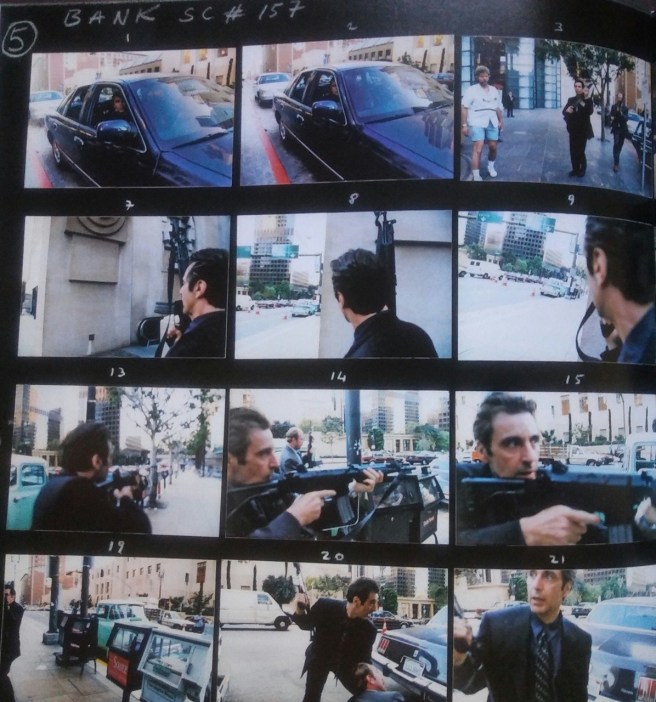
Into the Blue. One of the mid-level ‘00s action/adventure films that holds up. I love some of the cliche characters here. Like, yep, that new friend is definitely going to ruin everything by doing something dumb. You know it instantly. And I’d totally forgotten about Brolin’s role in this. If a movie makes you envy a lifestyle even if it’s not a great movie, it’s still doing something right.

Do we need *more* radical Islam? – Marginal REVOLUTION

In general, I am suspicious when someone dismisses a view for being “radical” or “extreme.”  There is usually sloppy thinking behind that designation.  Why not just say what is wrong with the view?  How for instance are we supposed to feel about “radical Christianity”?  Good or bad?  Does it mean Origen or Ted Cruz or something altogether different?  Can’t we just debate the question itself?

The same is true in politics.  Let’s say someone favors free trade and the First Amendment.  Is that “radical”?  Or is it mainstream and thus non-radical?  Does labeling it radical further the debate on whether or not those are the correct positions?

Do we need *more* radical Islam? – Marginal REVOLUTION

Blow Out

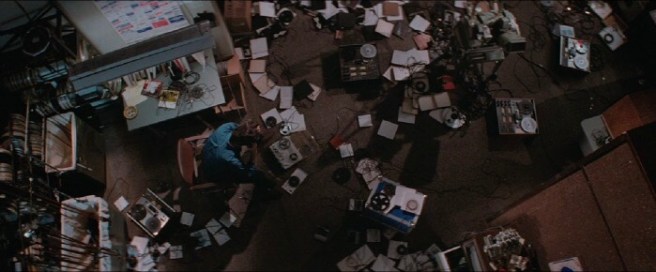
Blow Out. Last movie I saw at Ebertfest, and man what a way to go out. Love the cold open with a terrible horror film shoot… which we revisit later on. The movie does this throughout, working with both highbrow and lowbrow, exploiting genre trappings while mocking them. John Lithgow is amazing. I love how much old tech is in this: tape recorders, 16mm film, photo development, paper flipbooks, wearing wires. The climax, so ecstatic and lush and colorful and heightened through its slowness, is perfect. There’s something about the idea of truth in this one. Audio isn’t enough. It’s seeing that’s believing.

The Scrying Game — Real Life

Making leisure your labor, an elaboration of “working from home,” can be a profound comfort. Collapsing the public and private can mean protection from both realms — stripped of some of the obligations of traditional professionalism, your public life can be more intimate and casual. And when you “be yourself” for a living, your private self can be infused with the armored posturing of a public persona. This elision can also, truly, drive a person crazy.

The Scrying Game — Real Life

Love & Mercy

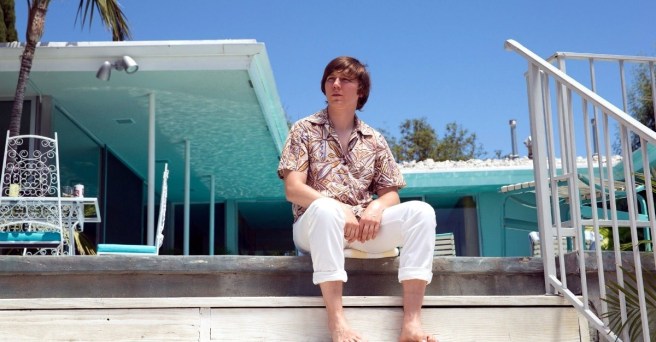
Love & Mercy. Biopics are not my strong suit and I usually complain about them. This was a good one, alternating between an older and a younger Brian Wilson, some of the scenes echoing each other. It didn’t delve into the drug stuff as much as I expected, or the long years he spent in bed. I wonder if that was a PR thing? Or maybe it just doesn’t lend itself to picturization. Still an interesting view of mental illness, and mental illness in a particular time and place without stuff we take for granted now. Also an atypical romance here, where the collapse happens in a way that you’re sympathetic to both. He’s a broken man; she’s a woman who knows she can only give so much. I left wondering about how thwarted and overwhelmed he must have felt. Not just the creative struggle to take what’s in his head and make it real. There’s also the conflicting and belittling messages from father, doctor, bandmates, etc. Wicked sound design at times playing against all of those in a few scenes, like when he rejects his father and picks up the headphones, some studio breakthroughs, some moments wrestling with schizophrenia.

After seeing this, I’m also curious about The Wrecking Crew, a doc about the session musicians who helped create the original sound for the Beach Boys and many others.

Filed under: Ebertfest

Radical Grace

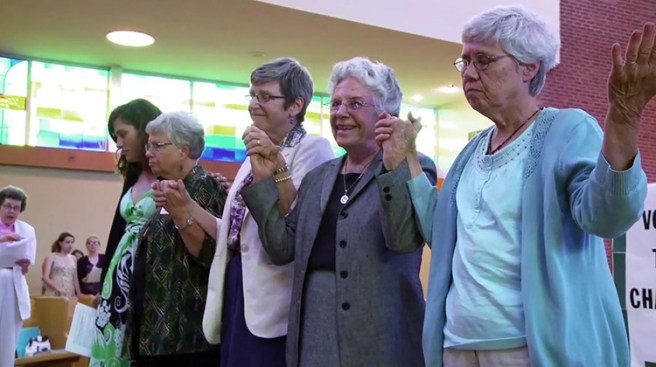
Radical Grace. This was a fun documentary. It tracks a group of feisty nuns and their guerrilla battles with the patriarchy in the Catholic church. They come under a lot of fire for more progressive outspokenness on a variety of issues. The sisters keep alive a sort of old-school community-based hippie evangelist approach. There’s some good droll “those wild women need supervisin’!” humor throughout. The nerve! Favorite line was from Sister Jean Hughes, when she said something like “God is not a man with a beard. God is the impetus for good.”

Why Is It So Hard to Get Serial Drama Right in 2016?

As TV drama becomes more traditionally novelistic, announcing exactly how long a story is going to take and assuring us that the end of a season will be the End, we can breathe a sigh of relief, because we know that at least one thing we’ve invested our emotions in will set an endpoint and stick to it and let us move on to something else.

This speaks to me. I don’t remember the last show I watched past the third season. I’m sure I’m missing out on many wonderful experiences, but… to each their own. Cf. streaming TV as a new genre.

Why Is It So Hard to Get Serial Drama Right in 2016?

Force of Destiny

Force of Destiny. In this one a sculptor gets liver cancer and falls in love. One of those sweet gentle ones, very weepy and slow. Every now and it’s intercut with trippy scenes: a heron flying with a stick; the hero with his mother as a child; scenes from Italy travel and boats; a masked ball with people in the hospital. One thing it captures well is that special sort of quite terror and anxiety of waiting in the hospital, surrounded by other people’s grief and afflictions. The autobiographical overtones here made me wonder if it’s self-indulgent, and if that’s bad, and why it matters, and why it bothers me, and what it means that it colors my reaction to the film so much. Also a little bit of a not-too-subtle organ donation promotional, and I’m on board with that. Filed under: Ebertfest.

Eve’s Bayou

Eve’s Bayou. One of my absolute favorites from Ebertfest. Maybe my favorite, period. Stands out superficially with some impressive child actors, female leads throughout, and no white people. I love how it accumulates little moments. There’s a vibe here I’m not savvy enough to describe other than “very 90s” that’s very… old-fashioned. Full orchestra. Soft film image. Evening glow. It felt like a play at some points, with some of the momentum and delivery in the dialogue, and how the scenes were staged. The scene where Mozelle tells the story of her husband confronting her lover is a little masterpiece. Highly recommended!

Disturbing the Peace

Disturbing the Peace. A documentary about how former militants – Israeli and Palestinian – changed their minds, joined up with the enemy, and started to work for peace. It opens with personal stories of transformation. Confessions of wrongdoing. Stories of victimhood. The moment they decided to do something different than fight the other side. In form, it’s a mix of talking heads, reenactments, news reel footage, and live documenting protests and nonviolent demonstrations.

My favorite part was this really great scene between husband and wife. The wife holds a more angry and strident pro-Palestinian stance. She sees the nonviolent, loving approach as a surrender. There’s this awesome parental tension I’d never considered – how do they decide to expose their daughters to that greater world and their perspective, when to introduce them to certain ideas, etc.

There’s also the fact that the rest of the populations (Israeli and Palestinian) sometimes aren’t just ambivalent but sometimes strongly anti-nonviolence, strongly against peaceful protest. Gave me a new appreciation, of how hard it is to do protest work when the rest of your community hates what you’re doing…

I forget whether this was in the movie or in the post-movie conversation, but I also like the idea that forgiveness is not altruistic. It’s one of the best things you can do for yourself.

Filed under: Ebertfest.

L’Inhumaine

L’Inhumaine. Marcel L’Herbier’s old French 1924 silent film. I saw this one at Ebertfest, along with Darius Milhaud’s original score played live by the Alloy Orchestra. It… messed with my head.

It starts at this awesome crazy-designed mansion of wealthy singer. You see, she’s a babe and there are men competing for her attention. One is jilted and attempts/fakes suicide. People mourn. There’s a big scene at a Paris theatre with a big rabble-rousing crowd. (That scene also features some awesome cameos from real-life friends from the art world – Proust, Joyce, Pound, etc.). The singer feels guilt. The suicide guy returns. One of the other suitors, a Maharaja, seeks revenge for his jilting by posing as a taxi driver and planting a poisonous snake in her cab. She dies. A mad scientist revives her. Etc. That’s not even the half of it. The final trippy hallucinatory sequence is NUTS. There’s montage, translucencies, overlapping images, swapping color filters, flashes of bold color, accelerating cuts. Don’t sleep on the old stuff.