In “Collateral Beauty” and “Passengers,” Two Tales of Gaslighting – The New Yorker

Fantasy, even when it’s rooted in practical details and doesn’t involve any metaphysical impossibilities, is the hardest genre to pull off, for the simple reason that life is interesting. A drama or a comedy that sticks close to experience has the intrinsic virtue of documentary—and, as with documentary itself, less is usually more.

In “Collateral Beauty” and “Passengers,” Two Tales of Gaslighting – The New Yorker

99 Homes

99 Homes. A tale of greed and selfishness. I think the lead’s motivation is borderline too irrational to hold up, but you never know. Wasn’t expecting so much from Andrew Garfield, but he’s legit. Shannon is the king.

Gone Baby Gone

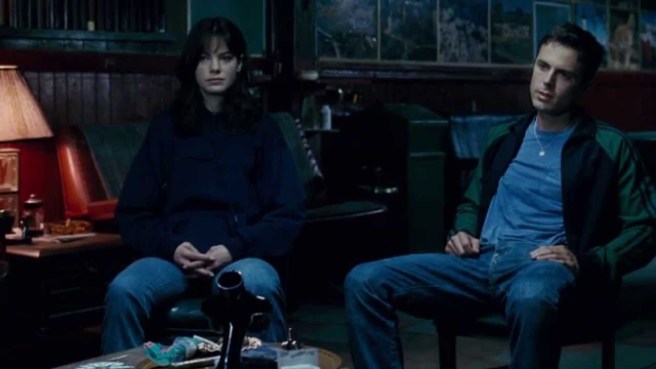
Gone Baby Gone. Second viewing (I like my first write-up). One thing I hate in this movie is how a disfigured villain character distances us. Seems like kind of a weasel move. You see similar in True Detective, which also really bothered me. So much of the series lingers in mundane evil and violence, and then… the final villains are freakshows. Lame. I suppose it’s a bit different here with the denouement, but the earlier raid still gets under my skin.

Force Majeure

Force Majeure. Domestic dramas are better when they are also dark comedy. I really liked the balance here. So much awkwardness, the couple tentatively probing and exploring what they’ve learned about each other, figuring out how to break the silence when vulnerability is high.

Into the Blue

Into the Blue. One of the mid-level ‘00s action/adventure films that holds up. I love some of the cliche characters here. Like, yep, that new friend is definitely going to ruin everything by doing something dumb. You know it instantly. And I’d totally forgotten about Brolin’s role in this. If a movie makes you envy a lifestyle even if it’s not a great movie, it’s still doing something right.

Do we need *more* radical Islam? – Marginal REVOLUTION

In general, I am suspicious when someone dismisses a view for being “radical” or “extreme.”  There is usually sloppy thinking behind that designation.  Why not just say what is wrong with the view?  How for instance are we supposed to feel about “radical Christianity”?  Good or bad?  Does it mean Origen or Ted Cruz or something altogether different?  Can’t we just debate the question itself?

The same is true in politics.  Let’s say someone favors free trade and the First Amendment.  Is that “radical”?  Or is it mainstream and thus non-radical?  Does labeling it radical further the debate on whether or not those are the correct positions?

Do we need *more* radical Islam? – Marginal REVOLUTION

Blow Out

Blow Out. Last movie I saw at Ebertfest, and man what a way to go out. Love the cold open with a terrible horror film shoot… which we revisit later on. The movie does this throughout, working with both highbrow and lowbrow, exploiting genre trappings while mocking them. John Lithgow is amazing. I love how much old tech is in this: tape recorders, 16mm film, photo development, paper flipbooks, wearing wires. The climax, so ecstatic and lush and colorful and heightened through its slowness, is perfect. There’s something about the idea of truth in this one. Audio isn’t enough. It’s seeing that’s believing.

The Scrying Game — Real Life

Making leisure your labor, an elaboration of “working from home,” can be a profound comfort. Collapsing the public and private can mean protection from both realms — stripped of some of the obligations of traditional professionalism, your public life can be more intimate and casual. And when you “be yourself” for a living, your private self can be infused with the armored posturing of a public persona. This elision can also, truly, drive a person crazy.

The Scrying Game — Real Life

Love & Mercy

Love & Mercy. Biopics are not my strong suit and I usually complain about them. This was a good one, alternating between an older and a younger Brian Wilson, some of the scenes echoing each other. It didn’t delve into the drug stuff as much as I expected, or the long years he spent in bed. I wonder if that was a PR thing? Or maybe it just doesn’t lend itself to picturization. Still an interesting view of mental illness, and mental illness in a particular time and place without stuff we take for granted now. Also an atypical romance here, where the collapse happens in a way that you’re sympathetic to both. He’s a broken man; she’s a woman who knows she can only give so much. I left wondering about how thwarted and overwhelmed he must have felt. Not just the creative struggle to take what’s in his head and make it real. There’s also the conflicting and belittling messages from father, doctor, bandmates, etc. Wicked sound design at times playing against all of those in a few scenes, like when he rejects his father and picks up the headphones, some studio breakthroughs, some moments wrestling with schizophrenia.

After seeing this, I’m also curious about The Wrecking Crew, a doc about the session musicians who helped create the original sound for the Beach Boys and many others.

Filed under: Ebertfest