Star Trek II: The Wrath of Khan

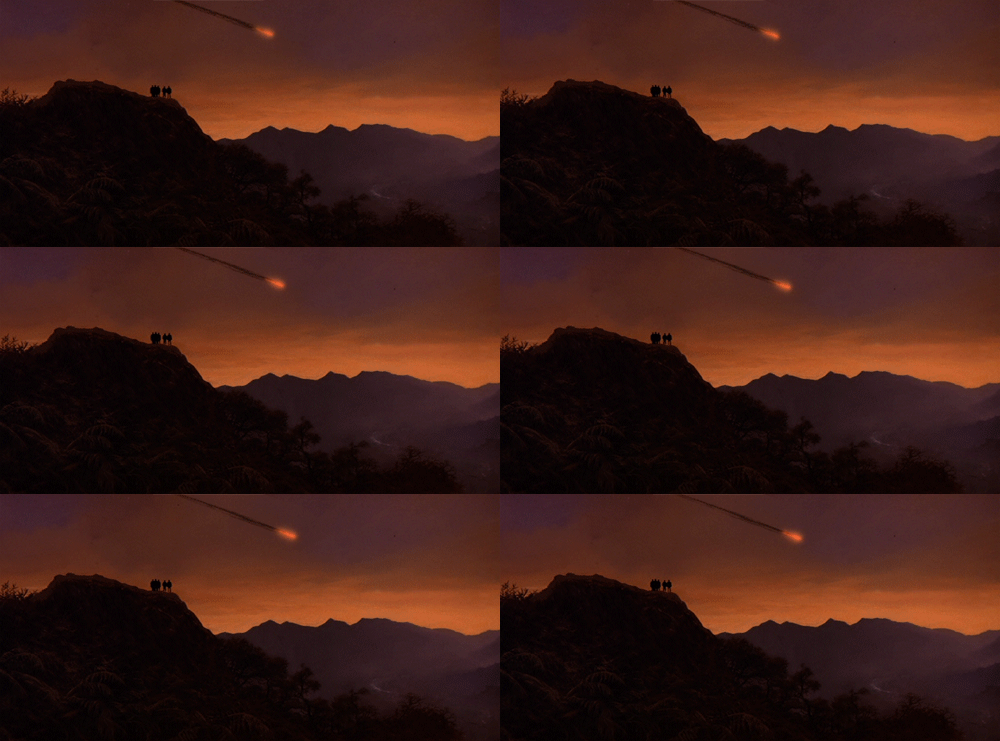
Star Trek II: The Wrath of Khan. It really is really good. Best of the Star Treks I’ve seen so far, for sure. Parable aside, one thing I’m growing to appreciate in this universe is the space battles. There aren’t always hordes of TIE fighters and X-wings buzzing in frantic clouds. Just a couple gigantic-ass ships lumbering around. You’ve got torpedoes, phasers, shields, and engines. Pick one, because you can’t go full power on everything. Every choice has a cost.

Midnight in Paris

Midnight in Paris.

That’s what the present is. It’s a little unsatisfying because life is unsatisfying.

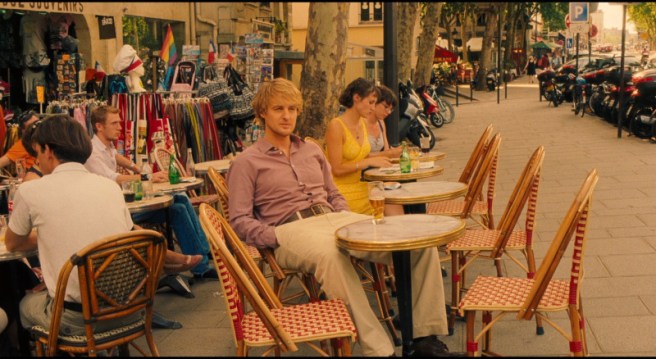
I really liked this one. Fun exploration of nostalgia, heroes, joie de vivre, being true to yourself, etc. And I love our hero’s giddy, can’t-believe-his-luck enthusiasm. This might be my favorite Owen Wilson performance ever. There’s a few characters who are only light caricatures for purposes of contrast, but that’s Woody Allen for you. I do love how the elements of scifi/fantasy here are a given, accepted, no explanation required.

It’s been a while since my last Woody Allen film. My updated rankings, though maybe it’s been too long a time for this to be definitive:

  1. Manhattan
  2. Annie Hall
  3. Midnight in Paris
  4. The Purple Rose of Cairo
  5. Vicky Cristina Barcelona
  6. Sleeper
  7. Match Point
  8. Scoop

Star Trek

Star Trek. This is more space opera than intellectual scifi salon, for better or worse. The best comparison I can think of is Rise of the Planet of the Apes: It’s not an all-time great movie, not really even close, but it’s great at what it does. Silly adventure that’s nice to look at. The cameo is dopey. But I do hope that movies following this reboot are a little more nerdy.

Solaris (2002)

Solaris (2002). I really liked the Tarkovsky version of the novel, and Soderbergh’s is very good, too. It’s more trim and spare. What I really loved was the sound throughout. Footsteps, rustle of clothing, breath. And that soundtrack! Cliff Martinez to the rescue again (see: Drive; Contagion). So perfect. That said, the script is a little painful here and there. What are you gonna do? At least the ideas about memory, empathy, regret, etc. are evergreen.

There’s not a single dud in any of the Soderbergh films I’ve seen lately. Looking forward to more. My current rankings:

  1. Haywire
  2. Out of Sight
  3. Solaris
  4. Contagion
  5. Ocean’s Trilogy, which I don’t remember all that well, honestly.

Blade Runner

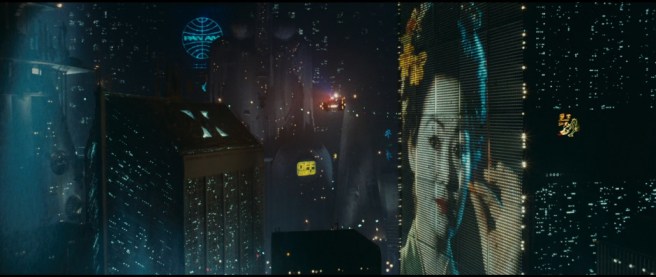
Blade Runner (Final Cut). Dang. Like Alien, this one holds up so, so well. Incredible movie. Cast, sets (!), shots, sound, score. I love the eye imagery and symbolism throughout. Themes of empathy, memory, humanity. Deckard has a sweet bachelor pad. If I were more of a jerk, right around now I’d take a second to mention how bad Prometheus was in comparison. Night and day.

Mad Love: The Surrealism of the Supernatural Romantic Melodrama, Part One « The Third Meaning

I hadn’t considered this. Socio-cultural roots of the modern fantasy melodrama?

Part of what makes supernatural romantic melodramas stories of amours fou, arguably, is how they go about addressing a fundamental problem for the love story in the contemporary social context: how do you erect obstacles between the couple? If they are in love enough for us to be invested in their situation, how can you have a plausible enough obstacle for them to have to overcome in order to be together? Unless you want to do a period picture (be it Thomas Hardy, Far from Heaven or The Notebook), class, nationality, religion, and other aspects of social background just aren’t sufficiently convincing barriers to a Western audience, even if really they should be; we have all been raised, mostly by movies and pop songs, to believe that True Love Conquers All.

Mad Love: The Surrealism of the Supernatural Romantic Melodrama, Part One « The Third Meaning

Analysis of Blade Runner. In which I learned that Deckard’s apartment scenes were modeled after Frank Lloyd Wright’s Ennis House, which has relief design inspired by the Mayan temples at Uxmal, which, unicorns aside, is an interesting architectural hint, when you recall that the Tyrell Corporation is headquartered in a gigantic-ass pyramid. Via Film Studies for Free, which I discovered on my journey waaaaaaaaaaaaaay down the rabbithole of film writing after watching and reading about Thief and related works.

Love

Love. Some parts I really loved, some parts I really did not. Such is the debut film experience. Excellent work on the sets and soundtrack.

Another Earth

Another Earth. This was just slightly too melodramatic for me, and thus I found it better as a source of ideas and food-for-thought than as general dramatic entertainment. Strong acting from the leads, though, and I appreciate that focus on only a pair of charactrers. I would have like less handheld camera. Good soundtrack.

Aliens

Aliens. This is how you do a sequel. Extend, not rehash. It’s not as good as Alien, but few things are and it doesn’t need to be because it’s just as fun. The first was about trauma and violation and survival, this one about confrontation and closure. Ripley’s got a great arc. I’d always wished they’d done more with Bishop’s crawl down the tunnel. It’s one of the best shots in scifi, but then the story zips elsewhere and when you come back, Bishop is chillin’, remote-controlling a plane. I also love when Ripley makes her machine gun + motion tracker + flamethrower superweapon with duct tape. It’s the little things.

Had the concept of software been available to me, I imagine I would have felt as though I were installing something that exponentially increased what one day would be called bandwidth, though bandwidth of what, exactly, I remain unable to say.

William Gibson on reading Borges’ Tlön, Uqbar, Orbis Tertius for the first time. Filed under: Borges; William Gibson.

I think that part of my experience of growing up in the American South in the early ‘60’s was one of living in a place unevenly established in the present. You could look out one window and see the 20th century, then turn and look out another window and see the 19th.

Brazil

Brazil. A daydreaming bureaucrat muddles through a dysfunctional future that seems crippled more by pervasive triplicate than any central evil. It’s not perfect, but it is absurd and entertaining. Jonathan Pryce is excellent.