Truth and falsity properly considered are properties of language, not of images.
Errol Morris in conversation with Lawrence Weschler.
Truth and falsity properly considered are properties of language, not of images.
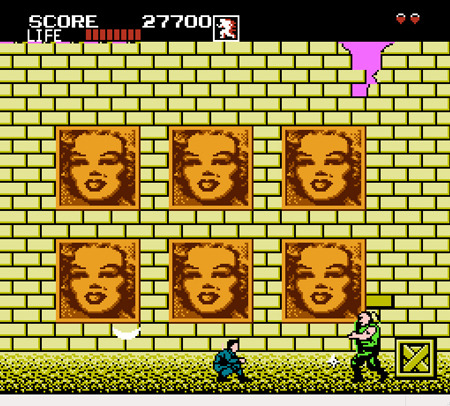
BURNAWAY » From Picasso to Warhol to Sega: Ashley Anderson’s Shinobi Marilyn. I’m a proud owner of one of Anderson’s other prints, and I’m so excited for this art show this weekend. Geeking out:
I love how Marilyn and 20th Century Fox never knew some artist in New York would buy a photo made to promote Niagara and turn it into some of the most famous art of the last 100 years. I love how Warhol died never knowing a game designer in Japan would inject his work into a video game (I think he would have loved it). I love how the game designer in Japan never knew his work would end up archived on the internet, found 25 years after the fact by some guy in Atlanta who would then turn the imagery right back around from the electric into the physical! It’s crazy!
Cf. Robin Sloan on the flip-flop. Atlantans: get thee to the Emily Amy Gallery this weekend.

Chris Glass » Vorontsov & Livadia Palaces. That floral relief is incredible.
Instagram filters are just how we’ve convinced ourselves to put up with looking at each other’s inane snapshots.
Essentially, we become our own documentarians and archivists in order to impose meaning on daily life, to show that we are honoring moments with the seriousness we are told they are supposed to possess, and to preserve that honor for posterity. We once did this in the semi-private realm of our families and social circles. Now we do so on a larger scale.
When we’re shown an image we tend to let our guard down. People learn how to read critically and think critically, but I don’t believe we learn how to see critically.

Raw File has an enjoyable writeup by Allen Murabayashi, in a form that we might call a “love rant.” It’s titled: Rant: I Love Photography | Raw File | Wired.com.
There are so many more incredible photos today than there ever were. And more people consume more photography than they ever did thanks to things like Facebook, Instagram, iPads, blogs, and “best of” compilations. This is the golden age of photography. Everyone takes photos now, and there is inspiration all around us. History is being made, and we’re capturing it. I love photography.
It’s worth a read/look.
A photograph is a secret about a secret. The more it tells you, the less you know.
Rita Hayworth – Gilda’s First Appearance. When I saw it featured in Visions of Light, which just showed the hair-tossing and winning smile, this bit got a nice laugh out of the audience. This was in the section of the documentary about Hollywood starlets and their symbiotic professional relationships with cinematographers who knew how to make them look great. Actresses and photographers would look out for each other. And then when I watched Gilda last night and saw this clip again, after a 20-minute intro… It’s still silly, but… I mean… dang.
So successful has been the camera’s role in beautifying the world that photographs, rather than the world, have become the standard of the beautiful.
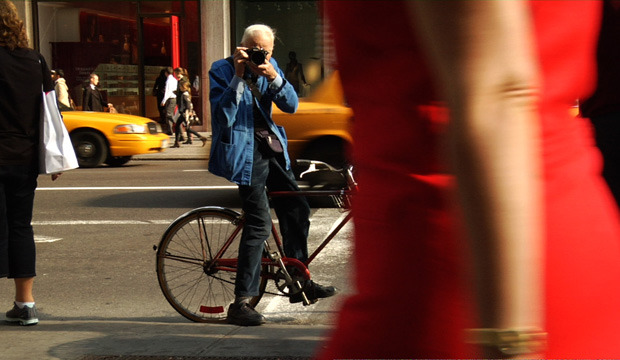
Bill Cunningham New York. Very highly recommended. What a guy.
If you don’t take money, they can’t tell you what to do. That’s the key to the whole thing.

Peachtree Street with wagon traffic. Atlanta, Georgia. 1864. Photo by George N. Barnard. 165-SC-46. Barnard in Georgia.

Igor Stravinsky bowing down to kiss his wife, Vera de Bosset. Hollywood, 1947. Photo by Loomis Dean for Life Magazine. I should really have more stuff with a Stravinsky tag.
If you don’t take money, they can’t tell you what to do. That’s the key to the whole thing.

“If Celebrities Moved To Oklahoma” — Pretty Faces, Poor Bodies | Celebrity Gossip, Academic Style.
The power of these photos, then, is the way that they illuminate the amount of capital it takes to make bodies not look like this. Celebrities weren’t born looking gorgeous and sophisticated. They are created; they are the product of capital. That process is elided, in part because the allure of the celebrity is the effortlessness with which he or she appears. But it’s absolutely crucial for us to remember, if only to recall that bodies are never automatically “trashy” or “classy,” “famous” or “poor,” including our own.

from the series aerials, claire johnson
When I saw this my first thought was “Hey, that makes me think of Chuck Close.” Life imitates art, etc.

A view of central Pyongyang, North Korea, at dusk on April 12, 2011. Photo by David Guttenfelder. Inside North Korea – The Atlantic. The most depressing place on Earth? (via)

Flannery O’Connor, Southern writer (of the novel Wise Blood and short stories) – died this day in 1964, aged 39, from lupus…
Photo of Flannery in front of her self-portrait w. peacock…
This photo was taken by AJC photojournalist Joe McTyre, by the way. Love me some Flannery.
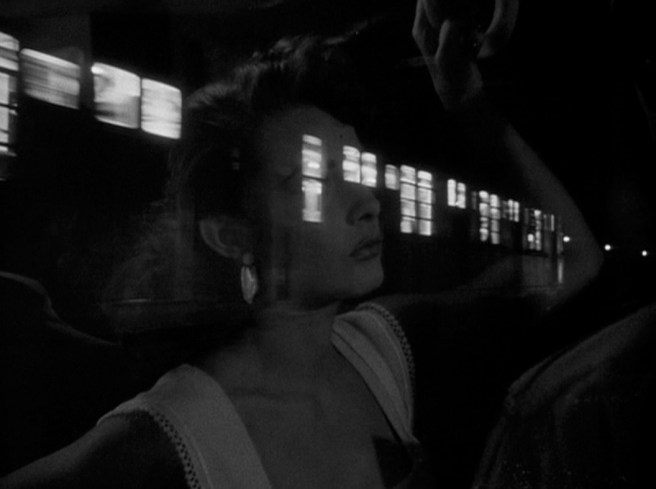
A still from Samuel Fuller’s Pickup on South Street. Part of a really awesome collection of stills in this series about trains in film. Linking to part 8 because it links to all the posts in the series at the bottom of the page.

Three guys running the marathon at the 1896 Olympics. Primitive running gear aside, this is a lovely photo. (via)
 Mark Larson