No Love For Me – DMX. “If I’m lookin’ for somethin’, it’s probably a fight.”
(Source: https://www.youtube.com/)
No Love For Me – DMX. “If I’m lookin’ for somethin’, it’s probably a fight.”
The difference between playing with Otis Redding and James Brown? I didn’t get fined when I played behind Otis.
You’d make a mistake while he was singing, and he’d turn around and say, “Ten dollars.”
Ummmmm… James Brown got in a gunfight??!!?!!!
James Brown: Soul Brother No. 1 (1933-2006) | Creative Loafing Atlanta
The difference is between sitting around listening to music and partying to music. You can’t just be walking back and forth on stage, otherwise it could just be a seminar.
What punk was to rock, crunk is to rap.
I come from a classical background. I came up singing Italian sonnets, Negro spirituals, and shit of that nature.
People’s Champion: Behind the Battle. I was bummed I missed the Atlanta premiere back in May, so I’m glad the first half of People’s Champion is now online. It’s a documentary going behind the scenes of the Eli Porter vs. Envy freestyle battle. They’re trying to Kickstarter the second half.
The music we spend our private time on, and use to build our identities, varies more wildly than ever from person to person. But there’s at least one kind of music that needs consensus to function, and that’s the stuff we dance, party, and strut around to. “The club” might be the last remaining space where strangers are all forced to pay attention to the same songs. And whether it’s an actual club or just a bedroom, it tends to be a space where people enjoy feeling fabulous.
Cf. Norman Lebrecht.
The concert hall is one of the few places where we become unreachable, where we can switch off our lifelines and surrender to a form that will not let us go for an hour or more.
Making pop music– more than almost any other art– sits right at the intersection between being yourself and finding something better than yourself to be. This, in the end, is what we’re looking for: Someone who can devise some fantastically compelling version of herself to act out, while still seeming as if she’s… being herself. Musicians are expected to write a great part and convincingly act the role at the same time. And even after that, we’re not really judging them on how compelling the identity they’re offering us is– we judge them based on which types of identities we personally need or aspire to at the moment. There is no identity politics quite as nuanced or complicated as people arguing about music.
Nitsuh Abebe kills it every time.
Radiohead – Staircase (live From the Basement). New song. Self-recommending, as they say.
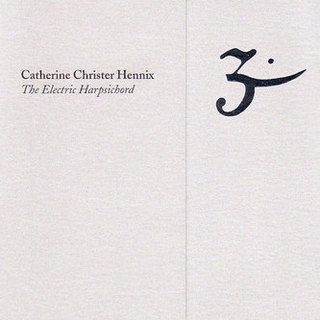
Catherine Christer Hennix – The Electric Harpsichord [1976]. Dang. Great piece of music. (Some say it’s “possibly THE obscure masterpiece of the days of the early American minimalism.”) In a stroke of unintentional genius, I apparently had my playlist such that it segued right into Bach’s Fantasy in A minor, BWV922 on harpsichord. Boom. And apparently I already had a harpsichords tag?
I need to see this.
I’ve got my eye on you, People’s Champion. You can also watch the first five minutes.
It’s my theory that rock and roll happens between fans and stars, rather than between listeners and musicians—that you have to be a screaming teenager, at least in your heart, to know what’s going on.
Ellen Willis, quoted in The New Inquiry – Heroine: Ellen Willis on Rock Music. On a similar note, Daniel Mendelsohn says:
Strange as it may sound to many people, who tend to think of critics as being motivated by the lower emotions: envy, disdain, contempt even… Critics are, above all, people who are in love with beautiful things, and who worry that those things will get broken.
See also both Little Steven and Elijah Wald on music and dancing.
Rock Steady – Aretha Franklin. Been too long since my last Soul Train post.

Terry Riley and Big Boi. American heroes. (via)

 Mark Larson