Room

Room. I love that a huge piece of this movie starts where many would have left off. Like most of it is time-shifted, where we see the after-affects of a horrifying experience, not just the first victory over it. Some side characters I can’t get behind, but the leads are solid gold.

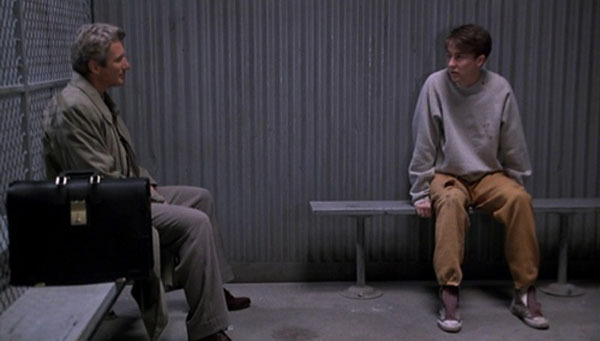
Public Enemies

Public Enemies. I love how so many people get to “lead” in this movie, though Depp is still at the heart of it. Forgot about the brief Channing Tatum scene. The arrest/trasnport/imprisonment scenes have some nice echoes of Kit Carruthers, the charisma and confidence. “We’re having too good of a time today; we’re not thinking about tomorrow.”

The Wesleyan Argus | A.O. Scott Defends the Art of Criticism

“One of the things that any artist is working with is other art. You think about filmmakers, for example, and they all start out as film fans. You have Martin Scorsese as a kid going to double features every day and absorbing all of the world in that way, and then thinking about Quentin Tarantino in the video store,” Scott said. “In the simplest way that you see something or you hear something, and you start thinking, ‘How did they do that? Could I do that? Could I do it better? How would I do it differently?’ All of what we identify as aspects of the creative process, the absorption of influence, the learning and discarding of rules, the workshop discipline of figuring out what works and what doesn’t and how—all of that is criticism.”

And:

Most human effort results in mediocrity, it’s just the tragic fact of the human condition. The question is, though, how mad are you gonna get about that?

The Wesleyan Argus | A.O. Scott Defends the Art of Criticism

brightwalldarkroom:

“It’s said that Chaplin wanted you to like him, but Keaton didn’t care. I think he cared, but was too proud to ask. His films avoid the pathos and sentiment of the Chaplin pictures, and usually feature a jaunty young man who sees an objective and goes for it in the face of the most daunting obstacles. Buster survives tornados, waterfalls, avalanches of boulders, and falls from great heights, and never pauses to take a bow: He has his eye on his goal. And his movies, seen as a group, are like a sustained act of optimism in the face of adversity; surprising, how without asking, he earns our admiration and tenderness.”

—Roger Ebert

American Psycho

American Psycho. Great example of how a movie can depict the absolute worst human being and make it enjoyable. A tale of hyper-masculine narcissism and sociopathy. Status envy. The recitations of facts, routines, brands and such, all that cataloging reminded me of… Walt Whitman? Bale’s character develops in only one direction, but he gives it his all.

“Back to the Future” is now all back and no future | MZS | Roger Ebert

The passage of time makes the whole trilogy seem wise and humble, in ways it never could seem in the eighties or nineties or aughts, because the entire thing is really and truly a time capsule—not of any temporal-physical reality, but of a particular strain of American cultural posturing circa 1985-1990. All movies, particularly time-travel movies, have a touch of this. But the “Future” films are different because, unlike the vast majority of time travel stories, they are anchored very strongly in the “present.” The present is not merely a framing device or a launching pad for adventures, as is the case in most time travel films. All visits to the past or future are related to the present – and the stakes are not just personal (Marty’s existence, his parents’ happiness), they are cultural. Marty doesn’t just change his family, he changes the town, and by implication, American life.

“Back to the Future” is now all back and no future | MZS | Roger Ebert

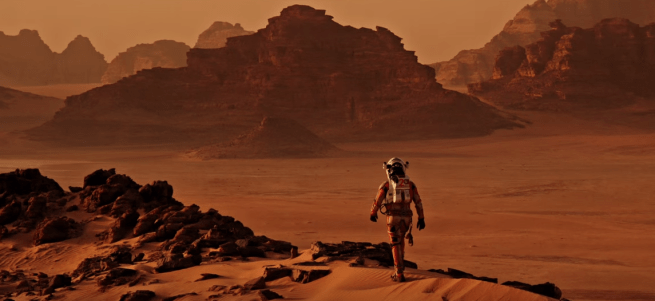
The Martian

The Martian. What’s most refreshing here is that it’s a fairly gentle, nice movie. Perfectly pleasant, always positive. I don’t think there’s anythig here for me to come back to, but it was really fun to watch. I didn’t finish the book.

The restriction of trailers to a few minutes of carefully selected and edited shots and scenes endows what we do see, from faces to car crashes, with a kind of pregnancy or underdeterminacy that allows audiences to create an imaginary (as-yet-unseen) film out of these fragments—we desire not the real film but the film we want to see.