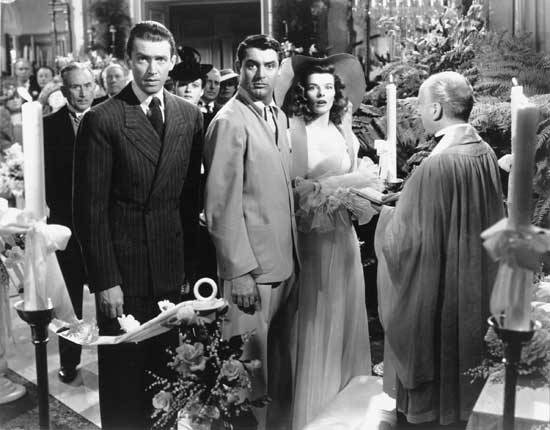
The Philadelphia Story. A very good movie. Hepburn and Stewart and Weidler steal the show here. I still don’t understand the appeal of Cary Grant.
The Philadelphia Story. A very good movie. Hepburn and Stewart and Weidler steal the show here. I still don’t understand the appeal of Cary Grant.

Gran Torino. Weaknesses up front: there’s some lazy writing, some bad acting, and Eastwood’s estranged family seems excessively caricatured. BUT, I thought the overall story arc here (themes: growing old; American confronting the Other; reluctantly becoming a better person) was really interesting and I never thought of switching it off. It had some good food-for-thought staying power after it ended. And Clint Eastwood gets a co-writing credit for the movie’s theme song.
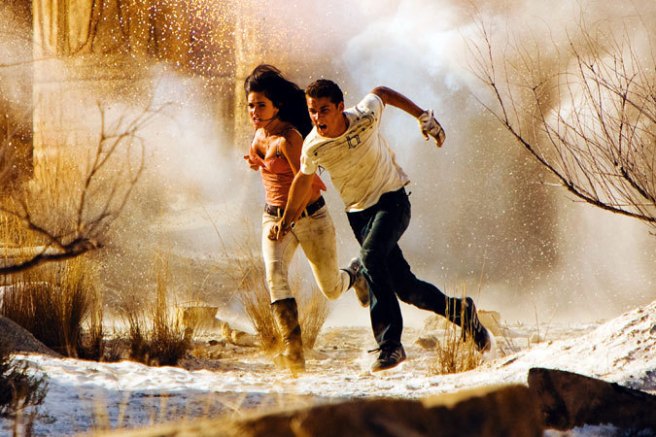
Transformers: Revenge of the Fallen. DNF, technically. About what I expected, only louder. I wouldn’t have screened it if it were my choice, but this was part of Atlanta’s Screen on the Green, which, this year’s mostly crappy movie selection aside (bring back TCM!), is usually nice when there are no real-life fisticuffs. Come on, Atlanta. Let’s do this right.

The Hurt Locker. I’m happy to say that the good parts were very, very, very good. Overall? Just okay.
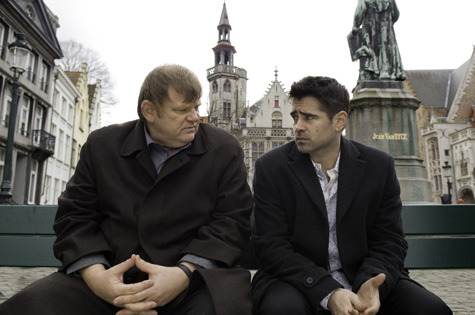
In Bruges. Plenty of dark humor presented in a carefree manner. You’re never too far from a laugh, but the pace isn’t manic. There’s a willingness to draw a scene out, let a situation linger. I liked it a lot.
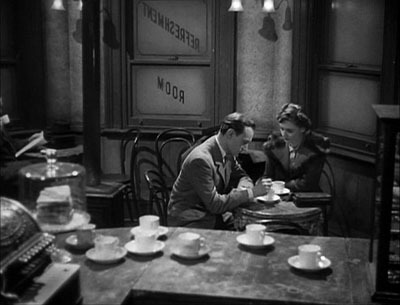
Brief Encounter. This was pretty good. I enjoyed it. It’s about an affair between two people, pretty tame by today’s standards. But that was a different era. Here’s a Criterion essay. And I got a couple semi-related thoughts:
One of the most enjoyable things about old/foreign movies is that I often don’t know the cast. It can feel more immediately immersive to see the characters as characters, rather than recognizing actors and trying to set aside that I know they’re portraying people. There’s no baggage, no expectations, no known quirks or ticks. It all feels very fresh.
This movie’s soundtrack relies heavily on Rachmaninov’s Piano Concerto No. 2, a few sections in particular. I wonder what it would be like, instead of scoring a film, to film a score. That is, take some work of music and make a movie such that every bit of imagery fits or bolsters (or undermines, why not?) the music in some way. Like Fantasia, I guess, but live-action and only focusing on one piece of music. Is there anything else in that vein? At the least, it would be an interesting constraint on the filming.

It Might Get Loud. Somewhat disappointed in this one. A bit slow. More like a set of parallel mini-bios, not enough material with the three of them together.

To Catch a Thief. It’s a romance packaged in a crime movie, and it’s quite good. Not fantastic, maybe not even great, but thoroughly enjoyable. Definitely feels shorter than it is. I expected the camerawork and direction to be more Hitchcockian (the faux diamond scene is an exception). I still don’t think I get Cary Grant, but I definitely want to see more Grace Kelly films. And I have to mention that first kiss. In context, it is absolutely incredible. Just jaw-dropping.

青梅竹馬 (Taipei Story). Directed by Edward Yang, who was part of that early Taiwanese New Wave thing. I’ve got a lot of patience for day-to-day slice-of-life movies, but found this a little too fragmented. I also think it suffered from a crummy translation (or, the translation was accurate and the writing was just that awkward). The scenes set at night seemed much better than the daytime ones, but I’m not sure why.

Plein Soleil (Purple Noon). This movie is wonderful. From 1960, it was the first adaptation of Patricia Highsmith’s 1955 book, The Talented Mr. Ripley. I really liked the 1999 version with Damon, Law, Paltrow, etc., and I’d say this one is even a smidge better. Compared to what I remember of the newer one, it seemed like there were fewer vignettes–the thread of the story spools out a bit more naturally. There’s a bit less prologue and a bit more watching the anti-hero trying to save his own ass. Fascinating stuff. In addition, some camerawork that winks its eye at the viewer, some of the best fashion on film and an excellent, unobtrusive soundtrack from Nino Rota. Recommended.

Monster. Charlize Theron is amazing in this movie. But the story is weak. Great craftsman, shoddy materials. It’s worth watching at least a little bit though. On a side note, the use of some pop songs (by Journey, The Searchers, REO Speedwagon, etc.) struck me as kind of weird. I understand their use as a sort of shorthand emotional signifier, but lately I find that a little more jarring. I think I might prefer a made-for-the-occasion original soundtrack.
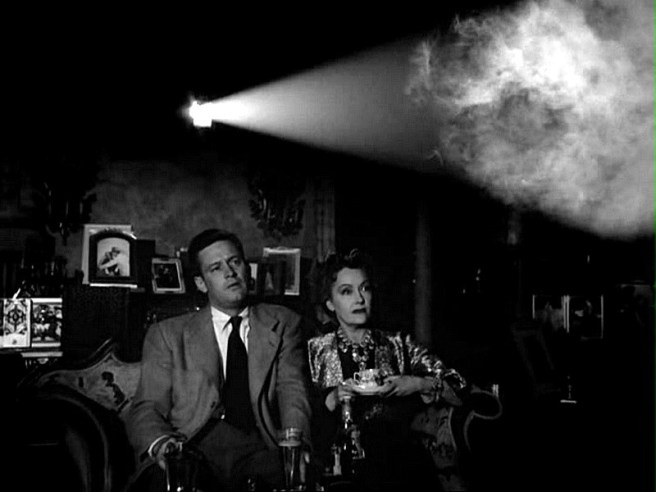
Joe Gillis: You’re Norma Desmond. You used to be in silent pictures. You used to be big.
Norma Desmond: I am big. It’s the pictures that got small.
Sunset Boulevard. Not as good as I had hoped, but still interesting beginning to end.

Mother. Eh. A hyper-protective mother defends an idiot son who’s been accused of a crime he may or may not have done. It waffled between realist slice-of-life and whodunit, and should have stopped at least 15 minutes earlier. I suspect this movie would have been better without the plot. Directed by Bong Joon-ho. I hear his movie The Host is pretty good.
Over these past few months I’ve been watching more movies than ever before, and Peter’s tweet got me thinking about movie-patience. I DNF books all the time. Movies, I almost always finish. Why is this? A couple theories:
Other possibilities?

The Cameraman. Keaton’s first film with MGM, whereupon he lost creative control and began his decline. In other words, the last of the good ones. Generally, if your movie introduces a monkey companion part of the way through, you are probably not in top form. That said, the best parts are very good: the dressing room scene and the scene at Yankee stadium (love his pitcher’s mannerisms, also check out the base-running and perfectly-timed slide into home at 2:35). It’s fun at times, but doesn’t compare with The General, Sherlock, Jr., or Our Hospitality.
Il Posto (The Job). I loved this movie and recommend it very, very highly. I would probably put this in my top 5. Here’s a Criterion essay. Basically, a young Italian goes interviewing for his first job at a faceless corporation, and there meets a lovely young woman in the same situation.
A few things I loved: 1) The story centers on a reluctant hero you can relate to. He’s tentative, intimidated. You find yourself rooting for him not because there’s some obvious evil to triumph over, but because he seems like a decent guy with decent aspirations. 2) The central love interest is done so well. The tension is really amazing, mostly created with pure body language: fleeting eye contact, reflexive shifting and posture perking up, trying to suppress that rush of exhilaration when they sense potential, (not-so-)subtle ways of giving the other an opening. 3) It’s beautiful. It’s got a feeling of being both very precise and very casual. I found myself thinking “what a beautiful moment” instead of “what a beautiful shot”.

Note by Note: The Making of Steinway L1037. This was interesting, but not a must-see. You get to know the multi-national cast of employees that put them together up in the Steinway factory in Astoria, Queens, NYC. There are also some scenes from the public showrooms and artist relations (patient employees help sensitive musicians searching for an ineffable something).
The scope of the actual construction is impressively broad–there are giant chunks of wood that just get absolutely manhandled, and there are tiny little fiddly bits that get tweaked and retweaked over a span of weeks. I used to work with my Grandpa in his workshop, and if you spend any time with smart carpenters, you catch on to the clever devices or tricks they invent to make the job easier. There’s some cool custom-made-for-the-job timesavers in the movie if you look for them.
The downside to all the behind-the-scenes stuff is that while you see a lot, they don’t explain a lot. E.g. you see a foreman selecting wood, but you don’t know what kind of wood it is or what kind makes it better than other chunks. I don’t know that I wanted a narrator intoning facts over all the footage, but it’s a shame that so much is kept at arm’s length. Maybe a more probing interviewer could have helped. If you’re really interested in the details, I think you’re better off reading something like the A Romance on Three Legs: Glenn Gould’s Obsessive Quest for the Perfect Piano.
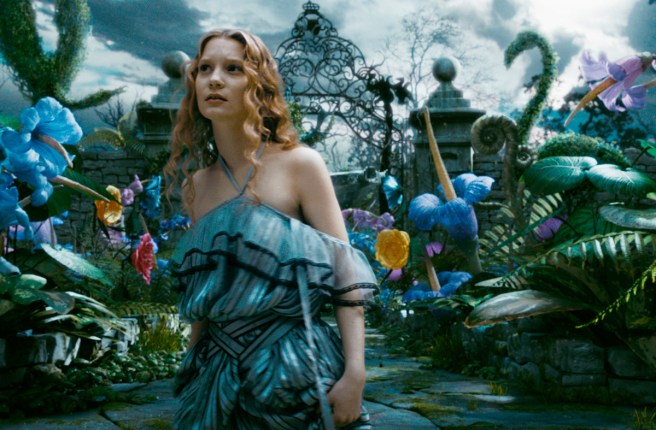
Alice in Wonderland. Mental note: refuse further invitations to see movies for kids. (See also). Too bad, because I like the cast in this one. Anne Hathaway is particularly amusing.
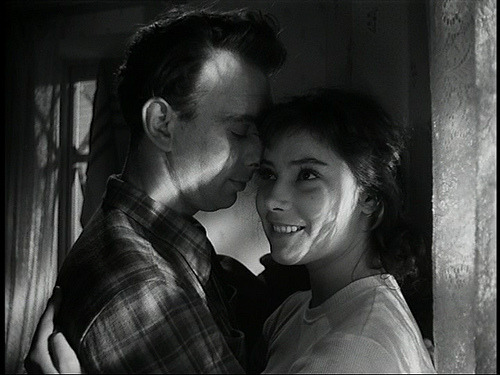
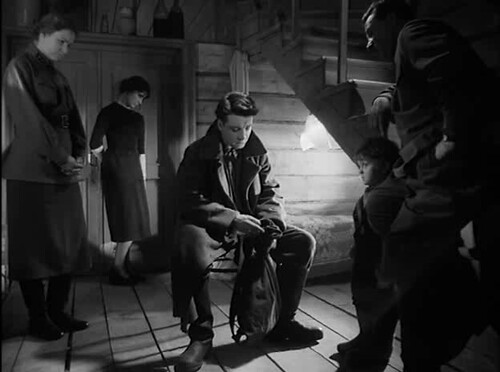
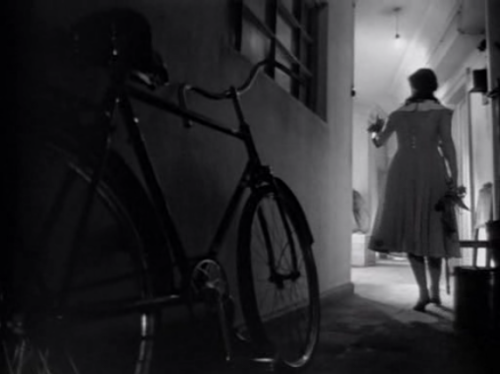
Летят журавли (The Cranes Are Flying). Here’s a good Criterion essay. It’s odd watching something like this the night after I watched Die Hard–which is a great movie, sure, but the camerawork is a bit more… utilitarian. This one is a treat for the eyes. It was directed by Mikhail Kalatozov and shot by Sergei Urusevsky, who is supposed to be a genius cinematographer. I think this is probably correct. Here are some more brilliant photos that don’t do it justice, because they’re not moving. There’s several dramatic long shots outdoors that are awesome, and many of the indoor takes have some clever tracking and repositioning. All in rich, purposefully-lit black and white. Looks like someone has put The Cranes Are Flying on YouTube so you can investigate. As for the story, it’s lovers-separated-by-war stuff. But if you’re going to get stuck watching a WWII romance that’s not Casablanca, it’s probably best take charge and pick something that’s visually awesome. And I should mention that the actors are great.
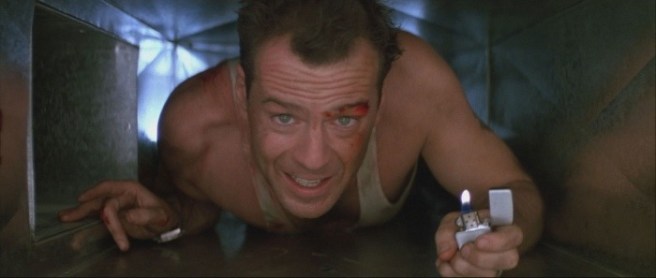
Die Hard. Excessive law enforcement buffoonery aside, it’s fun fun fun. Great movie. I got inspired to watch it after BLDGBLOG’s post on Die Hard as an architectural film.
 Mark Larson