Reblogging so I can enjoy this phrase a little longer: “Oklahoma City’s free-jazz marionette of a superstar and its hailstorm of a point guard”.
Kevin Durant, Russell Westbrook, and a midseason report on the Oklahoma City Thunder – Grantland
Reblogging so I can enjoy this phrase a little longer: “Oklahoma City’s free-jazz marionette of a superstar and its hailstorm of a point guard”.
Kevin Durant, Russell Westbrook, and a midseason report on the Oklahoma City Thunder – Grantland
Writers, it seems to me, should write, not make speeches. But speeches, like quasi-journalistic writing assignments, can come attached to plane tickets, to hotel rooms in cities one might never have thought of visiting otherwise. In writing speeches, curiously, one sometimes finds out what one thinks, at that moment, about something. The world at large, say. Or futurity. Or the impossibility of absolutely grasping either. Generally they make me even more uncomfortable to write than articles, but later, back in the place of writing fiction, I often discover that I have been trying to tell myself something.
Until recently, the universal self-actualizing creative ambition was to write a novel. Everyone has a novel in them, it was said. Now the fantasy has changed: Everyone has a TED Talk in them.
Judging only by the books on the list that I’ve actually read and heard about, excellent suggestions all around. I need to do this.
Why not make the fruit bowl more visible? Put your fruit on the table and not in the refrigerator bin. People say, “That’s okay because I have self-control.” Why not give your self-control a break?
Excellent interview about various findings from research on eating habits. External cues, exercise, perceptions, norming, status, mindfulness, and more generally, over-confidence.
One of the more peculiar, more semiconscious exercises I practiced, early in my fiction-writing career, consisted of reading record reviews in, say, Melody Maker, while pretending that I was actually reading a review of a new science fiction novel. I would later attempt to recall that novel, my sense of it from the review, as a species of writing-prompt.
Self-deception makes us better at deception. For example, there is value in my being able to deceive you into thinking I am stronger than I really am. You’re less likely to pick a fight with me, I’m more likely to win a dominance struggle without fighting, and so on. I am better able to bluff you if I actually believe I am stronger than I really am. So we deceive ourselves in order to be better able to deceive others.
Filed under: delusions.
Art is cognitive play. Humans and other intelligent species engage in prolonged periods of physical play as children—mock combat, feats of balance and coordination—in order to train themselves to deal with situations they will face as adults. Art, beginning with the songs of mothers and infants, trains our minds. Cognition is, first and foremost, pattern recognition, and art is concentrated pattern. But humans are also intensely social animals—the source of our evolutionary success—and the life of small human groups, as primate studies suggest (and everyday experience confirms), requires a constant effort of social cognition: eye contact, shared attention, awareness of status hierarchies, sensitivity to what others may be feeling, intending, discovering, believing. That’s where storytelling comes in.

Raw File has an enjoyable writeup by Allen Murabayashi, in a form that we might call a “love rant.” It’s titled: Rant: I Love Photography | Raw File | Wired.com.
There are so many more incredible photos today than there ever were. And more people consume more photography than they ever did thanks to things like Facebook, Instagram, iPads, blogs, and “best of” compilations. This is the golden age of photography. Everyone takes photos now, and there is inspiration all around us. History is being made, and we’re capturing it. I love photography.
It’s worth a read/look.
An extended, worthwhile critique/rant on Garden & Gun. OA Editor Marc Smirnoff talks a bit about willful editorial blind spots, like G&G’s intentional avoidance of politics, religion, and football. And race:
The South’s progress since 1966 is what needs to be celebrated, not the fact that a native magazine ignored the historic issues and deep struggles of the era. The growth in consciousness wasn’t a pretty process—wasn’t pretty enough for the pages of Southern Living—and it wasn’t even a process that all wanted. But nothing, in the end, has made the South more “civilized” and “gracious” than that growth.
(via)
G&G Me With a Buccellati Silver Spoon! The OA Editor Takes Down the Competition :: Oxford American

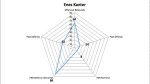

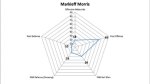
NBA Rookie Midterm Report. I love these radar charts for sports, especially with percentile rankings. Awesome.
To make it into the richest 1 percent globally, all you need is an income of around $34,00.
Perspective!
We [are] shaped as writers, I believe, not much by who our favorite writers are as by our general experience of fiction. Learning to write fiction, we learn to listen for our own acquired sense of what feels right, based on the totality of the pleasure (or its lack) that fiction has provided us. Not direct emulation, but rather a matter of a personal micro-culture.
By the time kids are 18, at least half of them have already received a psychological diagnosis.
If that’s true… wow. (via)

Steal Like An Artist Reviews – What People Are Saying. A stream of tweets, photos, and blog posts from happy customers. Why aren’t more writers/publishers doing this?
The great thing about dead or remote masters is that they can’t refuse you as an apprentice. You can learn whatever you want from them. They left their lesson plans in their work.
No matter what you are saying your effectiveness will be primarily determined by how much you love saying it.
As an artist you can sit and tinker with stuff forever. You can add and take away but I think that’s kind of the importance of having someone over you saying, “We need this, this is a deadline.” Sometimes those oppositions or those who push and pull are needed because we’ll just sit and tinker forever.
Claiming to be busy relieves us of the burden of choice. But if you’re working 50 hours a week, and sleeping eight hours a night (56 per week) that leaves 62 hours for other things. That’s plenty of hours for a family life and a personal life — exercising, volunteering, sitting on the porch with the paper, plus watching TV if you like.
 Mark Larson