Sleepers

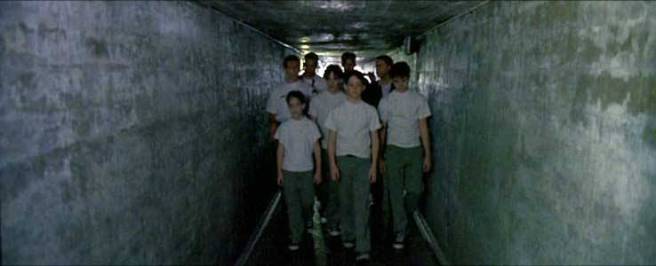
Sleepers. Has a nice momentum to it, but once it becomes a simple revenge story, it all goes to waste. I really liked Dustin Hoffman’s role, though. Mean Streets was another story of friend/neighborhood loyalties that I didn’t enjoy very much. I’ve heard good things about Levinson’s Diner.

The Naked and the TED

And also:

Since any meaningful discussion of politics is off limits at TED, the solutions advocated by TED’s techno-humanitarians cannot go beyond the toolkit available to the scientist, the coder, and the engineer. This leaves Silicon Valley entrepreneurs positioned as TED’s preferred redeemers. In TED world, tech entrepreneurs are in the business of solving the world’s most pressing problems. This is what makes TED stand out from other globalist shindigs, and makes its intellectual performances increasingly irrelevant to genuine thought and serious action.

The Naked and the TED

Q. and A. – Chris Rock Is Itching for Dirty Work – NYTimes.com

On criticism:

Only fans should be allowed to criticize. Because it’s for the fans. When I hear somebody go, “Country music [stinks],” I’m like, well, country music’s not for you. You’re just being elitist. Only a fan of Travis Tritt can say the record [stinks], because he’s got every one.

Also, on the need to work up your craft in private:

When you’re workshopping it, a lot of stuff is bumpy and awkward. Especially when you’re working on the edge, you’re going to offend. […] You’re mad at Ray Leonard because he’s not in shape, in the gym? That’s what the gym’s for. The sad thing, with all this taping and stuff, no one’s going to do stand-up. And every big stand-up I talk to says: “How do I work out new material? Where can you go, if I have a half an idea and then it’s on the Internet next week?” Just look at some of my material. You can’t imagine how rough it was and how unfunny and how sexist or racist it might have seemed. “Niggas vs. Black People” probably took me six months to get that thing right. You know how racist that thing was a week in? That’s not to be seen by anybody.

Q. and A. – Chris Rock Is Itching for Dirty Work – NYTimes.com
Unhappy husband must look past cliché – The Washington Post

I’d never thought about this before:

Here’s something to consider: Not everyone is comfortable with the abundance of noise, speech, color, smell, touch — especially touch — involved with small children. They’re in your lap, your arms, they’re tugging your hands, your shirt, your hair. Again, this affects men and women, introverts especially, older more than younger, and leads both men and women to withdraw (though women still tend to be the parent in the thick of it).

Unhappy husband must look past cliché – The Washington Post

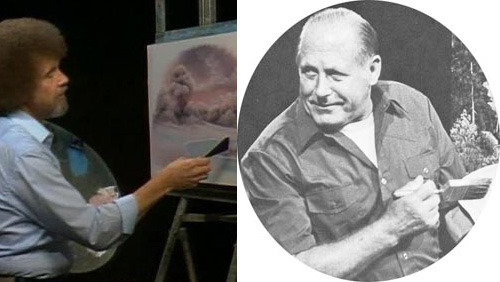
AUSTIN KLEON: Bob Ross’s rivalry with his mentor, Bill Alexander: “He betrayed me!”

This is so awesome.

austinkleon:

So here’s something you don’t hear about a lot — Bob Ross, the famous afro-ed host of The Joy Of Painting, was taught his famous “wet on wet” fast painting technique by a German expatriate painter named Bill Alexander, who, believe it or not, had his own PBS painting show calledThe Magic of Oil Painting, that ran from 1974-1982.

AUSTIN KLEON: Bob Ross’s rivalry with his mentor, Bill Alexander: “He betrayed me!”

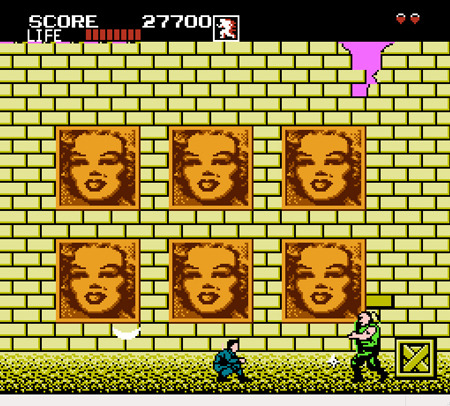
BURNAWAY » From Picasso to Warhol to Sega: Ashley Anderson’s Shinobi Marilyn. I’m a proud owner of one of Anderson’s other prints, and I’m so excited for this art show this weekend. Geeking out:

I love how Marilyn and 20th Century Fox never knew some artist in New York would buy a photo made to promote Niagara and turn it into some of the most famous art of the last 100 years. I love how Warhol died never knowing a game designer in Japan would inject his work into a video game (I think he would have loved it). I love how the game designer in Japan never knew his work would end up archived on the internet, found 25 years after the fact by some guy in Atlanta who would then turn the imagery right back around from the electric into the physical! It’s crazy!

Cf. Robin Sloan on the flip-flop. Atlantans: get thee to the Emily Amy Gallery this weekend.

Notebook on Cities & Culture S2: San Francisco and Portland by Colin Marshall — Kickstarter. Get your wallets open. I was a proud backer of the first season, and now this one as well. And check out THIS shit:

For $1000 or more, you’ll be the guest in one of season two’s episodes. I’ll come to you (within North America only, at least for this season) and we’ll record a conversation about the culture you create and the city you create it in. I’ll also thank you by name in all of season two’s episodes. This sounds like a joke, and I partially made it an option so the other options would look cheaper by comparison, but in the unlikely event of a $1000 pledge, I will totally do it.

Colin’s a great, great interviewer. Whoever snapped up that offer was wise.

Heat

Heat. Yeah, this is definitely going on my list of movies that are 1) more than 2.5 hours long, and 2) worth watching 3x or more. At the center are two guys who are both in lines of work that keep them from being normal people with normal relationships. And they know it. (Pacino’s Vincent Hanna would probably be jealous of Ford’s Dave Bannion). The female leads help round them out. Such a great cast. Nice action sequences, but thankfully not every confrontation is noisy or fast-paced or even violent. Although some, of course, are. But Michael Mann knows how to use silence, too. The end reminded me of Hanna with its perfect use of environmental light and sound. And I can’t forget to mention the L.A. synth-mood breaks a la Mann’s Manhunter, which I also loved (same cinematographer, too). Great, great film.

We Need to Talk About Kevin

We Need to Talk About Kevin. It’s grim, but it’s good. Family horror? The cast is solid across the board. I didn’t see the ending coming, and it’s not even a twist. Smart use of color and food and interior design to suggest other details. Score by Jonny Greenwood. And good timing on this one, as it touches on, here and there, the dehumanizing backlash that follows horrific events and how we struggle to make them meaningful when even those who cause them may or may not know why.