
The Long Two and Josh Smith | CourtVision.
The reason Atlanta fans melt down when Josh shoots a jumper is dualistic: it’s a low-percentage shot AND he is a beast near the rim.
Ooooohhhh man do NOT get me started.
The Long Two and Josh Smith | CourtVision.
The reason Atlanta fans melt down when Josh shoots a jumper is dualistic: it’s a low-percentage shot AND he is a beast near the rim.
Ooooohhhh man do NOT get me started.
The biggest pitfall of journalism is not penury but vanity.
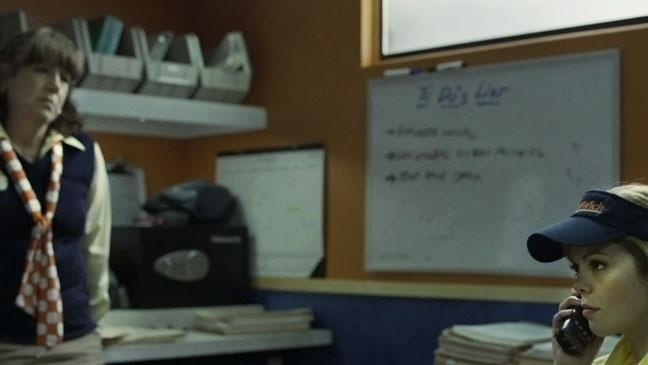
Compliance. Man. I have never been so uneasy in a movie theatre. (Not even during the (spoiler!) C-section in Prometheus.) A sustained hour of dread, not entertainment. Powerful stuff. I love when art can make you feel something so strongly, even if what you feel isn’t pleasant. Excellent score, too.

Cognitive Surplus by Clay Shirky
Started reading this last year, finished it a few weeks ago. My favorite sentence from the book which maybe summarizes it best: “The internet is an opportunity machine.”
My other favorite passage, which I’ve already posted, but I’ll repost here anyways:
The stupidest creative act is still a creative act… On the spectrum of creative work, the difference between the mediocre and the good is vast. Mediocrity is, however, still on the spectrum; you can move from mediocre to good in increments. The real gap is between doing nothing and doing something.
Oh, by the way: it’s fun to pay attention to subtitles, especially when a book comes in a hardback/paperback edition — the paperback edition usually shows the evolution (or devolution) of the publisher’s marketing of the book. The hardcover subtitle of Cognitive Surplus is “Creativity and Generosity in a Connected Age” vs. the paperback subtitle, “How Technology Makes Consumers into Collaborators.” When Lewis Hyde’s The Gift came out, the subtitle was “Imagination and the Erotic Life of Property”—later, much later, it was “Creativity and the Artist in the Modern World.”
That favorite passage reminds me of Peter Thiel talking about horizontal business vs. vertical business. Going from 1 to N, copying things that work, incrementally spreading and improving, is hard, yes. But going from 0 to 1 is really, really hard in a very different way.
What happens when your neighbor is a multimillion dollar shrine to sports
Thomas Wheatley bringin’ truth to the people.

Public Enemies. It’s a good ride, and it’s greatest charm and greatest flaw is that it doesn’t have a big arc to it. It’s not dramatic. Fine by me. This is a movie about a single-minded, short-sighted guy, told directly. I’d love to see Johnny Depp in more movies like this (i.e. non-comedy, non-Burton). Not sure about the very last scene, but I’ll give it to him.
Time for updated Michael Mann rankings. The top 3 are set, for sure. The others fluctuate day to day:

Winter’s Bone. Such a damn good movie. Every bit as good as the first time. It has the perfect balance between feeding you information and leaving you in the dark. Who knows what to do next? And I love the little moments of life in the Ozarks: splitting firewood, hunting, neighbors looking after each other, cooking. Between this and Martha Marcy May Marlene, I’ve got to find some more stuff with John Hawkes.
I feel like inspiring political moments these days are just spank-material for aspiring typesetters.
On Michael Mann, Terrence Malick, David Lynch, Wong Kar-wai and Hou Hsiao-hsien, etc.:
The sensualists are bored with dramatic housekeeping. They’re interested in sensations and emotions, occurrences and memories of occurrences. If their films could be said to have a literary voice, it would fall somewhere between third person and first — perhaps as close to first person as the film can get without having the camera directly represent what a character sees.
Yet at the same time sensualist directors have a respect for privacy and mystery. They are attuned to tiny fluctuations in mood (the character’s and the scene’s). But they’d rather drink lye than tell you what a character is thinking or feeling – or, God forbid, have a character tell you what he’s thinking or feeling. The point is to inspire associations, realizations, epiphanies — not in the character, although that sometimes happens, but in the moviegoer.
You can tell by watching the sensualists’ films, with their startling cuts, lyrical transitions, off-kilter compositions and judicious use of slow motion as emotional italics, that they believe we experience life not as dramatic arcs or plot points or in-the-moment revelations, but as moments that cohere and define themselves in hindsight — as markers that don’t seem like markers when they happen.

Mission Impossible. The gadgets have not aged well, but the rest of the film definitely has. Max is one of the best characters of the ‘90s.
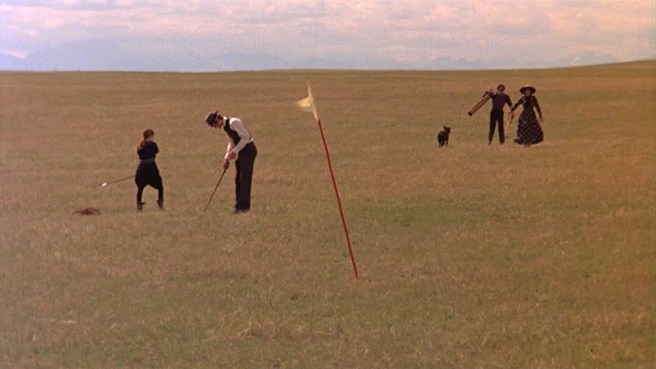
Days of Heaven. Re-watched. Re-loved. Still near the top of my all-time list. (My first viewing.)
Gone are the golden days when an author’s bio blurb read like an obituary. Date and place of birth, occupation, current abode, names and dates of publications, year of death (if applicable): this was, apparently, all an educated public really needed to know about their writers to be able to ‘place’ their work. And as staid and conventional as that may now seem, there’s a lot to be said for this approach.

Star Trek. This is more space opera than intellectual scifi salon, for better or worse. The best comparison I can think of is Rise of the Planet of the Apes: It’s not an all-time great movie, not really even close, but it’s great at what it does. Silly adventure that’s nice to look at. The cameo is dopey. But I do hope that movies following this reboot are a little more nerdy.

Great Wave Off Kanagawa by Ashley Anderson. Cf. Hokusai. I knew I wanted this print the second I saw a sample at Artlantis a couple months ago. Got a big print. Finally got it framed. My walls are killing it right now.
KNOWLEDGE + TASTE = MEANINGFUL JUDGMENT.
The hillbilly figure allows middle-class white people to offload the venality and sin of the nation onto some other constituency, people who live somewhere—anywhere—else. The hillbilly’s backwardness highlights the progress more upstanding Americans in the cities or the suburbs have made. These fools haven’t crawled out of the muck, the story goes, because they don’t want to.
Here Comes Honey Boo Boo and the history of the hillbilly in America. – Slate Magazine
I know too little about film or production to say much about this, either, but: the film used a lot of shot-techniques or whatever that I recognize from promos for films and reality TV shows. Here is the staff of the restaurant, arranged just so, staring into the camera; it is slightly slow-mo, the camera slightly pans to give dimensionality, but nothing is really happening. This is how you make ads and music videos, not documentaries, which ought to have something to impart beyond “tune in!” or “this! this! this!”
Yep. Jiro is fun to watch and makes you hungry and it’s also a complete letdown if you’re hoping to *learn* anything. Like Mills says furthermore:
A documentary about an artist which fails to even discuss what is unique about him or his work, how he works, what he is good an bad at, with what he struggles, what the nature of his excellence is: such a documentary must be a failure.
Kubrick // One-Point Perspective. See also Wes Anderson From Above and Tarantino From Below.

Miami Vice. It’s not nearly as good as his best, but it’s good corny fun. I mean, it’s Miami Vice. Visually, it’s also the most Michael Mann-ish thing I’ve seen (see Pinnland Empire on Mann’s motifs). It’s also got the typical cop/criminal dynamic he loves. Best analogy I read somewhere was this movie would happen if Malick decided to make a cop film (from the general reverie to the looser, drifty handycam shooting). Sadly, the score is merely functional, but Mann knows when to turn the music down and let it ride. I feel like if I watched it again, I’d like it even more. I really, really like this dude’s movies. Updated Michael Mann rankings:

Campbell Soup Company is tapping Andy Warhol for another 15 minutes of fame. I’m not surprised that Target is involved in this.
 Mark Larson