
Dallas Buyers Club. It’s not great, but never really goes wrong, and I like the moment-to-moment push and urgency of the thing. Great to see a likable hero who never remotely approaches perfection. Matthew McConaughey is something special.
Dallas Buyers Club. It’s not great, but never really goes wrong, and I like the moment-to-moment push and urgency of the thing. Great to see a likable hero who never remotely approaches perfection. Matthew McConaughey is something special.
I always tease them at the beginning of the semester about their writing—I say, “Whenever you write me at 11 o’clock on a Thursday night begging me for an extension on the paper, the prose is always so beautiful and the email is so wonderfully structured.” It’s a joke, but it’s also not a joke—in that situation they understand the rhetoric of the form to which they’re committing themselves: They understand who they are as a writer and a beseecher, they understand who I am as the person in charge, they understand what evidence to adduce in their favour—their dog died, their computer broke or whatever. Which is why the email begging for the paper extension is always a well-written piece. But whenever they have to write three paragraphs about women in Genesis or whatever—when they have to make an argument—it’s basically “word salad,” because they’ve never read anything that presents a text, wrestles with it and comes up with some conclusions. For that reason, I think it’s better that they should be reading Pauline Kael reviews in the New Yorker than Derrida.
Filed under: Daniel Mendelsohn.





Quick shout-out: The Cutting Class is one of my favorite tumblrs. It is a true joy to stumble on writing like this, where someone smart points out things that you’d never notice and makes you aware of a whole other world of smarts that you’d otherwise never know about.
Be gentle especially when you’re right.





Bruce Timm
Best intro in television history.
What an opening! Batman: The Animated Series is still one of my favorite shows.
I feel like this song was, for many American children, an introduction to Deep Thinking. Even at age 8 or 9 you heard this and thought something like, “There is some essential yearning and sadness and an essential sense of loss in life that we can’t escape, though many things are also beautiful and happy and the power of love and human connection is very real,” even if your mind didn’t yet have all these words in that order.

Dad Magazine: Thanksgiving Edition. “The Value of a Dollar: Dads Weigh In”. Check out the archives.

Oblivion. If you have seen and enjoyed a science fiction movie, you will probably find something to like here, where they’re all mixed and mashed into a movie that’s far from perfect, but more than good enough. Easy to find plotlines and moods from movies like Moon, Solaris, the new Solaris, 2001, The Matrix, WALL·E, Star Wars, Star Trek. (I particularly like the space-captain-retiring-to-California parallels with Star Trek V: The Final Frontier and Star Trek: Generations). I would have been okay with more time exploring the love/memory/identity stuff and less generic action, but no biggie. Outside of the plot, a few areas I was impressed by: camerawork with a smart sense of space and geography; world/technology design and general gorgeousness; and a good soundtrack by M83, et al.
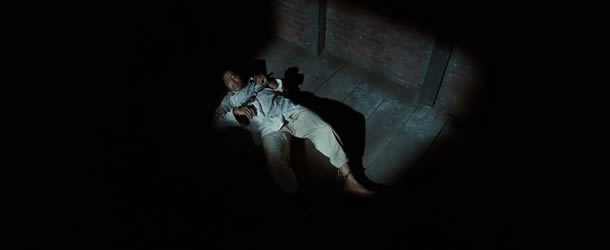
12 Years a Slave. Not sure how to talk about this one. Hard to watch. At times it is very, very on-the-nose. If you’ve seen Steve McQueen’s Shame and Hunger, this will be no surprise. But it’s strange that it doesn’t feel… dramatic. It is focused. It is facts. It also makes you feel some of the same unease (the score is a huge contributor here). The movie is all in the protagonist’s perspective, which unfortunately means everyone else can seem a little flat (despite the cast being awesome), or merely functional. But it also puts you in the center, witnessing the moral bargains and compromises, comparing and contrasting how each person manages an impossible situation, and perhaps suggesting the futility of passing judgment on how each copes. A couple more things to note. I’m not sure if it was intentional or not, but you don’t get the sense of time passing, though it’s ostensibly twelve years we see. Could definitely be by design – the monotony and sameness by design – I’m just not sure. And I gotta say, I’m not thrilled with Brad Pitt’s late appearance. He’s got too much star power to show up so late, in such a role, for so short a period. I couldn’t quite get used to him. It’s not his fault, though. Anyway, good movie. The contrast with Django Unchained could not be more stark.
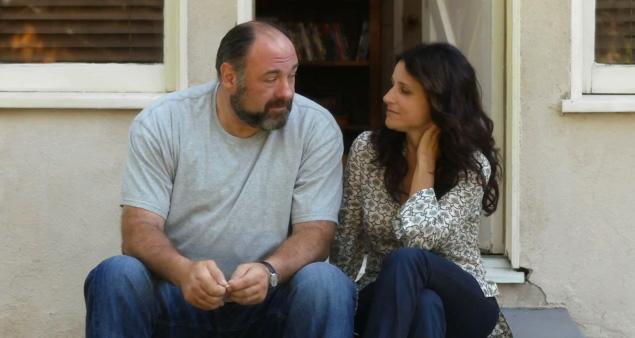
Enough Said. Sometimes we are our own worst enemy, as they say. Louis-Dreyfus is a genius. Gandolfini is instantly lovable. Keener plays a perfect flaky narcissist. Such a good heart to this movie.

In the Mood for Love. Gorgeous, seductive movie. One of the dilemmas here is, (how) can you get what you want if you don’t want to be the kind of person that would do what it takes to get it? When you’re watching it, it’s easy to sympathize with the protagonists, but afterward… don’t they seem a little, um, weird? I love the parallels in setting and architecture. They’re so hemmed in, so much kept inside. Thematically, it pairs well with David Lean’s Brief Encounter.
1-on-1 Basketball Game: Don Cornelius vs Marvin Gaye. Ref’ed by Smokey Robinson. If ever there were a video at the center of an important-to-me Venn diagram, it’s this one.
The postapocalyptic scenario—the future in which everyone’s a corpse (except you)—must be, at this point, one of the most thoroughly imagined fictions of the age.
Catching up on my RSS, seeing these two from Marginal Revolution in close succession caught my attention. I had no idea:
Suicides outnumber homicides in the United States by 3:1.
Prescription painkillers now kill more Americans than heroin and cocaine combined, according to the CDC.
:( Take care.
Steve Reich can talk a mile. The most amusing, Reich-splaining part of this interview is him talking about how, exactly, he was influenced by jazz.:
Yeah, sure, all jazz is improvisation. What I’m saying is what jazz is for me is yes, improvisation is a big part of it, I understand that and I’m just not a very good improviser and I’m not interested in improvisation at all, but I understand that it’s a very, very important part of music. What interests me in jazz is the feel of jazz, the tones of jazz, the gestures of jazz, the way John Coltrane sounds as opposed to some classical saxophone is like two different universes. I’ve had a tremendous influence where, when I was a kid I took piano lessons, but it wasn’t until the age of 14—when I was a kid before the age of 14 I never heard a note of music before 1750, I never heard a note of music after Wagner, and I never heard any real jazz, I heard you know, pop music and all kinds of Broadway shows and that kind of stuff. But at the age of 14 for the first time I heard the The Rite of Spring, the 5th Brandenburg Concerto, and Miles Davis, Charlie Parker, and the drummer Kenny Clarke and I decided I want to be Kenny Clarke and I started studying percussion at the age of 14. I studied with Roland Kohloff, who was the local great drummer and later became the timpanist with the New York Philharmonic, and I remained a drummer ever since. And so hence all the percussion in my group. And I went down to hear Miles Davis and Kenny Clarke and Thelonious Monk and Horace Silver and Art Blakey and the Jazz Messengers and all those groups started when I was 14 years old, on through high school, on through college when I got to Juilliard and continued doing it, and I started listening particularly to John Coltrane.
I got out to the West Coast and I was studying with Luciano Berio during the day, and every time he was in town I would go to hear John Coltrane at night. Now what was it I learned, improvisation? No, forget about it. What I learned was this: John Coltrane could play for half an hour on one harmony. Think of the album, or if you don’t think of it, go out and buy it or steal it whatever, called “Africa Brass”. Do you know it? “Africa Brass” is 17 minutes and it’s all on the low E of the double bass. So if you go to a jazz musician and say ‘hey man, what are the harmonic changes of “Africa Brass” – “This is E” “well what changes?”.”E for 17 minutes!” “Well that sounds strange, how are you going to play one harmony for 17 minutes?” Well I’ll tell you how: you have incredible melodic invention from Coltrane himself, who’s either playing gorgeous melodies or screaming noise through his horn, you have incredible timbral variety because he was working with another great jazz musician Eric Dolphy, who arranged all the brass in the “Africa Brass” and part of it was french horn, which sounded like elephants coming through the jungle. He also was working with Elvin Jones, who as you may know, is a drummer who sounds like he’s two or three or four drummers all at once. If you have rhythmic complexity, timbral variety and melodic invention, then you can stay put on a single harmony for half an hour, and it’s fascinating, it’s fantastic, it gives it more intensity because you’re focused on these other things. And in a funny way my piece “Drumming” doesn’t sound like “Africa Brass”. I didn’t even think about “Africa Brass”, but really it syncs the exact same way. There’s one slight change of key in the glock section, but basically it’s in six sharps for an hour. It doesn’t change. Because of the rhythmic complexity in the drums, the complete change of timbre into marimbas, and the rhythmic complexity and the melodic invention of the women’s voices and then the complete change of timbre into glockenspiel and the melodies in the flutes and piccolo and whistling, and then the complete change of timbre to all those instruments playing together you can listen to one key for an hour and enjoy it. So my interest in jazz is in gestures, the way Kenny Clarke could make an entire band sort of float in a magical way I never heard in any classical music, and the gesture of tones, the style of playing, THAT’S what I loved about jazz.
He also closes talking about his Radiohead piece and a great rant about artists getting expensed out of NYC. Filed under: Steve Reich.
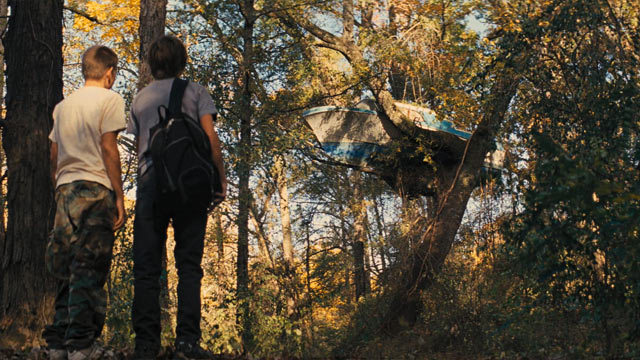
Mud. Best summarized in this review I stumbled upon where I lifted the still above: “Mud reminds us that the most special effect is compelling characters caught in a vexing situation.” Check and check. I loved this movie. Jeff Nichols is on a roll right now, after directing Shotgun Stories, and then Take Shelter, and then this. I’m excited for whatever is next.
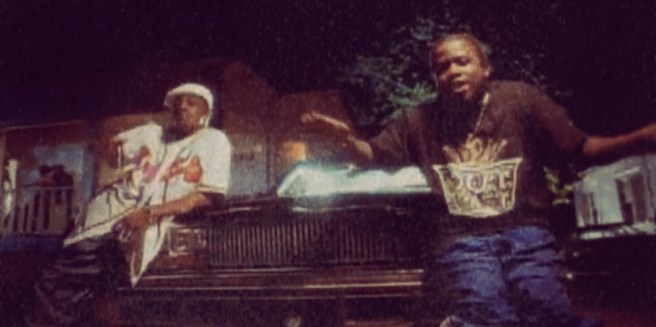
Atlanta to Atlantis: An OutKast Retrospective | Pitchfork. Essential reading.
The poet and the player was the tagline; the truth is that you never knew who was who.
No one thought Joe Theismann was soft for leaving the game when his leg was hanging sideways. Sometimes the brain goes sideways, and when that happens, “brave” or “cowardly” shouldn’t even come into it. Seeking help is just the practical thing to do.
Richie Incognito, Jonathan Martin, and the Miami Dolphins bullying scandal – Grantland
So jealous of Lain Shakespeare’s Atlanta moment:
Dude on MARTA dances alone in the center of the car. He’s good! An onlooker criticizes, says he’s not dancing “ATL enough” & challenges him.
— Lain Shakespeare (@lainshakespeare) November 16, 2013
//platform.twitter.com/widgets.js
The onlooker gets up and dances to show how it’s done. He’s good too! They dance battle. Everyone else is half-delighted, half-uneasy.
— Lain Shakespeare (@lainshakespeare) November 16, 2013
//platform.twitter.com/widgets.js
We pull into a station, they stop. Meanwhile, a woman gets caught moving between cars. The door jams! Moment of panic, then she tumbles out.
— Lain Shakespeare (@lainshakespeare) November 16, 2013
//platform.twitter.com/widgets.js
She nearly falls over, regains footing by momentum-dancing up the aisle. She’s embarrassed but rolling with it, right toward battle dudes.
— Lain Shakespeare (@lainshakespeare) November 16, 2013
//platform.twitter.com/widgets.js
Battle dudes recognize her embarrassment & dance-beckon. They all dance together until the next stop. Everyone is delighted! Cheers erupt.
— Lain Shakespeare (@lainshakespeare) November 16, 2013
//platform.twitter.com/widgets.js
We arrive at the next stop. Everyone sits, the crowd elated. The moment passes with delighted hush. As if on beat, the second dancer says:
— Lain Shakespeare (@lainshakespeare) November 16, 2013
//platform.twitter.com/widgets.js
“Yo, who wants to buy some liquor?!” He opens a backpack revealing like twenty mini vodka bottles. And right then, the door opened: my stop.
— Lain Shakespeare (@lainshakespeare) November 16, 2013
 Mark Larson