Zodiac. A serial killer is the impetus, but the theme is obsession. So good. If only all directors could use their minutes this well.

Zodiac. A serial killer is the impetus, but the theme is obsession. So good. If only all directors could use their minutes this well.

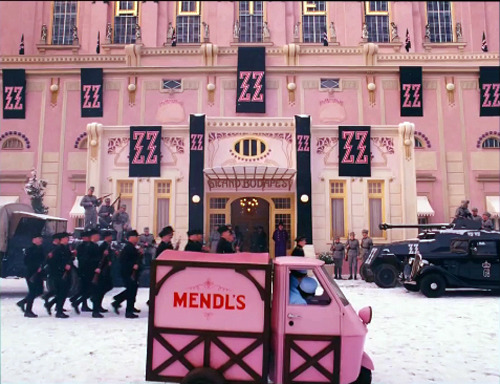
Observations on film art : THE GRAND BUDAPEST HOTEL: Wes Anderson takes the 4:3 challenge.
In Grand Budapest Hotel we move from the present, more or less, to events in the 1980s, then the 1960s, and eventually the 1930s, which constitute the central episodes.
Anderson has shot the frame stories in different aspect ratios. It’s 1.85 for the near present and the 1980s, when the Author recounts meeting the hotel owner. That meeting, set in the 1960s, is shown in 2.40, the anamorphic aspect ratio. The central story, taking place in the 1930s, is presented in classic 1.37, or 4:3 imagery. With typical Anderson butterfly-collector wit, each era gets a ratio that could have been used in a movie at the time. It’s remarkable that Anderson could persuade Fox Searchlight to let him do this, but it’s also a gift of digital projection: This play with ratios wouldn’t have been possible on film.
I knew something was up, I just couldn’t put my finger on it.
Almost always there is considerable tension between chronology and theme, and chronology traditionally wins. The narrative wants to move from point to point through time, while topics that have arisen now and again across someone’s life cry out to be collected.
Filed under: John McPhee.

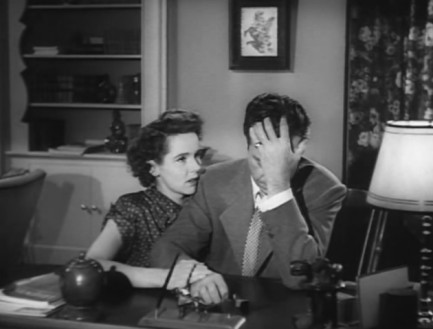
Pitfall. Aw, man. I watched this at the end of last month, so now everything is out of order. Anyway, really dug this one. A guy does some really dumb things while on the job, and the universe exacts its toll. Raymond Burr is so awesome – always loved him since watching Perry Mason as a kid. Reminds me of a portly cross between Kirk Douglas and Philip Seymour Hoffman. What a perfect weaselly creepy charmer.
Let’s pause for a moment, in fact, to notice that this kind of story almost always imagines a future world that’s far simpler than the one we currently live in, one in which all the stuff and clutter of our lives – the screens, the gizmos, the cars, the noise – has evaporated. As David Mamet once put it, every fear hides a wish.
A person can only have so much expertise, but if you can sell your ignorance and ability to root out answers, you’ll be employable forever, understood frequently, and relatable always.

The Parallax View. I really loved some of the camerawork and staging and general style, but I just didn’t care. Something about Beatty(’s character) just didn’t click for me. So in general, I’d say skip this one. Actually, do watch the watch the amazing montage/brainwashing scene. And then go watch the superior Three Days of the Condor.

The Broken Circle Breakdown. Heartbreaking. Cf. my thoughts on Blue Valentine. More like Bluegrass Valentine, amirite? Our relationships hinge on our ability to adapt not just to change itself, but also to how we accept/support/deny/undermine the effect on those we care about. I was pleasantly surprised by how much of this movie revolved around parenthood as much as romance. I was hoping for a bit more music. Took a quote-unquote “European” turn for a bit at the end.
Percentage wise, it is 100% easier not to do things than to do them, and so much fun not to do them—especially when you were supposed to do them. In terms of instant relief, canceling plans is like heroin.
No one wants advice—only corroboration.

State of Play. A bit a too complicated for its own good, but it’s still fun.

Tinker Tailor Soldier Spy. I still like it. Such a nice change of pace, embodied in Oldman’s lead role. Patient, cautious, taciturn, deliberate. (Previously.)
Authenticity is seductive; we embrace it because it makes us feel exclusive. Hating Bourbon Street has valuable social currency, and it’s an easy step toward assuming co-ownership of “real” New Orleans culture. But declaring something to be inauthentic positions the critic in the dubious position of arbitrating reality. […] Worse, inauthenticity rests on the troubling supposition that not all human beings or human endeavors contribute equally to this thing we call culture.
Eyes that have seen a lot of stuff in Downtown Atlanta. From the Eiseman Building to the Five Points MARTA station.

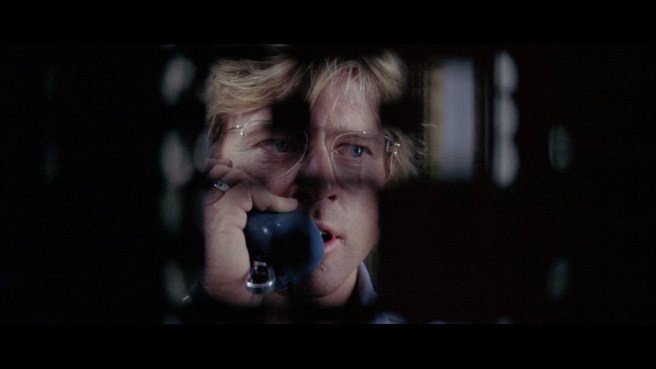
Three Days of the Condor. Dang, this movie is so fun. There aren’t many spy films with such appeal to your daydream fantasy fulfillment side, that seem almost within reach. The protagonist here? Just a dork with a day job that mainly involves reading about espionage – news, novels, magazines – and reporting on new ideas. BUT then he becomes the object of various gun-related machinations, and now he’s got to think his way out. There’s some strange sexual politics and some really good writing and some refreshing characterization. Redford and Dunaway are great. It took me a second to figure out why Max von Sydow looked familiar. Worth checking out.
In light of all our focus on “progress,” it’s easy to forget that you can turn around from traveling in a wrong direction, and return to the place where things last felt right—whether that’s for something as trivial as what I’m trying to do with my goofy website, or as monumental as restructuring your identity, ambition, and emotional furnishings to match the last time you felt like yourself. You can go back. Sometimes that’s progress.

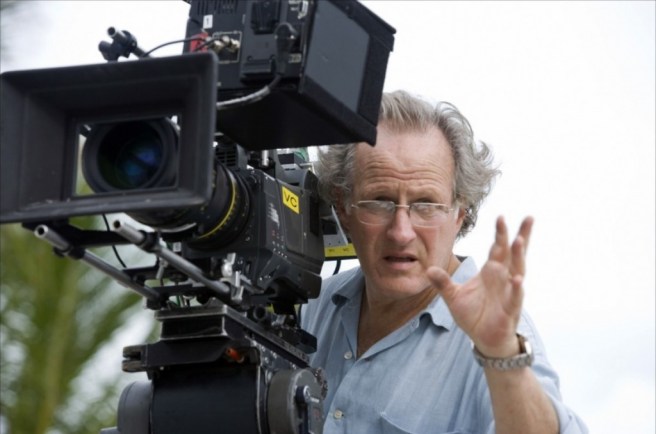
“I get that same queasy, nervous, thrilling feeling every time I go to work. That’s never worn off since I was 12 years-old with my dad’s 8-millimeter movie camera. The thrill hasn’t changed at all. In fact, as I’ve gotten older, it’s actually increased, because now I appreciate the collaboration. When I was a kid, there was no collaboration, it’s you with a camera bossing your friends around. But as an adult, filmmaking is all about appreciating the talents of the people you surround yourself with and knowing you could never have made any of these films by yourself. My job was constantly to keep a movie family going.”
Atlanta is a sports town, just not one that resembles other major league cities. To understand Atlanta’s relationship with the Hawks, it’s necessary to understand that the common cultural heritage of the metropolitan area tends toward living in the suburbs and the tribalism of college football. To believe Atlanta is not a good sports town, it’s necessary to believe college football is not a sport.

Ran. Very satisfying. I still have a lot of Kurosawa left to see. Previously: Throne of Blood; Rashomon.