I’ve never followed HONY, and I’m not sure if I’ve actually seen any of the posts, but I’m familiar with the project. Interesting how it’s pretty much inevitable that even our most noble efforts will be compromised somehow. You can’t observe and document people as some kind of inert, neutral, sociology-less being… so it’s important to take criticism well when you run with projects like this.
From ‘American Sniper’ to ‘Macbeth,’ a Reporter’s Moviegoing Spree – NYTimes.com
I love this essay about a two-day bender at the movie theaters.
Henry Higgins has a song in “My Fair Lady” in which he talks about how even-keeled his life was before Eliza Doolittle came along and messed it up. That is true at the movies, too. Alone, you can respond any way you want; the only negotiation is between you and the screen. Let another person in, and everything changes. My friend was gracious, but I could tell that he wished the seats were farther back and that he was repelled by what he perceived to be the unpleasant jingoism cascading around the theater. I felt responsible, because the movie had been my idea.
That was a bummer. I began to believe that maybe art is better experienced alone, which is not a healthy belief.
And this too:
The movie was “Night at the Museum 3: Secret of the Tomb,” and it was pretty bad. It was a perfect thing to see alone, because I really liked it and would not have wanted to explain myself to anyone.
From ‘American Sniper’ to ‘Macbeth,’ a Reporter’s Moviegoing Spree – NYTimes.com

Step 1. Read this book
Step 2. Live a cool life
Step 3. Repeat once a year
Seneca reblog rule in effect.
ももへの手紙 (A Letter to Momo)

ももへの手紙 (A Letter to Momo). The warm-up and the denouement drag a bit for me, but there’s plenty of laughter and heart and goofy “why not?” interludes along the way. I like the focus on the daughter here, and her inner life. Good soundtrack, too. Nice contrast after watching a movie like Big Hero 6. I should be more open-minded about animated stuff in general.
The Myth and the Reality of the $43 Download | The Pitch | Pitchfork
Yet here is a most crucial piece of knowledge regarding sound quality: Transmitting electricity is easy, moving air is hard.
The Myth and the Reality of the $43 Download | The Pitch | Pitchfork

I just do things I really enjoy. I enjoy acting. When I’m driving to the studio, I sing in the car. I love my work and my wife and my kids and my friends. And I think, “You’re a lucky man, Gregory Peck, a damn lucky man.”
Making Peace With Music That Everyone Loves But You
Part of maturing, I think, is realizing that charges of acting in bad faith are often themselves made in bad faith, an attempt to explain away gaps in understanding between two people rather than trying to bridge them, or even make peace with them.
The Life-changing Magic of Tidying Up

I read Marie Kondo’s book The Life-Changing Magic of Tidying Up, and it was a bit embarrassing to see how many of these recommendations I was already doing. She’s a little nutty, but it’s a great set of advice and perspective. And I really like the part about empathizing with your socks.
Codes, chaos, and the world of Heat / The Dissolve
Neil and Vincent are orderly men, and Mann harmonizes their activities beautifully, but being human isn’t an orderly business. Opening up to other people means opening up to chaos and disorder.
And from the later forum discussion of Heat:
It struck me that, for all the ways Heat questions the macho code of non-attachment that McCauley and Hanna live by, it has a very old-fashioned view of the uses of violence. Both McCauley and Hanna deploy it very precisely. What’s wrong with Waingro is that he can’t control himself.
American Sniper
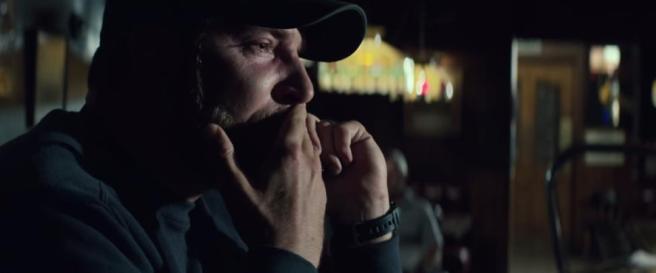
American Sniper. Not as good as other Eastwood movies with similar thematic material. Broken heroes, the toll of duty and violence, and what it is to have a noble but misunderstood purpose, and so forth. Perhaps this and Selma share some common values? The fake babies are really distracting and completely baffling. Forewarning: there are parts of this movie that will be unbearable if you’re sensitive about violence against children. And if you aren’t… WTF? If I were choosing among 9/11 fallout movies, I’d rather watch Zero Dark Thirty again. Another movie with a great sandstorm climax is Mission: Impossible – Ghost Protocol.
Whiplash

Whiplash. Fixation and obsession. Somewhat promotes the myth of the tortured artist who must be pushed to self- and other-destructive extremes. If you’ve ever felt that sinking feeling when you become the focus of attention in band class, you can relate to this movie. Good momentum through most of it – take some of that Birdman-esque groove with more big band pop and sizzle. Love the way they did the cuts and shifts. Kind of criminal that they ignored half of the drumset, though. Seriously, all that wonderful energy and no footwork at all? It’s really too bad. Simmons is not jk in this movie. He’s awesome. A weakness is that Teller isn’t his equal. Still fun, though. Another movie that features a horrifying coach/mentor: Foxcatcher.
Inherent Vice
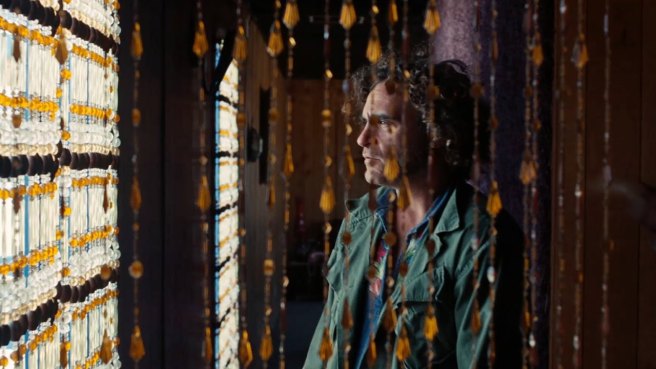
Inherent Vice. It’s a fun ride. I didn’t understand it completely while it was happening, but didn’t particularly care about that. Then again, I don’t feel interested in understanding, either. I’d be curious to see Paul Thomas Anderson go back to material that’s not so sprawling. I’m more likely re-watch any of his other movies before this one. Speaking of, I think I’d rank them…
- The Master
- Hard Eight
- There Will Be Blood
- Boogie Nights
- Magnolia
- Inherent Vice
…or something along those lines.
When once isn’t enough
To me, the threshold for repeat viewings is this: The first viewing must beckon you back for a second. It’s not enough to feel like you’d missed something the first time […] but you have to like the film and feel compelled to return, like an itch that needs scratching.
Selma

Selma. Amazing stuff. Mad respect for movies that take inherently interesting subjects, and then actually measure up. Not just summarizing the events, but giving them dramatic weight. Not just telling what their goal is, but something of their emotional life. (cough) One particularly refreshing thing in this movie: seeing religion treated as a source of solace and comfort. Another thing that struck me about both is the “period” look. Selma a bit sepia and has this constant lens distortion at the edge of the frame (you can see it in the still above). I saw The Imitation Game the day before, and noticed its own “historic” palette is desaturated, but with some hues just exploding, like they were manually re-tinted black-and-whites. In both cases the movies resemble some extant photographs from those times. Which is a bit odd. Like, the world itself wasn’t sepia or desaturated back then. Just got me thinking of whether that “period look” that helps transport us back in the storytelling could also over-distance us from the events and the people. Hems them in, keeps them at arms length, makes it easier to see and forget when we need to remember.
The Devotion Leap – NYTimes.com
If they’re going to be open to a real relationship, they have to stop asking where this person rates in comparison to others and start asking, can we lower the boundaries between self and self.
Blackhat
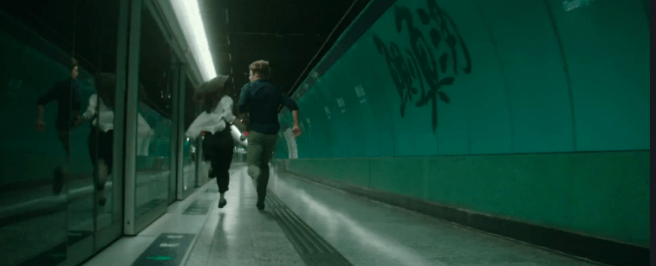
Blackhat. I really liked it, if my tweet binge is any indication. If you like Michael Mannerisms, you probably will, too. I like how the hacking here wasn’t just people tapping away at a keyboard, but also more general deceptive/intrusive behaviors like social engineering and burglary, and how technology is subverted for purposes good and bad. (Note how our hero goes into final battle with improvised body armor and weapons that reflect prison ingenuity.) I love that the big battle scenes have some geographical/tactical brains behind them, and the hand-to-hand fights are swiftly decided. It’s a movie willing to let its stars lounge in bed, or enjoy a nice view, and get you inside their head a bit. Filed under: Michael Mann
The Imitation Game
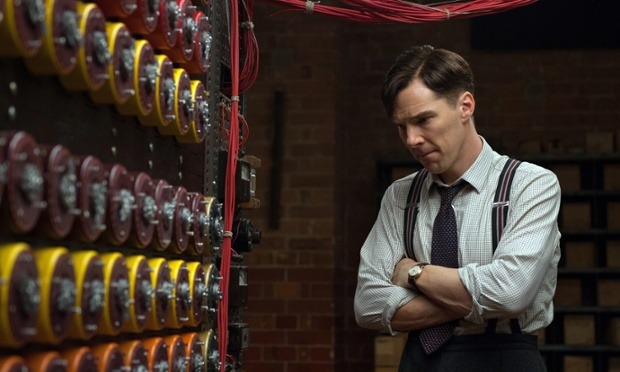
The Imitation Game. Some good material here, but pretty instantly forgettable. So much left at surface level, it seemed. And they weren’t really lacking for time. Blah.

Three Generations
Martin Luther King Jr. with his father and son. Photo taken in 1963 by Richard Avedon.
(via Voxsartoria)
Boogie Nights

Boogie Nights. It’s not my movie, but it’s a great movie.
An Old Fogey’s Analysis of a Teenager’s View on Social Media — The Message — Medium
We’ve been down this path before. Andrew is not the first teen to speak as an “actual” teen and have his story picked up. Every few years, a (typically white male) teen with an interest in technology writes about technology among his peers on a popular tech platform and gets traction. Tons of conferences host teen panels, usually drawing on privileged teens in the community or related to the organizers. I’m not bothered by these teens’ comments; I’m bothered by the way they are interpreted and treated by the tech press and the digerati.
An Old Fogey’s Analysis of a Teenager’s View on Social Media — The Message — Medium
 Mark Larson