The Sun Never Sets: On Roger Federer, Endings, and Wimbledon

Who knows what goes on in any athlete’s head, but he comes across as someone who has genuinely found a way to solve the three brutal overlapping problems that come for any really great athlete late in his or her career. Namely, how to a) keep up the phenomenal and borderline terrifying level of motivation required to commit to nonstop training and preparation after you’ve already realized all your goals, while b) making peace with the fact that you not only aren’t as good as you once were but in fact are doomed to get worse, while c) maintaining a realistic, evolving sense of what you can do so that you know how to plan and when to feel proud, frustrated, optimistic, etc.

The Sun Never Sets: On Roger Federer, Endings, and Wimbledon

Jurassic World

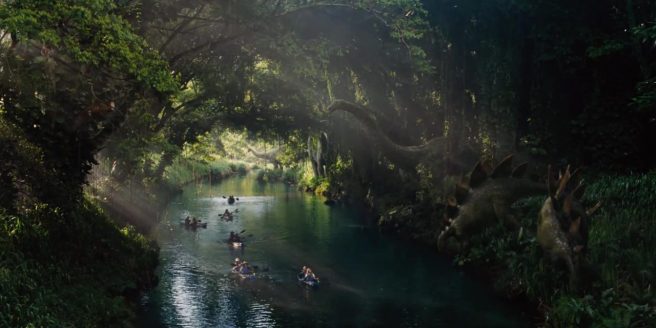
Jurassic World. There are at least three establishing shots early in the movie that make sure you’re ready, later on in the movie, for a terrible jab about high heels. It’s that sort of dedication to the stupidest things where this movie really shines.

I’m curious about how this amped up B-movie plays for a young audience that doesn’t have ties to the earliest film. There’s a lot of fan service here with “remember how ___?” nudges throughout. The cellphone ringtone that pulls from the main theme was a nice touch. Along with those references, I thought I saw some borrowing from other movies, too: *Predator*-vision with people getting killed in the jungle; *King Kong*, where a monster looms over a woman in a tattered dress; flying creatures pouring over the horizon, like *The Wizard of Oz*; the scene people with tossing air tanks off the back of a vehicle has a hint of *Jaws* to it.

There’s also a complete orgy of product placement! Converse, Beats, Samsung, Verizon, Coca-Cola, Blackberry, Mercedes, Starbucks, Margaritaville. I’m pretty sure I’m forgetting another 5-10, minimum. Totally shameless.

It’s too bad that Chris Pratt is no fun here, mostly posing stiffly and asserting. They killed his charm, but he’s somehow still the best thing going here. D’Onofrio manages to make his Hoskins character more interesting than it should be, with all the swagger and bluster. Most of the others are pretty bland. Least (spoiler) favorite (spoiler) part (spoiler): the viciously indulgent death of the British nanny. Other downsides relate to its general overstuffed-ness. Earnest family bonding moments and a vast insider corporate conspiracy?

That I have so much to say about this says… something. So anyway, go watch Jurassic Park instead.

Top Gun

Top Gun. Exhilarating for the first 80 minutes or so. Intoxicating. Is there any other movie where people are this cool? So many blinding, aggressive smiles. I remember when I was a kid I thought Iceman was a punk. Now he seems so chill and reasonable. “It’s not your flying, it’s your attitude.”

Blade Runner (Final Cut)

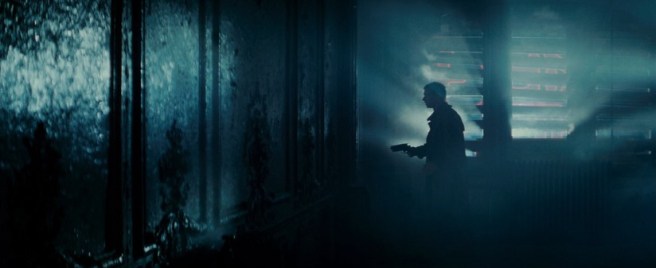
Blade Runner (Final Cut). I like how the more I watch this the less I root for Deckard and the more I pull for Roy, Pris, Leon, and Zhora. Deckards’s kind of a jerk, right? Fits with the film noiriness to have a hero with a dark side. Those elements stood out a lot more this time, too, so much smoke and fog, backlighting, rainfall leaving everyone bundled and drenched. I forget how jarring some of the cuts and transitions are, but I’ll forgive a lot. Such a whole, rich world. You feel like you could go there. Filed under: Blade Runner.

Photography would seem to preserve our past and make it invulnerable to the distortions of repeated memorial superimpositions, but I think that is a fallacy: photographs supplant the past and corrupt our memories.

Sally Mann, Hold Still (via austinkleon)

Internal Affairs

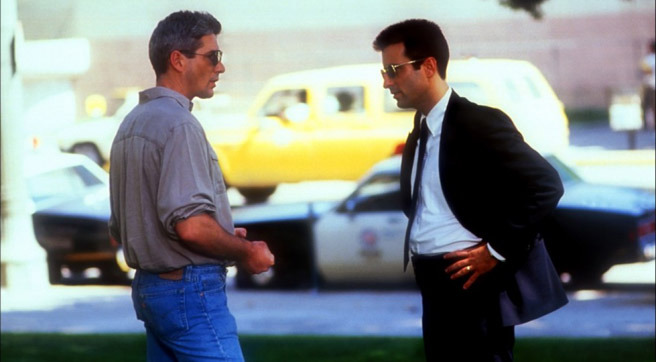
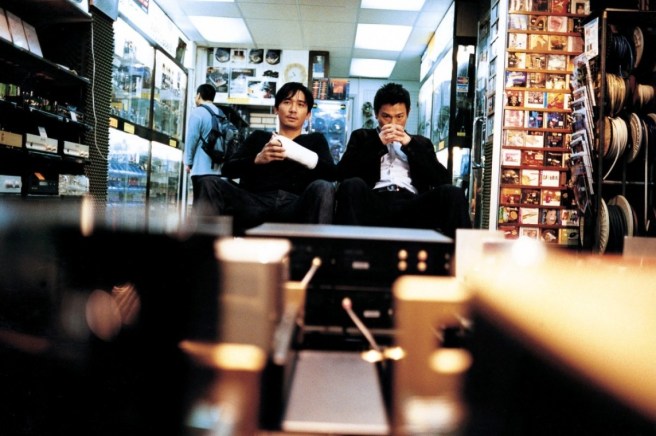
Internal Affairs. The main reason I watched this was becase I’d recently watched Infernal Affairs, so I figured why not. Pretty solid! I love the undercurrents of menace and heat. So much imagined, suggested, inferred. And always fun to see a charming star like Gere play someone who’s just a terrible human being.

Dark Places

I read Gillian Flynn’s Dark Places, but I didn’t finish. It’s really into being dark, and it leans so hard on its ugly rawness that it seems a little… insecure? Let this not dissuade you from reading or watching Gone Girl, though. That one. That’s the stuff.

What I learned from Prince and Muhammad Ali was that it’s possible to love yourself so much that everyone else does, too.

Train Dreams

I read Denis Johnson’s Train Dreams and enjoyed it. Short and sharp. I like the “scenes from a life” method here. Hits some highlights, not strictly chronological, plenty of asides and characters that aren’t strictly relevant to any plot (such as it is), but add color and fragrance to the story. Parts of it based around the Pacific Northwest logging scene reminded me of The Golden Spruce.

Jurassic Park

Jurassic Park. Damn this movie is good. One of those movies where just skimming through search results looking for a good headline image had me smiling. Dr. Sattler is up there amongst the best heroines of the last couple decades. Smart, tough, funny, bold, decisive. (“We can discuss sexism in survival situations when I get back.”) There’s a lot of humor I’d forgetten in this one.

“Are these characters… autoerotica?”
“No, we don’t have any animatronics.”

Some catchphrases (“Hold on to your butts.”), and a few great monologues, like…

I’ll tell you the problem with the scientific power that you’re using here, it didn’t require any discipline to attain it. You read what others had done and you took the next step. You didn’t earn the knowledge for yourselves, so you don’t take any responsibility for it. You stood on the shoulders of geniuses to accomplish something as fast as you could, and before you even knew what you had, you patented it, and packaged it, and slapped it on a plastic lunchbox, and now you’re selling it.

Also nice to see an action/thriller that, despite it’s crazy dinosaurs, is very human. It isn’t heavily reliant on overt evil, just self-interest and shortsightedness that devolves (see what I did there) in just about the worst ways possible. And the heroes are pretty regular people, out of their depth, but thinking on their feet and for the most part working together. Even the kids make some good decisions.

Maybe the best sequence in the whole thing is where that teamwork is undercut by each group working with limited information. Dr. Grant and the kids are making their way back to HQ, while the folks at HQ are working to get the power back on. It’s brilliant. Each group is separately in danger, each one needs to succeed, and the success of one group of good guys, at the wrong time, is really gonna screw over the others. I’m surprised more movies don’t do something like that – the same team accidentally working at cross-purposes.

If you haven’t seen this in a while… fix that.
Bright Wall/Dark Room June 2015: A History of Violence

The scaffolding around this essay is my unshakeable belief that images matter, in real time and in retrospect, because visual media can and do shape the way we see the world, frequently more than we bargained for. Does Hersh’s account transform “Zero Dark Thirty” from half fact into whole fiction? If the cinematic treatment of a supposedly true story turns out to be a lie, does that make it propaganda? To what, exactly, can we ascribe the profusion of doubt that’s accompanied this tale of sound and fury, and what does it mean that this is a story we can’t seem to tell, much less find the moral in?

I really liked this essay (and the movie).

Bright Wall/Dark Room June 2015: A History of Violence

The Secret of NIMH

The Secret of NIMH. I’d heard about it for ages, but this was the first time I’d seen it. Stumbled on a big-screen showing on a recent trip to San Francisco, and I figured why not? So much more funny and bizarre than I expected. I’m having a hard time imagining a similarly weird movie like this coming out any time soon. Refugee displacement, magic, biomedial ethics, eugenics, interspecies rivalry and cooperation, etc. I’ve been watching (slightly) more animated stuff lately, with good results.

The Cine-Files » THE TINNITUS TROPE: ACOUSTIC TRAUMA IN NARRATIVE FILM.

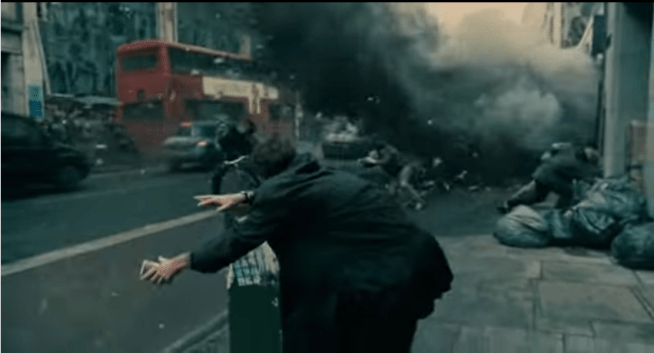
How—if at all—do increasing or changing representations of acoustic trauma articulate with changing notions of nation, security, and warfare? Tinnitus is the top disability in American troops returning from Iraq and Afghanistan and untold numbers of westerners have experienced it after terrorist attacks in New York, Madrid, London, and Boston. It does seem plausible that consequence-free cinematic explosions began to strain credulity (not to mention morality) after such attacks, even for those who have not directly experienced acoustic trauma. Tinnitus offers an economical representation of trauma in films that aspire to some level of realism and empathy—and in fact, researchers view tinnitus and PTSD as related. Could a nation’s trauma be sounding in the ears of its onscreen heroes?