Internal Affairs

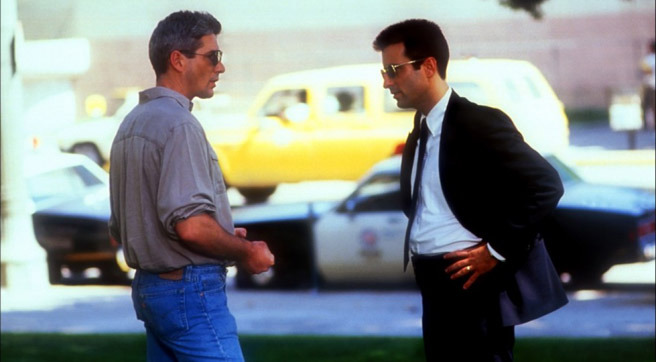
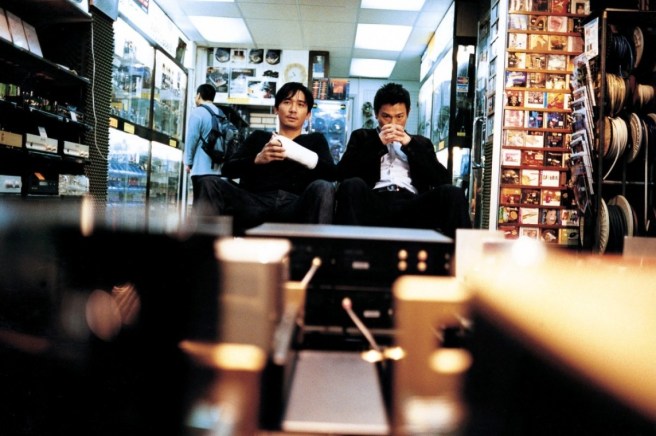
Internal Affairs. The main reason I watched this was becase I’d recently watched Infernal Affairs, so I figured why not. Pretty solid! I love the undercurrents of menace and heat. So much imagined, suggested, inferred. And always fun to see a charming star like Gere play someone who’s just a terrible human being.

Dark Places

I read Gillian Flynn’s Dark Places, but I didn’t finish. It’s really into being dark, and it leans so hard on its ugly rawness that it seems a little… insecure? Let this not dissuade you from reading or watching Gone Girl, though. That one. That’s the stuff.

What I learned from Prince and Muhammad Ali was that it’s possible to love yourself so much that everyone else does, too.

Train Dreams

I read Denis Johnson’s Train Dreams and enjoyed it. Short and sharp. I like the “scenes from a life” method here. Hits some highlights, not strictly chronological, plenty of asides and characters that aren’t strictly relevant to any plot (such as it is), but add color and fragrance to the story. Parts of it based around the Pacific Northwest logging scene reminded me of The Golden Spruce.

Jurassic Park

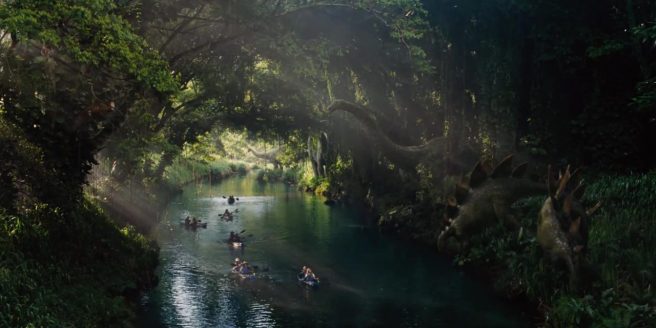
Jurassic Park. Damn this movie is good. One of those movies where just skimming through search results looking for a good headline image had me smiling. Dr. Sattler is up there amongst the best heroines of the last couple decades. Smart, tough, funny, bold, decisive. (“We can discuss sexism in survival situations when I get back.”) There’s a lot of humor I’d forgetten in this one.

“Are these characters… autoerotica?”
“No, we don’t have any animatronics.”

Some catchphrases (“Hold on to your butts.”), and a few great monologues, like…

I’ll tell you the problem with the scientific power that you’re using here, it didn’t require any discipline to attain it. You read what others had done and you took the next step. You didn’t earn the knowledge for yourselves, so you don’t take any responsibility for it. You stood on the shoulders of geniuses to accomplish something as fast as you could, and before you even knew what you had, you patented it, and packaged it, and slapped it on a plastic lunchbox, and now you’re selling it.

Also nice to see an action/thriller that, despite it’s crazy dinosaurs, is very human. It isn’t heavily reliant on overt evil, just self-interest and shortsightedness that devolves (see what I did there) in just about the worst ways possible. And the heroes are pretty regular people, out of their depth, but thinking on their feet and for the most part working together. Even the kids make some good decisions.

Maybe the best sequence in the whole thing is where that teamwork is undercut by each group working with limited information. Dr. Grant and the kids are making their way back to HQ, while the folks at HQ are working to get the power back on. It’s brilliant. Each group is separately in danger, each one needs to succeed, and the success of one group of good guys, at the wrong time, is really gonna screw over the others. I’m surprised more movies don’t do something like that – the same team accidentally working at cross-purposes.

If you haven’t seen this in a while… fix that.
Bright Wall/Dark Room June 2015: A History of Violence

The scaffolding around this essay is my unshakeable belief that images matter, in real time and in retrospect, because visual media can and do shape the way we see the world, frequently more than we bargained for. Does Hersh’s account transform “Zero Dark Thirty” from half fact into whole fiction? If the cinematic treatment of a supposedly true story turns out to be a lie, does that make it propaganda? To what, exactly, can we ascribe the profusion of doubt that’s accompanied this tale of sound and fury, and what does it mean that this is a story we can’t seem to tell, much less find the moral in?

I really liked this essay (and the movie).

Bright Wall/Dark Room June 2015: A History of Violence

The Secret of NIMH

The Secret of NIMH. I’d heard about it for ages, but this was the first time I’d seen it. Stumbled on a big-screen showing on a recent trip to San Francisco, and I figured why not? So much more funny and bizarre than I expected. I’m having a hard time imagining a similarly weird movie like this coming out any time soon. Refugee displacement, magic, biomedial ethics, eugenics, interspecies rivalry and cooperation, etc. I’ve been watching (slightly) more animated stuff lately, with good results.

The Cine-Files » THE TINNITUS TROPE: ACOUSTIC TRAUMA IN NARRATIVE FILM.

How—if at all—do increasing or changing representations of acoustic trauma articulate with changing notions of nation, security, and warfare? Tinnitus is the top disability in American troops returning from Iraq and Afghanistan and untold numbers of westerners have experienced it after terrorist attacks in New York, Madrid, London, and Boston. It does seem plausible that consequence-free cinematic explosions began to strain credulity (not to mention morality) after such attacks, even for those who have not directly experienced acoustic trauma. Tinnitus offers an economical representation of trauma in films that aspire to some level of realism and empathy—and in fact, researchers view tinnitus and PTSD as related. Could a nation’s trauma be sounding in the ears of its onscreen heroes?

Listen for follow-up questions, because when those dry up, that means your companion’s interest usually has, too.

CONVERSATIONS ON SLOWNESS | Vestoj

When we talk about the 1970s for instance, they think about ABBA as one of the icons of the decade. They don’t know that ABBA at the time was considered to be extremely bad taste – vulgar and completely unfashionable. ABBA was still wearing platform shoes when everyone else had already moved on. What I mean to say is that it’s not always the best versions of the past that live on.

CONVERSATIONS ON SLOWNESS | Vestoj

Thrillers

There are a lot of ways for a novelist to create suspense, but also really only two: one a trick, one an art.

The trick is to keep a secret. Or many secrets, even. In Lee Child’s books, Jack Reacher always has a big mystery to crack, but there are a series of smaller mysteries in the meantime, too, a new one appearing as soon as the last is resolved. J. K. Rowling is another master of this technique — Who gave Harry that Firebolt? How is Rita Skeeter getting her info?

The art, meanwhile, the thing that makes “Pride and Prejudice” so superbly suspenseful, more suspenseful than the slickest spy novel, is to write stories in which characters must make decisions.

Thrillers

Why Michael Pollan Is Wrong About Artisanal Food

I’m kind of exhausted with food talk these days, so I almost skipped this interview. Glad I didn’t. It’s a great change of pace.

Farm products are not food; they are the raw materials for food. Turning plants and animals into something edible is just as difficult, just as laborious as farming itself. Very few of our calories come from raw, unprocessed food. And if those calories are from fruits and vegetables, then it’s only because centuries of breeding has made them less chewy, more tasty, and easier to digest. Cooking, which is one part of processing, went hand in hand with becoming human. Human food is processed food. And there are good reasons for this. Overall, processed foods are easier to eat and digest, more nutritious, tastier, safer, and longer lasting. The idea that any change made in the raw material is detrimental is just flat wrong. […] That we can talk about “A cake made from scratch” when the butter, sugar, and flour that go into it are are highly processed shows how we have lost awareness of the energy that formerly went into food preparation.

Why Michael Pollan Is Wrong About Artisanal Food

Mad Max: Fury Road

Mad Max: Fury Road. Ridiculously fun, and so refreshing. I do wish the dialogue were more intelligible. I would have killed for some subtitles or something in the first 10-15 minutes. Sneaky side-effect, though, is that it makes you dial in a bit more, and pay attention. On the other other hand, it doesn’t matter too much, though, as it’s a (very extended) chase film where the details don’t matter too much. (Made me think of Apocalypto in its relentlessness.) Furiosa joins a long, storied line of shaven-head heroines like Ripley, Lt. Ilia, LUH-3417, what’s-her-face in V for Vendetta, et al. Filed under: road movies.

The Loveless

The Loveless. Gotta admit I got really restless watching this one. Funny to see old fashion from yesteryear that’s still around today, but the cultural associations are so different. I love Willem Dafoe. Another willfully slow-paced and stylish movie with a hero on the fringe: A Girl Walks Home Alone at Night. Easy Rider is a better movie focused on bikers. Can I count The Place Beyond the Pines, too? And yeah, Sherlock Jr. has one of the best motorcycle scenes you’ll ever see.

Blue Steel

Blue Steel. It took me a while to realize I’d seen big chunks of this one before. Jamie Lee Curtis is a cop with itchy trigger finger issues, but she’s also in a frame and no one believes her! Interesting to watch this in the wake of The Thin Blue Line and see how easily cops are over-committed to their early suspicions and prejudices. Slowly catching up on Kathryn Bigelow films. She’s good.