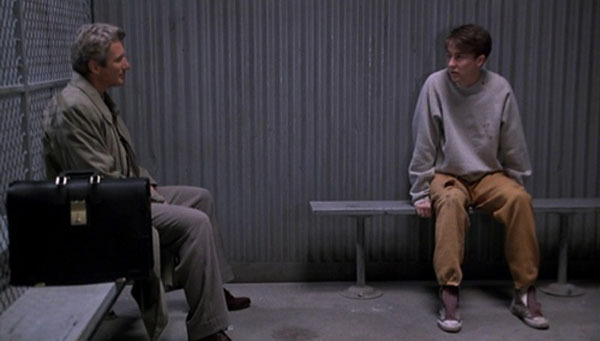
Primal Fear. Ugh.
Primal Fear. Ugh.
Sprig-type operations drain agency and expertise out of the world. They centralize, aiming to build huge hubs with small spokes; their innermost mechanisms are hidden. They depend on humans behaving as interchangeable units of labor.
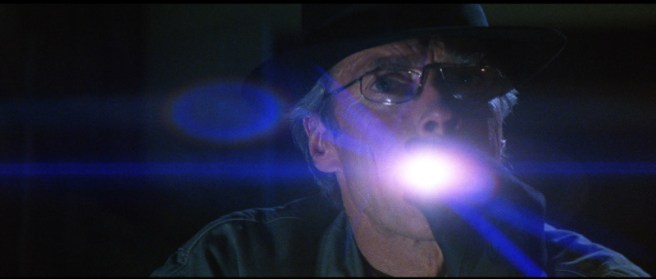
Absolute Power. A jewel thief witnesses the President murdering his mistress. I’d put this in the upper middle-class of movies Eastwood has directed.
Startups that redefine social and economic relations pop up in an instant. Lawsuits and regulations lag behind.
English is a mutt and it’s the best thing. I love dives like this, into the history of a language. Well, at least this one.
Why is English so weirdly different from other languages? by John McWhorter — Aeon

In the Line of Fire. Cat, mouse. Better than I’d hoped. I still can’t jive with Malkovich, though.
Our notion of places — which is to say the romances and images we project onto them — are always less current and subtle than the places themselves. […] That disconnect is even more acute because so many travelers have been everywhere (if only on-screen), which in turn means that reality — all that is unmediated and nonvirtual — holds a greater premium than ever.

Collateral. I keep trying to re-rank Mann movies and running out of #1 slots.
Getting along isn’t luck, it’s a skill.
Informal language is the athletic clothing of ideas.
By virtue of being atmospheric, ambient music tends to make the listener aware of the hardware involved in reproducing it, so it’s always, in a sense, about technology.
The restriction of trailers to a few minutes of carefully selected and edited shots and scenes endows what we do see, from faces to car crashes, with a kind of pregnancy or underdeterminacy that allows audiences to create an imaginary (as-yet-unseen) film out of these fragments—we desire not the real film but the film we want to see.
There are over a billion Chinese people. If even one in a thousand is a robber, you can provide one million examples of Chinese robbers to appease the doubters. Most people think of stereotyping as “Here’s one example I heard of where the out-group does something bad,” and then you correct it with “But we can’t generalize about an entire group just from one example!” It’s less obvious that you may be able to provide literally one million examples of your false stereotype and still have it be a false stereotype. If you spend twelve hours a day on the task and can describe one crime every ten seconds, you can spend four months doing nothing but providing examples of burglarous Chinese – and still have absolutely no point.
If we’re really concerned about media bias, we need to think about Chinese Robber Fallacy as one of the media’s strongest weapons. There are lots of people – 300 million in America alone. No matter what point the media wants to make, there will be hundreds of salient examples. No matter how low-probability their outcome of interest is, they will never have to stop covering it if they don’t want to.
The Bookmark represents what we wish for. It’s the earliest indicator of intention, and the most vulnerable; by definition, the act of saving something for later means that whatever we hope for hasn’t happened yet. Bookmarks are placeholders for the future. By thumbing through them, we can start to see what might happen next.
If the words nerd and geek can be rehabilitated — if legions of misunderstood enthusiasts can march from the margins of respectability to the heart of the mainstream — then why not snob as well?
Internet writers live on Twitter and it greatly distorts their understanding of reality.
As someone who loves Twitter, this can be hard to admit, but ultimately Twitter is an ephemeral online forum that nobody really uses, and our tiny politics subpocket of Twitterdom almost certainly has no effect on anything.


I love these drawings by Delmer Daves for his adaptation of the 1957 3:10 to Yuma. It makes me so happy to see these things sketched out and then see how they really came to life, just like they had in mind.

3:10 to Yuma (2007). Well, Russell Crowe is no Glenn Ford, but who is. Loved the original movie, which fleshes out the very short story really well. This movie adds in a bit too much extra material for me, which dissipates the tension. Good, though. Themes of pride, circumstance, honor. Love this line on insurance/forced retirement, basically: “They weren’t paying me to walk away; they were paying me so they could walk away.” Filed under: westerns.
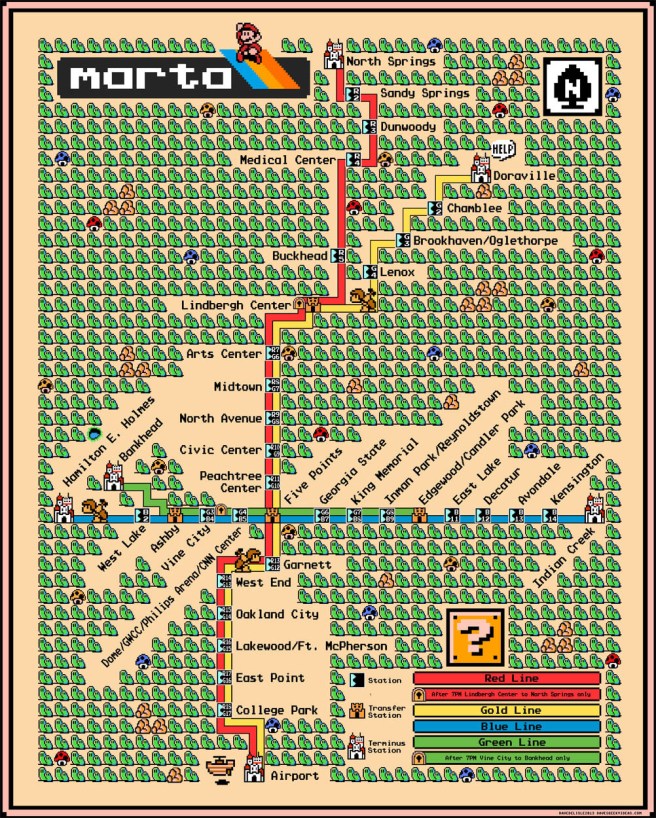
 Mark Larson