The Politics of Empathy and the Politics of Technology — The Message

Then there’s the question of automated changing of profile pictures to express sympathy, a form of emotional disaster relief. We first saw this phenomenon when Facebook created an easy way for people to apply a rainbow overlay to their profile pictures to support and celebrate a civil rights win: marriage equality. Even if you approve of rainbowing profiles, you have to acknowledge that by encouraging rainbows, Facebook was making another political choice, like the way Safety Check was a political decision.

The Politics of Empathy and the Politics of Technology — The Message

Leveling both sides of the playing field

What if, instead of teaching women that they have to raise their hands to speak at meetings, we taught men to be more reflective and circumspect; instead of telling women to tamp down their emotions at the office, a man was told that he didn’t appear committed enough to the job because he’s never shed tears over it; instead of pushing women to take public credit for their work, we publicly admonish men who don’t properly acknowledge others’ contributions? I was just invited to a seminar on public speaking skills for women — where’s the class on listening skills for men?

Leveling both sides of the playing field

Public Enemies

Public Enemies. I love how so many people get to “lead” in this movie, though Depp is still at the heart of it. Forgot about the brief Channing Tatum scene. The arrest/trasnport/imprisonment scenes have some nice echoes of Kit Carruthers, the charisma and confidence. “We’re having too good of a time today; we’re not thinking about tomorrow.”

The Wesleyan Argus | A.O. Scott Defends the Art of Criticism

“One of the things that any artist is working with is other art. You think about filmmakers, for example, and they all start out as film fans. You have Martin Scorsese as a kid going to double features every day and absorbing all of the world in that way, and then thinking about Quentin Tarantino in the video store,” Scott said. “In the simplest way that you see something or you hear something, and you start thinking, ‘How did they do that? Could I do that? Could I do it better? How would I do it differently?’ All of what we identify as aspects of the creative process, the absorption of influence, the learning and discarding of rules, the workshop discipline of figuring out what works and what doesn’t and how—all of that is criticism.”

And:

Most human effort results in mediocrity, it’s just the tragic fact of the human condition. The question is, though, how mad are you gonna get about that?

The Wesleyan Argus | A.O. Scott Defends the Art of Criticism

Hunger Makes Us Modern Fans: An Interview with Carrie Brownstein | NOISEY

Fandom carries with it an inherent curiosity, and I think curiosity is what allows us to be open and optimistic and to allow into our lives experiences that we would otherwise be closed off to. We’re confronted all the time with so many instances and so much information that almost requires a shutting down—almost requires us to become inert… to become frightened. There’s something about fandom’s relationship to curiosity that keeps us moving forward into the world and into the process of discovery, and I think to balance that with the things that feel more frightening and uncertain… It helps me keep optimism as part of the ingredients in my life, and it helps me live in the present. Even if you’re discovering something old for the first time, the process of allowing something new into your life I think speaks to an allowance that’s important.

Hunger Makes Us Modern Fans: An Interview with Carrie Brownstein | NOISEY

Reasons to Survive November

josianecurtis:

November like a train wreck—
as if a locomotive made of cold
had hurtled out of Canada
and crashed into a million trees,
flaming the leaves, setting the woods on fire.

The sky is a thick, cold gauze—
but there’s a soup special at the Waffle House downtown,
and the Jack Parsons show is up at the museum,
full of luminous red barns.

—Or maybe I’ll visit beautiful Donna,
the kickboxing queen from Santa Fe,
and roll around in her foldout bed.

I know there are some people out there
who think I am supposed to end up
in a room by myself

with a gun and a bottle full of hate,
a locked door and my slack mouth open
like a disconnected phone.

But I hate those people back
from the core of my donkey soul
and the hatred makes me strong
and my survival is their failure,

and my happiness would kill them
so I shove joy like a knife
into my own heart over and over

and I force myself toward pleasure,
and I love this November life
where I run like a train
deeper and deeper
into the land of my enemies.

Tony Hoagland

brightwalldarkroom:

“It’s said that Chaplin wanted you to like him, but Keaton didn’t care. I think he cared, but was too proud to ask. His films avoid the pathos and sentiment of the Chaplin pictures, and usually feature a jaunty young man who sees an objective and goes for it in the face of the most daunting obstacles. Buster survives tornados, waterfalls, avalanches of boulders, and falls from great heights, and never pauses to take a bow: He has his eye on his goal. And his movies, seen as a group, are like a sustained act of optimism in the face of adversity; surprising, how without asking, he earns our admiration and tenderness.”

—Roger Ebert

American Psycho

American Psycho. Great example of how a movie can depict the absolute worst human being and make it enjoyable. A tale of hyper-masculine narcissism and sociopathy. Status envy. The recitations of facts, routines, brands and such, all that cataloging reminded me of… Walt Whitman? Bale’s character develops in only one direction, but he gives it his all.

“Back to the Future” is now all back and no future | MZS | Roger Ebert

The passage of time makes the whole trilogy seem wise and humble, in ways it never could seem in the eighties or nineties or aughts, because the entire thing is really and truly a time capsule—not of any temporal-physical reality, but of a particular strain of American cultural posturing circa 1985-1990. All movies, particularly time-travel movies, have a touch of this. But the “Future” films are different because, unlike the vast majority of time travel stories, they are anchored very strongly in the “present.” The present is not merely a framing device or a launching pad for adventures, as is the case in most time travel films. All visits to the past or future are related to the present – and the stakes are not just personal (Marty’s existence, his parents’ happiness), they are cultural. Marty doesn’t just change his family, he changes the town, and by implication, American life.

“Back to the Future” is now all back and no future | MZS | Roger Ebert

Sympathy for the Devil by Lorrie Moore

The ability on a camera-laden set to inhabit a character without a twitch of distraction or preoccupation or visible hint of the internally or externally irrelevant is a scary but brilliant feat.
Ordinary people cannot do it. But I have seen great actors do it even at cocktail receptions full of cell phones. In a world where major writers have announced that they cannot focus on their work without extracting or blocking the modems in their laptops, this kind of thespian concentration is worth noting. (One thinks of the writer Anne Lamott’s remark on her own maturing undistractibility: “I used to not be able to work if there were dishes in the sink,” she has said. “Then I had a child and now I can work if there is a corpse in the sink.”)

Sympathy for the Devil by Lorrie Moore

My Writing Education: A Time Line – The New Yorker

George Saunders is a gem.

There’s this theory that self-esteem has to do with getting confirmation from the outside world that our perceptions are fundamentally accurate. What Doug does at this meeting is increase my self-esteem by confirming that my perception of the work I’d been doing is fundamentally accurate. The work I’ve been doing is bad. Or, worse: it’s blah. This is uplifting–liberating, even—to have my unspoken opinion of my work confirmed. I don’t have to pretend bad is good. This frees me to leave it behind and move on and try to do something better.

My Writing Education: A Time Line – The New Yorker

The Martian

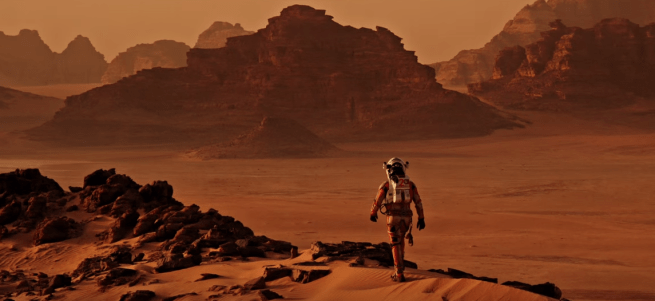
The Martian. What’s most refreshing here is that it’s a fairly gentle, nice movie. Perfectly pleasant, always positive. I don’t think there’s anythig here for me to come back to, but it was really fun to watch. I didn’t finish the book.