I always assume that a good book is more intelligent than its author. It can say things that the writer is not aware of.
We need some delusions to keep us going. And the people who successfully delude themselves seem happier than the people who can’t.
Forer effect – Wikipedia, the free encyclopedia
And now I know the name for this. (via)
The Forer effect (also called the Barnum Effect after P.T. Barnum’s observation that “we’ve got something for everyone”) is the observation that individuals will give high accuracy ratings to descriptions of their personality that supposedly are tailored specifically for them, but are in fact vague and general enough to apply to a wide range of people. This effect can provide a partial explanation for the widespread acceptance of some beliefs and practices, such as astrology, fortune telling, and some types of personality tests.

Portrait of Madame X by John Singer Sargent. When the painting debuted, the right strap of Mme. Gautreau’s dress was falling off her shoulder. Scandal!
Doctor Zhivago

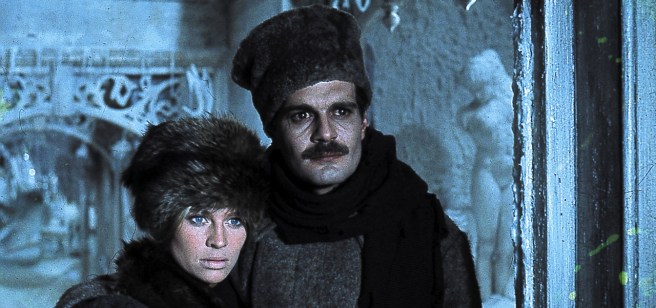
Doctor Zhivago. Beautifully set, shot, and acted, but know that this is pure soap opera. That said, after a little warm-up, I was rapt for the first two hours. The last hour is weaker. Just set your skeptic filters low and let yourself get swept away. It’s a great cast of imperfect people. Our hero, Omar Sharif, is a little annoying. The reliable Rod Steiger is a perfect asshole. Julie Christie is tough, and in her role as Lara is maybe the most attractive modestly-dressed character I’ve seen on film. Frumpy Russian winterwear never looked so good. Perfect lighting helps. Anyway, Ebert calls it “an example of superb old-style craftsmanship at the service of a soppy romantic vision, and although its portentous historical drama evaporates once you return to the fresh air, watching it can be seductive”. I would watch it again.
Philosophy Bites: Cynthia Freeland on Portraits. This is a really great episode. Art history, portraiture, photography, self-representation, etc. One of the topics that came up was Roland Barthes’ book Camera Lucida, a short volume on photography written after his mother’s death. (See also his journal excerpts from the same time period.) Given the choice, Freeland would like David Hockney to do her own portrait.
Copacetic – Online Etymology Dictionary
We’re not quite sure where “copacetic” came from.
1919, but it may have origins in 19c. Amer.Eng. Southern black speech. Origin unknown, suspects include Latin, Yiddish (cf. Heb. kol b’seder), Italian, Louisiana French (coupe-sétique), and Native American. None is considered convincing by linguists.
While I’m on the topic, I should mention that the Online Etymology Dictionary is one of my favorite sites ever. I usually make a couple visits every day.
Copacetic – Online Etymology Dictionary
Forget What You Know About Good Study Habits – NYTimes.com
Learn in different locations. Mixing related skills in one study session makes them easier to learn. Spread your study sessions and testing/reviews over time for best retention. Highly-focused immersion is not always better than a more eclectic approach. I think the overarching theme here is that making it easier for yourself isn’t always the wisest thing. If you give the brain some variety it will do remarkable job of pulling things together.

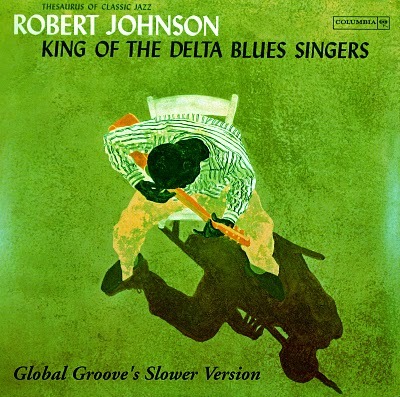
Robert Johnson, King of the Delta Blues Singers, Slower Version, Columbia
If you’ve some means of slowing the LP down – like a direct drive turntable – you’ll suddenly find yourself listening to a sexy young black guy with a cool guitar sound – less of paranoid gabbler, more of a human being
See also: Steady Rollin’ Man: a revolutionary critique of Robert Johnson
With the disclaimer that I’m not *supersuper* into old blues, I find these *much* better than the earlier, speedier versions.

I first learned this as a speed-reading technique–just a way to warm up the book and make it easier to flip through the pages. I found myself doing it for books for leisure reading, too, just because it makes so much sense.
Bird

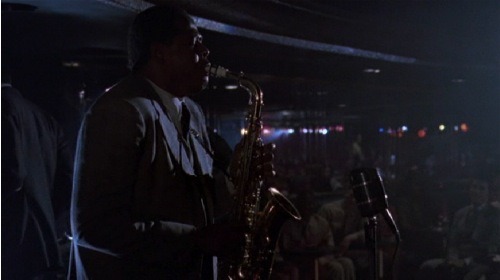
Bird. A pretty good Eastwood-directed biopic about Charlie Parker, though I’m not sure it’s that interesting for people who lack at least a mild enthusiasm for jazz. This is not a three-act story of redemption a la Ray or Walk the Line. This one seems more of a collage, cutting back and forth. It’s a blur, short of detail, but heavy on mood, aided in that most of the movie’s shots are so dark, murky, noir-ish. Parker–alcoholic, junkie–doesn’t seem a raging, violent, destructive artist, but one more burdened and resigned. I’ve got a new appreciation for Forest Whitaker now that I’ve seen him in a leading role. Makes me curious about The Last King of Scotland. Here’s a nice bit from Ebert’s review:
Two of the subtler themes running through much of Eastwood’s work – and especially the 14 films he has directed – are a love of music, and a fascination with characters who are lonely, heroic drifters. There is a connection between the Parker of “Bird” and the alcoholic guitar player in “Honkytonk Man.” They are both men who use music as a way of insisting they are alive and can feel joy, in the face of the daily depression and dread they draw around themselves.

Who is the Greatest Diva of the Last 25 Years? – The Awl. “While Aretha pretty much broke every song she ever performed, leaving it smoking on the stage, never to be touched again, Whitney broke our goddamn National Anthem.” (via)
Scientists identify moves that make men irresistible on the dancefloor
It’s worth clicking this link just to see the video.
“The head, neck and upper body come out as the key features that are important for good dancing and that surprised us.” (via)
Scientists identify moves that make men irresistible on the dancefloor
A Cruel Country by Roland Barthes : The New Yorker
“Journal excerpts by Roland Barthes about mourning his mother, Henriette, who died at eighty-four, in October, 1977.” It’s a real shame this one is behind a paywall. Favorite bits:
What I find utterly terrifying is mourning’s discontinuous character.
And:
Mourning: not a crushing oppression, a jamming (which would suppose a “refill”), but a painful availability: I am vigilant, expectant, awaiting the onset of a “sense of life”.
And also:
1st mourning
false liberty
2nd mourning
desolate liberty
deadly, without
worthy occupation
Trekking Midtown by Tad Friend : The New Yorker
This week’s issue has been pretty darn good so far. “The goal: to walk from the Empire State Building, on West Thirty-third Street, to Rockefeller Center, on West Forty-eighth, without ever setting foot on Fifth or Sixth Avenue.”

Dead Man Walking – Pedestrian fatalities per 100,000 residents. Atlanta wins! (via)