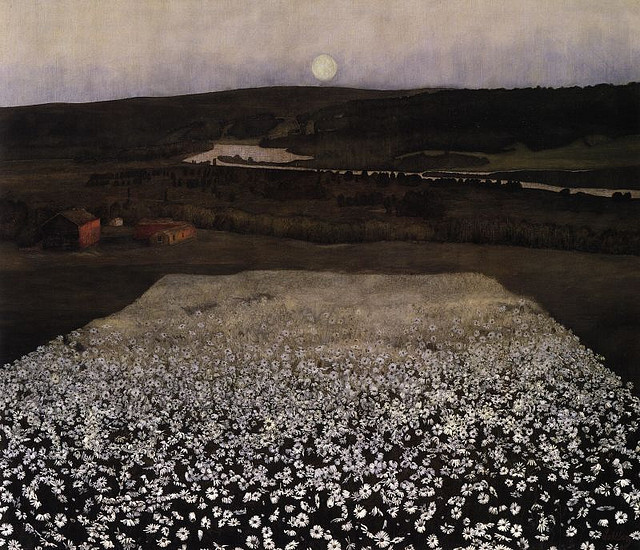
“Sunset Portraits, From 8,462,359 Sunset Pictures on Flickr, 12/21/10”. A photo illustration by Penelope Umbrico for The New York Times. I’ve probably become inured to news images, but this was one of those rare ones that stopped me in my tracks. If there were a print of this, I’d probably buy it. Cyberspace When You’re Dead.
There are two ways of walking through a wood. The first is to try one of several routes (so as to get out of the wood as fast as possible, say, or to reach the house of grandmother, Tom Thumb, or Hansel and Gretel); the second is to walk so as to discover what the wood is like and find out why some paths are accessible and others are not. Similarly, there are two ways of going through a narrative text.

theatlantic:

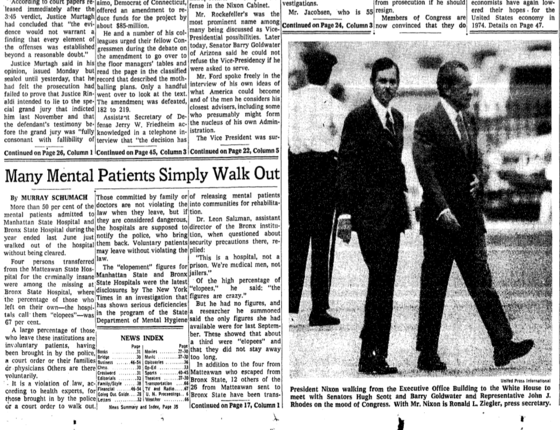
In response to the The New York Times’ Cheney layout gaffe, a reader writes:

I still have a copy of the New York Times from August 8, 1974 — one day before Richard Nixon resigned the presidency. On the front page at the bottom is a photo of Nixon, walking from the Executive Office Building to the White House, juxtaposed with an article headlined, “Many Mental Patients Simply Walk Out.”

Read more here.

Sabotage

Sabotage. I’ll give Hitchcock credit for starting off in a snappy manner without much preamble, but my attention drifted a good bit here and there. Especially after the heartless, classic package delivery scene, which is both an impossible-to-beat mid-story climax and a colossal waste of time. It’s also really effective, even if you know what’s coming. I kind of resent Hitchcock’s skill at jerking my emotional chain for a few minutes, and then leaving me not caring very much when the moment passes. To his credit, he came to regret the scene later in his career as he developed as a storyteller.

My updated Hitchcock rankings:

  1. Rear Window
  2. To Catch a Thief
  3. Notorious
  4. Vertigo
  5. Psycho
  6. Sabotage
  7. North by Northwest
  8. The Man Who Knew Too Much

Company Man: Why Bud Selig Is Wrong For Baseball & Why It Doesn’t Matter by Ben Birdsall

Winning in sport matters because it doesn’t matter in any grander scheme. Because nothing beyond a game rests on which team scores the most runs, we can give it our all without having to consider anything else. Our team is righteous, our opponent is craven precisely because nothing outside the field of play is at stake.

Company Man: Why Bud Selig Is Wrong For Baseball & Why It Doesn’t Matter by Ben Birdsall

Stephen Schenkenberg: My Favorites for 2010

schenkenberg:

So at the end of just about every year since 2000, I’ve rounded up my favorite (mainly cultural) stuff of the previous 12 months and posted it online. Here are my picks for 2010, which I’ll soon be adding to my permanent Annual Favorites page.

Aside from the great idea of keeping a running annual favorites page, I also appreciate Stephen’s inclusion of museum collections/exhibitions and wines. I keep telling myself I need to keep a beer/whiskey/etc. journal.

Stephen Schenkenberg: My Favorites for 2010