Q. If you could be president for one day what would be your first order of business?
A. […] Everyone gets free pizza making lessons (dough, sauce, etc). Crazy, right? No! It’s about teaching people to have an eye (and tongue) sensitive to quality. Pizza seems simple, but boy it’s tough at first. But then it’s pretty easy once you know what you’re doing. And you’re like: Wow! I make the best pizza in the ‘hood! And chances are, you’re right. You do. So, once you know great pizza, it’s *shocking* how little is out there. How much *bad* pizza is out there. It’s everywhere! Great pizza is actually a pretty low bar. And doesn’t have to cost that much. So it gets you thinking: “Why are these bad pizza places so bad? Why don’t they make great pizza? It’s not that hard!” And then: “Why don’t more people know what great pizza tastes like? Don’t they know how much pleasure they’re missing out on?” And then it spirals into more generalized notions of quality and sensitivity and experience. And then, *poof*, suddenly America is Japan. Or something like that.
Category: uncategorized
The Iced-Coffee Economy: Why the Cold Stuff Costs More
The Last Days of Disco: Abebe Remembers Donna Summer and Robin Gibb
Disco’s success at capturing glamour and sex as an aesthetic can be frightening — in approximately the same way it’s frightening to watch the world do similar things to weddings, turning them into sites of glittery yearning where one’s sense of self and love turns strangely prop-filled and expensive. This seems like one of the more-flattering reasons why rock fans treated disco with so much hostility: It’s a puritan’s gut instinct that there’s something dangerous about a sex-and-glamour bubble floating too exuberantly beyond the realm of reality, becoming too stylized and commercial. And of course straight, white, male rock fans were the ones who’d feel that fear and loathing most strongly: They’d have been the listeners with the least to gain from actively reimagining love, sex, and glamour. Disco claimed the audience with the most critical stake in reframing those things — gay, black, female, and Latino listeners chief among them.
Cf.
The Last Days of Disco: Abebe Remembers Donna Summer and Robin Gibb
Dark City

A happy childhood is poor preparation for human contacts.

Whatever it is you have never done before in your life and have no interest in doing, that’s probably what you’ll need to learn in order to keep your business running. Accounting, sales, inventory management. These are all things I’ve had to take on. These are also things that I would rather not do for the rest of my life. And while I’ll never be a crack accountant or a star salesman, it’s better to be mediocre than incompetent.
Lessons from a craft beer startup. My buddy Jonathan and his two co-founders Jeff and Joel make the best beer in Atlanta.
The question arose as to what we would do differently if we were immortal. […] I answered that I would travel more. Later the question was asked, what would you do differently if you found out you had only a short time to live. I answered again that I would travel more. Click, buzz, whirr…does not compute, does not compute. […] Given that I would travel more if I was to live either less or more, the probability that I was at just that level of mortality that I should not be traveling now must be vanishingly small.
Alex Tabarrok. Swap out “travel” for whatever it is that you happen to value a lot. (Got reminded about this post via Ben Casnocha.)
Casino Royale
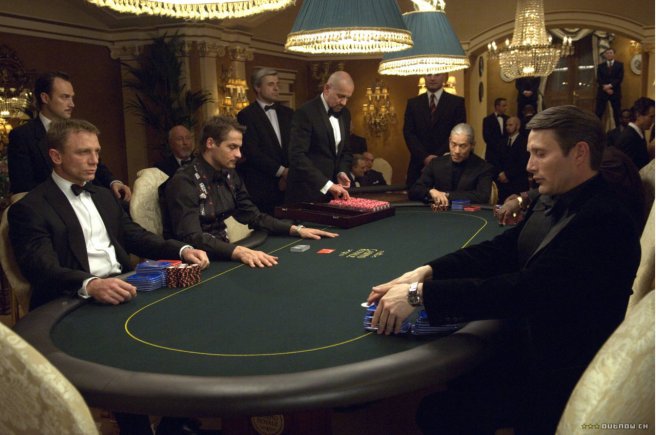
Casino Royale. I admitted on Twitter that I’d never seen a post-Dalton Bond film and asked for recommendations. This was the clear favorite. I like this reboot. Craig is excellent. The movie is kinda Bourne-y, and therefore great as an action film. It’s kinda eehhhhh if you’re looking for clever spy things. (Chasing baddies by text messages they leave behind on cellphones? Surely it’s harder than that…) It has basically no sense of humor. It’s a bit too long. Appropriately glamorous photography. Soundtrack is nothing special, but I really appreciate withholding the main theme until the closing credits. The arc of storytelling is not the revelation and denial of a grand evil plot; it’s gloomy, reckless Bond becoming Bond. Looking forward to Quantum of Solace!
Mean Girls
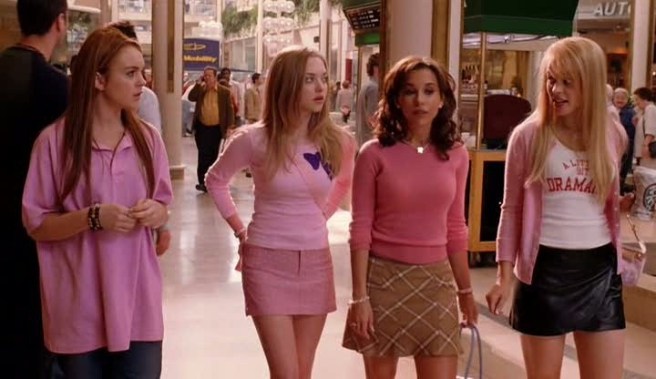
Mean Girls. This is one of the great comedies of our era. So quotable, awesome characters, great pace. Talent is put to perfect use here. I really hope Lohan bounces back some day.
Best Room Fan | The Wirecutter
Just in time. The Wirecutter is wonderful.
What is the most musical city in the United States?
Atlanta = number 5 in musical artists per capita, behind Beverly Hills, San Francisco, Nashville, and Boston. Eat it, cities not in the top 5! (via)
See also evidence for Atlanta listeners being the among the most influential. We run this.

What we call a home is merely any place that succeeds in making more consistently available to us the important truths which the wider world ignores, or which our distracted and irresolute selves have trouble holding on to. As we write, so we build: to keep a record of what matters to us.
From The Architecture of Happiness by Alain de Botton. (via carpentrix)
Why do you always sit in the same place in meetings? – Barking up the wrong tree
People exhibit territorial behavior when they take seats in public places, limiting themselves to small areas so they don’t have to “renegotiate” seating arrangements with other people, researchers say. In one study by Marco Costa of the University of Bologna in Italy, university students showed strong attachments to specific areas of a lecture hall; on average, each student made use of just 2.4% to 2.7% of the seating area.
Confession: at college back in the day and at work currently, I’m that jerk that, every so often, likes to take the seat where other people always sit. Always stirrin’ shit up.
Why do you always sit in the same place in meetings? – Barking up the wrong tree
How to Enjoy Going to the Movies Again – NYTimes.com
A hushed theater reminds me why I love movies. But a midnight show reminds me why I love going to the movies.
Everybody’s Al Capone in a barber’s chair.
Killer Mike. Also:
Atlanta [is] the post-civil rights city that worked. I think that’s the real legacy. All this foolishness we be doin’ as rappers is just something for the old guys to laugh at,“ he says with a conciliatory chuckle. "They did this on Simpson [Road] 50 years ago.”
The Shawshank Redemption

The Shawshank Redemption. Second time around. Still don’t like it.
Manhunter
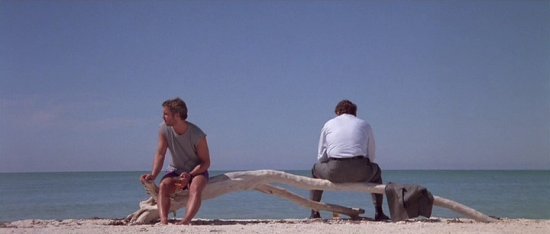
Manhunter. Awesome. Slow-burning Miami-synth-moods thriller. I love the pre-cellphone detective work, cops running evidence from office to office. The sitting and pondering. The prison scene in Atlanta is actually in the High Museum! I now have to see everything Michael Mann has done.
Many people think that in the 1960s I quit my job in an advertising company to write my first novel. Not at all: I just quit so I could go to the movies every afternoon.
Don DeLillo. (via) Echoing the Paris Review interview:
I wish I had started earlier, but evidently I wasn’t ready. First, I lacked ambition. I may have had novels in my head but very little on paper and no personal goals, no burning desire to achieve some end. Second, I didn’t have a sense of what it takes to be a serious writer. It took me a long time to develop this. Even when I was well into my first novel I didn’t have a system for working, a dependable routine. I worked haphazardly, sometimes late at night, sometimes in the afternoon. I spent too much time doing other things or nothing at all.
 Mark Larson