Filed under: George Saunders.
George Saunders Has Written the Best Book You’ll Read This Year – NYTimes.com
In an odd way, the fact that no one else knows has made me more competitive, not less. I’m sure serious runners are familiar with this seeming paradox. Maybe nobody else knows that you shaved 1.2 seconds off your personal best time for the mile, but you know — and that knowledge, plus the fact that your achievement has brought you no external reward, gives you a perverse sense of satisfaction. Or no, let’s be honest about this: it gives you a perverse sense of superiority.
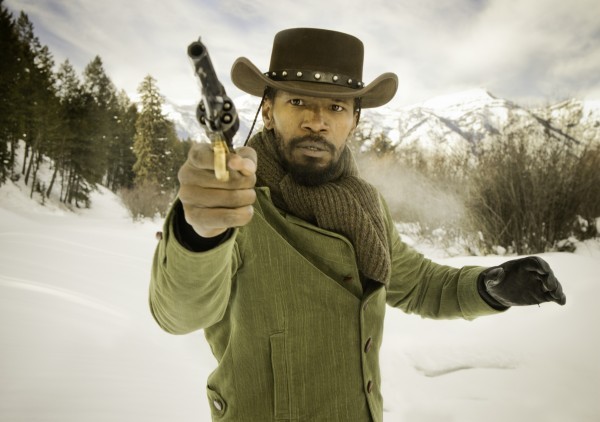
Django Unchained. The best way to summarize my experience is that this movie made me excited about what movies can do. And like Compliance, a huge part of the experience is how you share it with a theater full of other viewers. Powerful, thoughtful entertainment that makes you think about why you’re entertained.
While not the same, because it’s much more complex, this “Django Moment” is an evolutionary advancement to my own personal “Jay-Z Moment,” in which the decision has to be made, going into one of his shows, of how to attack the N-word. While most certainly not just tied to Mr. Carter, the overall sentiment of “I’m not black, but I want to say the N-word at this concert, because the rapper onstage is practically begging me to say it along with him” has long been something to note among his ever growing, ever more mainstream fan base. What’s happening in Django is simply taking that premise to the next, more intense level.
Really good stuff from Rembert Browne (@rembert).
Django, the N-Word, and How We Talk About Race in 2013 – Grantland
This is what RSS is for, these days: you set a snare, leave it, and trap for yourself the words you want to read most.
I’m not sure how revealing it is that people in rural China and Africa have chosen something that is relatively inexpensive and available, over something that is fairly expensive, and isn’t. Saying “Well, they didn’t install this totally inadequate substitute” doesn’t really persuade me.
Megan McArdle FTW.
What’s Better: Cell Phones or Indoor Toilets? – The Daily Beast
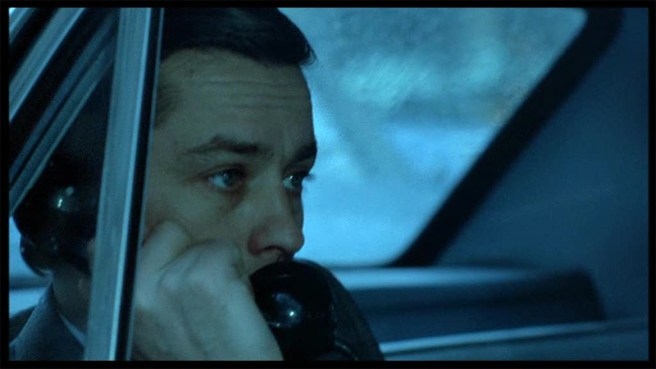
Un flic (A Cop/Dirty Money). I love seeing older movies like this and realize I’m seeing some of the early DNA for later films. Like the camera that circles the group as they plan/explain the upcoming heist. The helicopter+locomotive scene was surely an inspiration for Mission Impossible. And the ending, where the camera holds on Delon’s face as he drives? You see the same thing echoed at the close of Michael Clayton. You’re invited to linger on the protagonist and speculate about how they feel about the whole ordeal. Oh, and I love Delon’s (anti-)hero here. He’s not traditionally noble. Like how he handles the love triangle. Or the part where, instead of trying to prevent a suicide and collar a live suspect, he closes the door? Woah! And about those criminals: like I mentioned when I watched Thief, there’s something about seeing middle-aged guys doing heists that’s kind of refreshing. And the one guy hiding the moonlighting from his wife! He’s like, “The job interview went okay. Long day!” Ha! This movie also has: 1. Catherine Deneuve (not enough, but hey). 2. A character nicknamed Matthew Suitcase. 3. A transvestite informer (/love interest?). Looks great, sounds great. Great movie. Jean-Pierre Melville’s Le Samouraï is also very good. I also love Alain Delon in Plein Soleil/Purple Noon.
Martin Sheen:
Terry called one night and said, “I want you to play the part.” I had to get up very early the next morning to go to work, and I was driving along the Pacific Coast Highway in a little Mazda. I was listening to a Dylan album I was fond of, and the song “Desolation Row” was playing, and the sun was rising, and it hit me that I was going to play the role of my life. I had been a professional actor since I was eighteen. I was thirty-one, I had four children, I was struggling, doing a lot of television—a lot of bad, silly work just to make ends meet—and I wasn’t having any luck in features to speak of, and here was the part of my life. And I was overwhelmed, and I pulled off to the side of the road, and I wept uncontrollably.
Also, from assistant director Bill Scott:
We were so green. A couple years ago, Terry told me that on that first morning of filming, after he got his big wide shot, the cameraman turned to him and said, “Should we go in for coverage now, Terry?” And Terry said, “No, let’s do an over-the-shoulder shot’"—which is coverage. And I remember when someone asked me if I had ordered the honeywagon, I said, "Yeah, the catering’s all lined up.” The honeywagon’s the toilet truck.
I gotta watch Badlands again.
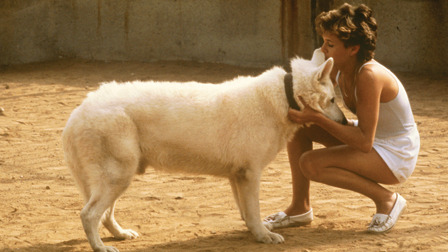
White Dog. Incredibly blunt B-level message movie with terrible dialogue, but it works in a Night of the Living Dead kind of way. Ennio Morricone soundtrack helps for sure.


What I Read, 2007-2012. Amazing how it all adds up. Six years, 400-something books and counting. (Sometimes I write about them.)
As with any long-term journaling, what’s especially fun is the bigger picture you get from looking back. I see the individual books, yes, and my passing topical interests and ongoing obsessions, but I also see who I was hanging out with, who I was influenced by, and an incidental history of where I was living.
No one can yet predict exactly how quickly and in whom hypothermia will strike–and whether it will kill when it does. The cold remains a mystery, more prone to fell men than women, more lethal to the thin and well muscled than to those with avoirdupois, and least forgiving to the arrogant and the unaware.
In other words, I’m doomed. I remember reading Jack London’s To Build a Fire and watching the short film adaptation in middle school. Love it. Keep your gloves on, folks.
The Cold Hard Facts of Freezing to Death | OutsideOnline.com
Maps are not only about space, they’re also about time: maps are frozen journeys.
After working with terminal patients for over 30 years, Dr. Byock recommends four simple expressions. “Please forgive me.” “I forgive you.” “Thank you.” “I love you.”
Filed under: death.
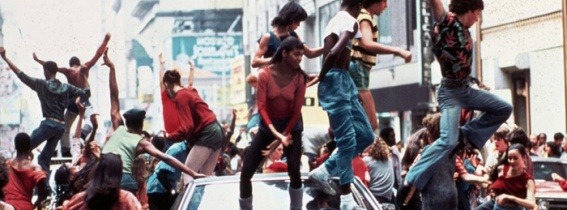
Fame. Like I said after I watched Mystic Pizza, the bildungsroman reached a huge peak in the ‘80s. I was totally sold on a few really awesome musical numbers in there, none of them feeling too super-campy-fabulous, but the real payoff is actually the stories in between. The few main chapters (auditions, freshman year, sophomore year, etc.) each present a few vignettes revolving around a collection of teen hopefuls. Success, stress, trauma, persistence. Great movie. I have no interest in the remake. Another wonderful, episodic film about New York teens (from a different demographic) wrestling with their fears and expectations is Metropolitan.
The standards once applied to reporting are now often reserved for correction writing. […] If you tell me that a lunatic killed twenty kids in an elementary school, that gives me enough to process for a while. I can wait a few minutes or a few hours (or even a few days) to learn about the details about the shooter’s psyche or his relationship with his deceased mother. But these days, it seems, no one producing news can wait. But someone has to wait. Little value for journalists or their readership is created in the race to be first. We need a media that races to be right.
When he was twenty-two, Bram Stoker read and fell in love with Walt Whitman’s poetry, finding solace and joy between the covers of Leaves of Grass. And, like many fans, he wanted the connection that he felt to Whitman to be real. Late one night, cloaked in the comfort of darkness, Stoker poured his soul out to Whitman in a shockingly honest letter that described himself and his disposition. That letter, when Stoker finally mustered the courage to mail it, would begin an unexpected literary friendship that lasted until Whitman’s death.
After watching THX 1138, I started reading about co-writer Walter Murch. I love how he separates his film editing from his film writing:
When I write a script, I lie down–because that’s the opposite of standing up. I stand up to edit, so I lie down to write. I take a little tape recorder and, without being aware of it, go into a light hypnotic trance. I pretend the film is finished and I’m simply describing what was happening. I start out chronologically but then skip around. Anything that occurs to me, I say into the recorder. Because I’m lying down, because my eyes are closed, because I’m not looking at anything, and the ideas are being captured only by this silent scribe–the tape recorder–there’s nothing for me to criticize. It’s just coming out.
That is my way of disarming the editorial side. Putting myself in a situation that is opposite as possible to how I edit–both physically and mentally. To encourage those ideas to come out of the woods like little animals and drink at the pool safely, without feeling that the falcon is going to come down and tear them apart.
So simple, so obvious: if you want to get some ideas out without reflexive self-editing, choose your medium and environment so it’s hard to edit. Use a tape recorder, separate digital vs. analog desks, Sharpies, index cards…
Going back to the 19th century makes you realize that a phenomenon we tend to blame on digitization actually happened a century earlier. Once you can throw it away, the value of books comes to reside in the words they contain rather than their potential for reuse.
Secret Reading Lives, Revealed – The Chronicle Review – The Chronicle of Higher Education



 Mark Larson