
Aggregating! (via @gwynnstu).
Aggregating! (via @gwynnstu).

Before having children, and provided we’ve moved on a little from the maelstrom of adolescence, it is possible to think of ourselves as good people: patient, kind, loving, tolerant. A few years of parenthood strips us of these illusions and we see ourselves in the raw: capable of fury, rage, pettiness, jealousy — you name it. For children confront us with the infantile aspects of our own personalities, the parts of ourselves we’d most like to deny, and we can hate them for it. Worse still, they can thwart our wish, even our need, to feel loving and effective.
That’s Edward Marriott on ambivalent parenting. Cf. Megan McArdle:
I wonder if we ought to re-examine our commitment to happiness. It seems to me that there’s possibly some merit – if we persevere and have the sense to learn from it – in the other-orientation that is (good) parenting. It’s fine to go through life happy, in other words, but I suspect we also want to go through life without becoming big fat self-absorbed jackasses. Children really help in that regard.
To be sure, there are too many parents who, despite their children, remain narcissistic nimrods. But the nature of parenting is to beat that out of you. There’s just no time to spend on ourselves, at least not like we would if we didn’t have babies to wash and toys to clean up, usually in the middle of the night, after impaling our feet on them.
People are inherently self-centered, and especially in a peaceful, prosperous society, this easily leads to self-indulgence that in turn can make us weak and ignoble. There’s something to be said for ordeals – like parenting, or marriage, or tending the weak and broken – which push us into an other-orientation. When we have to care for someone, we get better at, well, caring for people. It actually takes practice, after all.

Star Trek: Nemesis. I can see why they put the brakes on the movies for a while. This one might be too blockbuster for it’s own good. It lost some Trekkiness. A very safe film. Definitely better than Insurrection, though, and I think the better production values are a big part of it. As you might suspect from the title, there’s some identity issues explored here. The Picard/Shinzon relationship feels a bit portentous (although one of the saving graces is that young Tom Hardy shows he’s had that incredible screen presence all along, even though his villain is one we’ve seen before: smart, pale, bald, leather.); it’s the relationship between Data and B4 that’s really cool. It’s sort of a Ship of Theseus problem–if you give a physically identical android the same memories, is it the same android? Brent Spiner is a life-saver for all the TNG movies, which seem like they give their supporting cast a lot more screen time. I admit that I enjoyed the dune buggies.
And that’s that. I’ve seen every Star Trek film. Here’s how I rank them:
You hit 30, 35, 40, and the life of a professional athlete seems more and more remote. It’s one of a million pasts that never happened rather than a future you can dream about. And the experience of the coach is simply much more accessible to almost every grown-up fan than the experience of any high-level player. And not just because so many fans go on to coach their kid’s T-ball team or whatever; think of it as a lifestyle question. The coach doesn’t have to be able to score from an overhead kick or throw a football 80 yards; he has to run meetings, make plans, juggle lists, and justify himself, same as anybody. He does paperwork. Maybe hops on the treadmill when he can. He’s still connected to the magic of sports, but with him it takes the form of inspired halftime speeches and brilliant late-game stratagems — basically work e-mail lifted to a spiritual plane. More than anything, he has to watch a ton of games: obsess about what’s not working, get mad at players who screw up, praise players who do well.
Understanding a fan’s relationship with management in sports – Grantland
Conspiracy is a nearly irresistible labor-saving device in the face of recalcitrant complexity.
Henry Louis Gates, quoted in The Signal and the Noise. Cf. William Gibson:
Conspiracy theories and the occult comfort us because they present models of the world that more easily make sense than the world itself, and, regardless of how dark or threatening, are inherently less frightening.
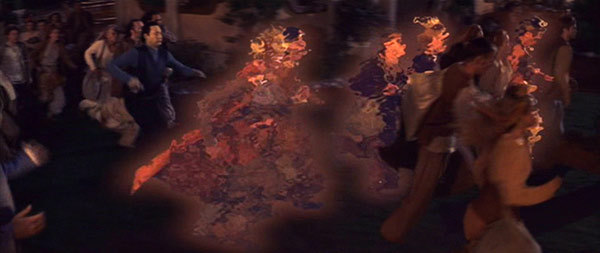
Star Trek: Insurrection. There are a couple of main themes here that I really like. One, aging and youth. And two, the forced relocation/Lebensraum/irredentist refugee thing, with the Federation getting involved in some less obviously noble politics. But these themes come up in a pretty ho-hum story that never breaks the TV feel like First Contact does. Even the opening titles are kind of cheap. Add in some truly stupid moments (the beaded headdress; the Gilbert & Sullivan; the life raft), and some good drama that starts and ends too abruptly (Geordi and the sunrise; the slow-time moments). Missed opportunity. Riker kicks ass on the bridge, though. One more to go!

Zoe’s Desk | Submitted For Your Perusal.
It’s a neat trick on Fincher’s part. It’s difficult to render knowledge work cinematically (quick, what’s the last great movie about writing you remember seeing?), as opposed to physical work which more readily lends itself to Rocky-style montages, but Fincher has figured out a way to short circuit the process. Like all good filmmakers, he knows that if he gives us the signs, we will fill in the rest.

Star Trek: First Contact. I hear this is the best of the TNG cast, and it is good, but doesn’t measure up to the best of the original cast. Definitely darker. Some of that innocence and optimism is gone (which makes some of the humor and goofiness just… awkward), though thankfully the special effects are finally worthy of the setting. Highlights? I loved the editing and cuts between the scenes on Earth and the various ship scenes–so fluid. Patrick Stewart breaks out of Shatner’s shadow at last. The scenes with Data and the Borg are really good. The spacewalk scene is one of the most typically movie-theater-type fun set pieces in the whole series. There’s also a thematically appropriate opera reference in the solid soundtrack. I liked it.
Great appreciation for a great film. The Talented Mr. Ripley was kind of a wake-up call for me. I think I saw Magnolia around the same time. I was 17. Like there was something different about the way these movies were good and strange that I hadn’t seen before and didn’t really have a reference for.
Bright Lights Film Journal :: The Complex Art of Murder: On The Talented Mr. Ripley
With my stand-up now, I’ve realized there are two types of jokes. One type is me talking about miscellaneous topics and getting laughs. That would be how I feel my first two stand-up specials come off. The second type is, you get a laugh, but you also get the feeling that the audience is saying, “Thank you for saying that!” I find the second type way more satisfying.
Aziz Ansari gets candid about love: “elusive and sadly ephemeral”
Wow. Seth Kugel is delightfully self-aware.
Q: What motivates you to keep writing?
A: Not to be facile, but if I don’t write, I don’t get to do the things I later write about. An editor once asked me whether I was one of those writers who liked writing or who hated writing. The implication—that there are journalists who struggle with writing and that that’s completely normal—was a huge relief.
Also this:
Q: Name three things you still want to cross off your bucket list.
A: Get married. Have kids. Write a great book. Disappointed?
Actually, the more obvious it’s not a normal illness, the less likely they’ll mention it. Even if your cast includes some of the most helpful doctors or mind readers, the character won’t bring it up for quite a few episodes in a row, constantly making the excuse they’re just a bit under the weather.
On trolls: Remember that foul words or blows in themselves are no outrage, but your judgement that they’re so. So when anyone makes you angry, know that it’s your own thought that has angered you. Therefore make it your first endeavour not to let your impressions carry you away…
Love me some Epictetus.
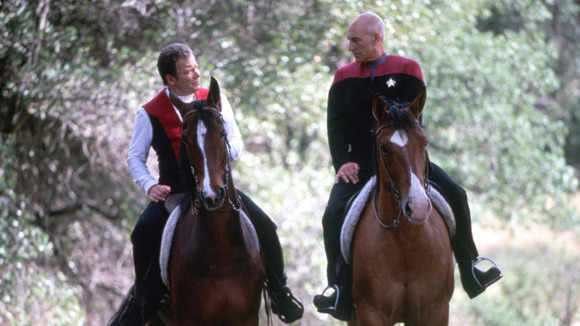
Star Trek: Generations. It is simply not as good as the others, and Shatner’s exit is woefullly mishandled. What a shame. Three more to go. Rankings so far:

The Age of Reason. There are a couple scary things here. (via)
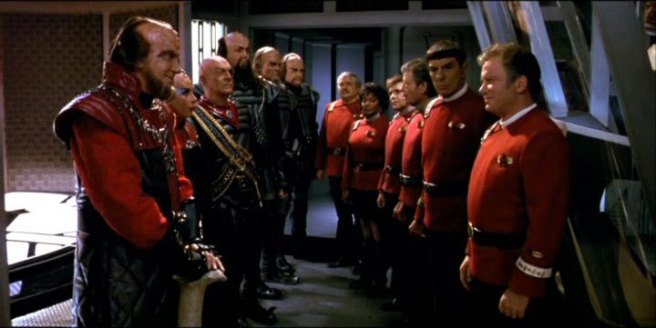
Star Trek VI: The Undiscovered Country. This one is intense! Such a good way to close out with the original stars. It seems to have the most traditional blockbuster feel: political intrigue, betrayal, blatant emotionalism, heroes in peril, a mad dash to prevent calamity, last-minute rescues, one-liners and philosophical banter. I think this one also built up the biggest sense of dread and risk out of the series. Also a nice thematic change, rather than exploring the frontiers of space and encounters with strange beings or energy forms or whatever, they’re easing into universal civics, basically, and trying not to let their baggage screw it all up. Same director as the excellent Star Trek II… and I think this one gives it strong competition.
The film tricks you into thinking it’s one thing and then repeatedly reveals itself as another. With enough viewings and distance, you begin to see that the film is entirely about the act of its own creation.
‘Ocean’s Twelve’ Is a Great Sequel About How Hard It Is to Make a Great Sequel | Criticwire

Repo Man. So lively and fun, and it gets more demented the further you go. I loved this one, especially all the side laughs they threw in – just little gems of gesture (e.g., the wrapped gift) or background noise (the TV in the hospital) or the way a scene closes (behind the counter after buying drink at the convenience store) or a character detail (the cop knitting; the kindling for the kooky fireside conversation). A solid cast across the board, with lovely typecasting. One character is an obvious ancestor of Napoleon Dynamite.


 Mark Larson
