Alex Ross’ new music blog on the New Yorker website. Nice counterweight to the blog of Sasha Frere-Jones .
Category: uncategorized
A visual interpretation of Erik Satie’s famous piano suite… The movement of each column maps the physical activity of each the pianist’s fingers respectively. The pitch of each key struck is represented by an assigned colour.
(Source: http://www.youtube.com/)

The Good, the Bad, and the Ugly
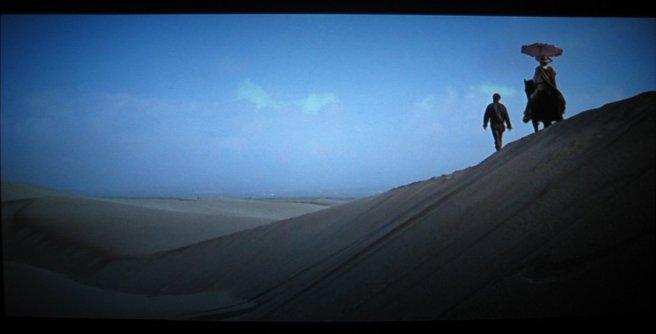
The Good, the Bad and the Ugly. I’d seen about 90% of this one, but never before in one uninterrupted stretch. Every bit as good as they say.
Storytime: Children tell their own tales
“Want to hear a really good story? Turn off your TV and turn toward the nearest 4-year-old.”

Tom Phillips: Paintings and Drawings: Oh Those Reds. Acrylic on canvas, 122 x 25.5 cm, 1969-72.

The Album Covers of Brian Eno.
The album’s pastoral cover art is a detail from After Raphael, a painting by Tom Phillips, Eno’s mentor during his days at Ipswich Art College. (Some believe that the boy in the foreground, with the blond hair and the red beanie, is meant to be Eno.) The back cover depicts the decidedly un-rocking image of Eno sitting up in bed, reading a book – underlining the album’s general vibe of stillness, solitude, and quiet reflection.

Lunch at the Dutch Haus in Montebello, Virginia. May 14, 2007. One of my favorite meals of all time.
To the Audience
Often insomnia would strike in, and I would ask aloud, to the darkness of the room, “will anyone appreciate this”? (My girlfriend had by that time developed the habit of using earplugs). And then in a spectacle of light rays and stars, the Fairy of Reason would appear to me and speak tenderly: “good hearted child, if you love it, some people, who have things in common with you, will too”. And then, on my knees, holding my hands together, tears shaking on the corners of my begging eyes, I would ask, “what if I’m just a freak and no one is like me?”
via snarkmarket

MAD MEN – “Have you ever been hunting?” I’m a latecomer to the best television show I’ve ever seen, only about 75% through with the first season. This is the best scene so far.
(Source: https://www.youtube.com/)
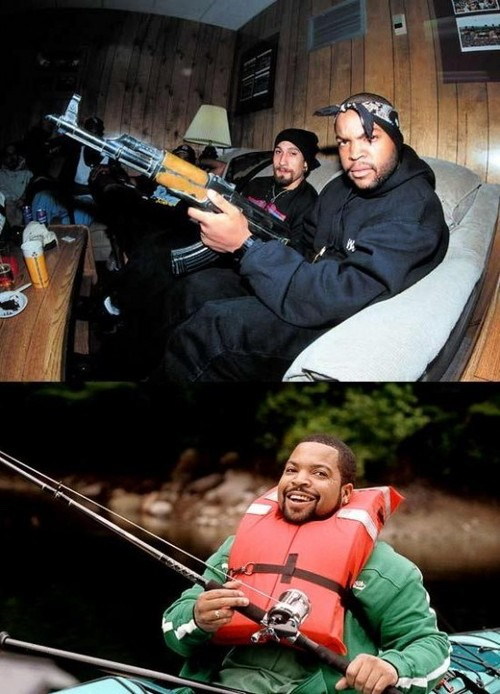
Ice Cube – then and now. “Today I didn’t even have to use my A.K. / I got to say it was a good day.”
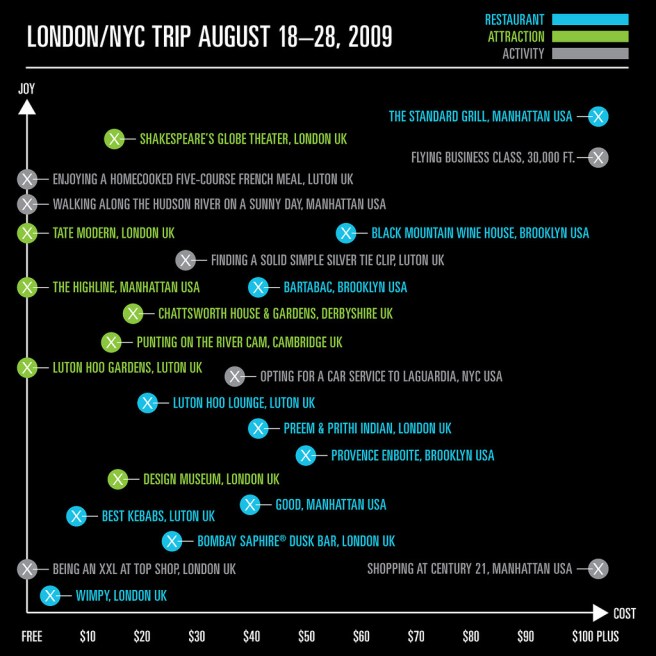
Writing as real-time performance « Snarkmarket
This is very interesting.
Think instead of a short story written with playback in mind. Written for playback. Typing speed and rhythm are part of the experience. Dramatic deletions are part of the story. The text at 2:20 tells you something about the text at 11:13, and vice versa. What appear at first to be tiny, tentative revisions turn out to be precisely-engineered signals. At 5:15 and paragraph five, the author switches a character’s gender, triggering a chain reaction of edits in the preceding grafs, some of which have interesting (and pre-planned?) side effects.
Roman Holiday

Roman Holiday. I’d only seen bits and pieces of this one before. A nice build-up, a romp, and then some romantic tension that last until literally the very last second. Classic.

The Believer – The Codex Seraphinianus

Solaris (1972)
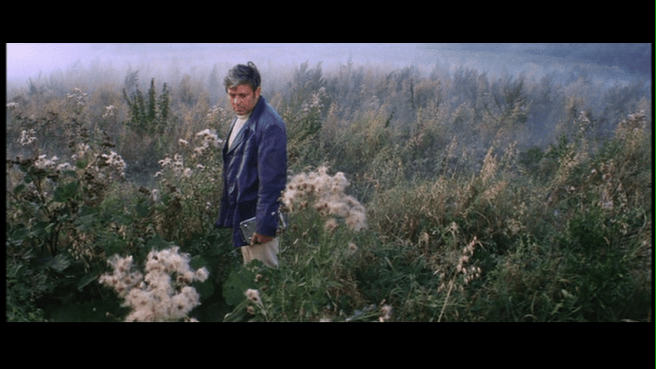
Solaris, directed by Andrei Tarkovsky. I like this one much more in hindsight than when I was actually watching it. But I have to say it’s given much more post-viewing food-for-thought than its cousin, 2001: A Space Odyssey. Now that it’s over, I kind of want to watch it again. It’s much more introspective than the Kubrick, and it’s beautifully shot with some truly “wow” moments. I give it a thumbs-up for when you’ve got some patience to let it linger.
Roger Ebert on Solaris. Phillip Lopate on Solaris (“Watching this 169-minute work is like catching a fever, with night sweats and eventual cooling brow”).
Being Individuals in an Increasingly Individualistic Culture
It would be nice… if the career advice industry would frame their obsession with passion in larger sociological context, and reinforce how new a concept it really is.
Being Individuals in an Increasingly Individualistic Culture
 Mark Larson