sarahbelfort:

trivialrecords:

Tintin means, literally, “Nothing”. His face, round as an O with two pinpricks for eyes, is what Hergé himself described as “the degree zero of typeage” – a typographic vanishing point. Tintin is also the degree zero of personage. He has no past, no sexual identity, no complexities. Like Cocteau’s Orphée, who spends much of the film in the negative space or dead world on the far side of the mirror, he is a writer who does not write.

— Tom McCarthy, Tintin and the Secret of Literature (excerpted in the Guardian)

What writers have is a license and also the freedom to sit—to sit, clench their fists, and make themselves be excruciatingly aware of the stuff that we’re mostly aware of only on a certain level. And if the writer does his job right, what he basically does is remind the reader of how smart the reader is. Wake the reader up to stuff that the reader’s been aware of all the time.

David Foster Wallace quoted in The Howling Fantods Q&A with David Lipsky. Like I said, I wish Wallace had done stand-up comedy, too, because this attitude seems perfect for it. Isn’t that what many great comedians do? A voice in the wilderness kind of thing, standing apart or going deep and observing and noticing more than you, and pointing out these things in a way that makes you happy.

Monster

Monster. Charlize Theron is amazing in this movie. But the story is weak. Great craftsman, shoddy materials. It’s worth watching at least a little bit though. On a side note, the use of some pop songs (by Journey, The Searchers, REO Speedwagon, etc.) struck me as kind of weird. I understand their use as a sort of shorthand emotional signifier, but lately I find that a little more jarring. I think I might prefer a made-for-the-occasion original soundtrack.

MOON8

“Have you ever wondered what Dark Side of the Moon would sound like if Pink Floyd had written it for NES, instead of for a rock band?” (via) Interesting to hear which songs remain affecting, and which ones don’t translate so well.

MOON8

Q&A: David Lipsky | Mark Athitakis’ American Fiction Notes

From an interview with David Lipsky (via), here’s David Foster Wallace on the philosophical depth of country music:

Because that’s like pretty much all there is, when you’re tired of listening to Green Day on the one college station. And these country musics that are just so—you know, “Baby since you’ve left I can’t live, I’m drinking all the time.” And I remember just being real impatient with it. Until I’d been living here about a year. And all of a sudden I realized, what if you just imagined that this absent lover they’re singing to is just a metaphor? And what they’re really singing to is themselves, or to God, you know? “Since you’ve left I’m so empty I can’t live, my life has no meaning.” That in a weird way, they’re incredibly existentialist songs. That have the patina of the absent, of the romantic shit on it, just to make it salable… But that if you cock your ear and listen real close—that it’s deep, you know?… That we find, that art finds a way to take care of you, and take part. Kind of despite itself.

Q&A: David Lipsky | Mark Athitakis’ American Fiction Notes

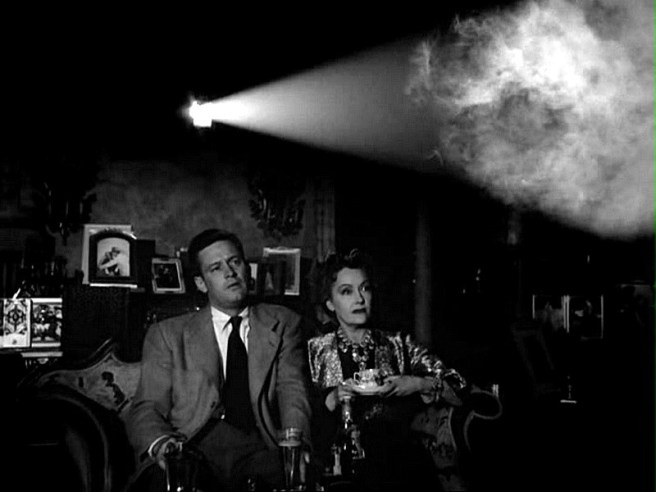
Sunset Boulevard

Joe Gillis: You’re Norma Desmond. You used to be in silent pictures. You used to be big.
Norma Desmond: I am big. It’s the pictures that got small.

Sunset Boulevard. Not as good as I had hoped, but still interesting beginning to end.

You can still compare a coin to the moon–poets have done so in days gone by. The coin itself remains one of the few objects of perception continually and immediately surrounding us that, through long-established habits and fantasies, connect us across the millenia to antiquity–like bread and wine, our shoes, the dog, the knife, indeed the moon.

Pennies to heaven—By Joachim Kalka (Harper’s Magazine). Nice reflection on the death of money made of paper & metal. Better than most “death of” pieces. Also includes a nice discussion of Scrooge McDuck.

If you are feeling nervous, nervous is good. All right? It makes us stop thinking about things. It makes us ready to play. If you’re nervous, that’s fine. Feel nervous.

Lacrosse coach Trevor Tierney quoted in John McPhee’s “Pioneer”. I like the “stop thinking about things” part–I’ve never been distracted while nervous. Nerves and focus go hand in hand.

Mother :: rogerebert.com :: Reviews

Apparently Roger Ebert was posted his review of “Mother” while I was watching it. (via). I like this conclusion:

“Mother” will have you discussing the plot, not entirely to your satisfaction. I would argue: The stories in movies are complete fictions and can be resolved in any way the director chooses. If he actually cheats or lies, we have a case against him. If not, no matter what his strange conclusions, we can be grateful that we remained involved and even fascinated.

Mother :: rogerebert.com :: Reviews