“What happens when technology can analyze every quotidian thing that happened to you today.”
Category: uncategorized
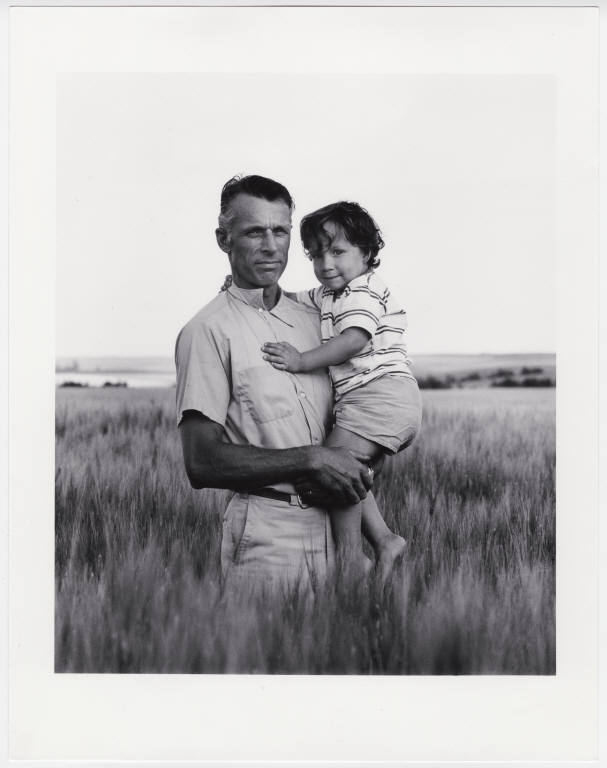
Bill Stramer and son Todd. Hazelton, North Dakota, 1971. Photo from the David Plowden Archive in the Yale Collection of Western Americana, Beinecke Rare Book and Manuscript Library.

From Kircher’s Musurgia Universalis: Birds!!
(via xtina)
“The book is one of the seminal works of musicology and was hugely influential in the development of Western music – in particular on J.S.Bach (1685-1750) and Beethoven (1770-1827).”
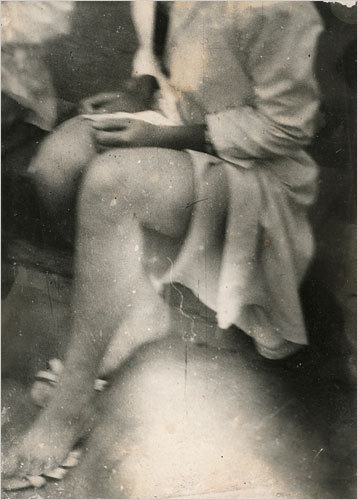
Untitled photo by Miroslav Tichý, who’s got an exhibition at the International Center of Photography going on for a couple more weeks. More in the New York Times and Financial Times. Check out that homemade camera. (via this month’s Harper’s)
Brief Encounter
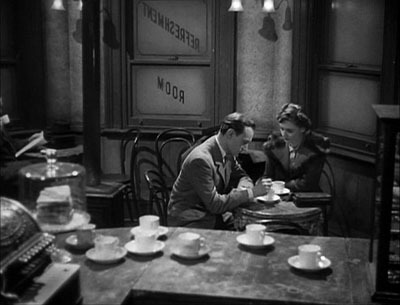
Brief Encounter. This was pretty good. I enjoyed it. It’s about an affair between two people, pretty tame by today’s standards. But that was a different era. Here’s a Criterion essay. And I got a couple semi-related thoughts:
-
One of the most enjoyable things about old/foreign movies is that I often don’t know the cast. It can feel more immediately immersive to see the characters as characters, rather than recognizing actors and trying to set aside that I know they’re portraying people. There’s no baggage, no expectations, no known quirks or ticks. It all feels very fresh.
-
This movie’s soundtrack relies heavily on Rachmaninov’s Piano Concerto No. 2, a few sections in particular. I wonder what it would be like, instead of scoring a film, to film a score. That is, take some work of music and make a movie such that every bit of imagery fits or bolsters (or undermines, why not?) the music in some way. Like Fantasia, I guess, but live-action and only focusing on one piece of music. Is there anything else in that vein? At the least, it would be an interesting constraint on the filming.
Cassidy had no idea what made Andrea so different, but he could sense that she had somehow survived twenty years as an attractive female in the republic without having had her mind reamed out by mama, the Junior League or Helen Gurley Brown.
The best line from John L. Parker’s otherwise okayish book, Once a Runner.
Getting Their Guns Off – Magazine – The Atlantic
Certainly one of the reasons why World War II came to be called “the Good War,” and those who fought it “the Greatest Generation,” and why Americans have reserved their utmost sentiment for the European theater of that war, is because the 1945 discovery that we’d helped shut down a genocide redeemed that theater’s carnage—ex post facto—and bestowed upon that campaign a narrative, moral, and even aesthetic appeal that is exceptional for any war. Saving Private Ryan and Band of Brothers epitomize that theater’s irresistible appeal, with their mix of commendably upsetting, technically brilliant combat scenes and more general uplift. Every mangled limb, every shattered facade, every act of conditioned violence stage-whispers “Sacrifice” amid the gently weeping soundtrack and the faded–Saturday Evening Post color palette, with the overall effect evoking stateliness, esteem, even nostalgia—emotional luxuries that only a comfortable remove can give to the hectic, terrifying nature of combat. All of which takes viewers half out of the moment, despite the kinetic you-are-there cinematography.
It Might Get Loud

It Might Get Loud. Somewhat disappointed in this one. A bit slow. More like a set of parallel mini-bios, not enough material with the three of them together.
I cannot walk through the suburbs in the solitude of the night without thinking that the night pleases us because it suppresses idle details, just as our memory does.
Rush – YYZ. Setting aside Peart and Lifeson’s extended solos, check out Geddy Lee’s amazing hair.
(Source: https://www.youtube.com/)
The problem with clichés is not that they contain false ideas, but rather that they are superficial articulations of very good ones. The sun is often on fire at sunset and the moon discreet, but if we keep saying this every time we encounter a sun or a moon, we will end up believing that this is the last rather than the first word to be said on the subject. Clichés are detrimental insofar as they inspire us to believe that they adequately describe a situation while merely grazing its surface. And if this matters, it is because the way we speak is ultimately linked to the way we feel, because how we describe the world must at some level reflect how we first experience it.
Alain de Botton. Wehr in the World: The problem with clichés.
Anthony Bourdain, unreserved – chicagotribune.com
An excellent interview in many respects. I like this bit:
How do you avoid cliche when you’ve already done so many shows?
We try to undermine whatever it was that worked last week. We deliberately set up difficult things to do. Using new lenses, constantly experimenting with new equipment to give it a more cinematic look — letterboxes, widescreen, gyros, cheap do-it-yourself kind of innovation. The editing styles. We think about movies that we loved that have been shot in this area that we might try to rip off. In the case in Rome, we’re going to do the whole thing in black and white, and in letterbox. Can we do really gorgeous food porn in black and white? It’s never been done.

Interview with Carol Kaye | WMLB 1690 | The Voice of The Arts.
Scott Glazer speaks with one of music’s most prolific bass players, Carol Kaye. Kaye has played on over 10,000 recordings in her career including her work with the Beach Boys, Frank Zappa and as Phil Spector’s go-to bass player. Scott and Carol talk about her history in recorded music, how it all started and how an accidental session with Sam Cooke changed her life forever.

The sad/hilarious collection of unsatisfied coffee cups in our office right now.
Spinning class, the scarcity heuristic, and me
When I really feel like dogging it at spinning class, I engage in some self-talk that goes something like this: This is 45 minutes out of the entire day, and 45 minutes is all you get. In an hour you will be at your desk, where you’ll stay for most of your waking hours. You’ll be envious of the joggers outside in the middle of the day. It’s very unlikely that you’ll get more gym time once this 45-minute opportunity has ended, so treat it like gold.
The Trustworthiness of Beards – Percolator – The Chronicle of Higher Education
“The way you gain people’s trust is to earn it over time by repeatedly proving that you deserve it. That, or grow a beard.”
The Trustworthiness of Beards – Percolator – The Chronicle of Higher Education

Score for “Piano Etudes” (2009) by Jason Freeman. (via)

Arndt & Margaret Larson. My dad’s father’s parents. North Dakota or Minnesota, 1910s maybe.
Marginal Revolution: Atlanta bleg
Tyler Cowen is going to Atlanta and asks “Where should I eat dinner tomorrow?”. Recommendations are all over the map. I’m surprised by all the recs for The Varsity and Fat Matt’s.
Embracing the digital book — Craig Mod
“Ragged Right Text. I’m going to pretend I don’t even have to mention this. There’s something sociopathic about major e-readers not including this option.”
 Mark Larson