Maybe one of the single best things a person can do for themselves is to shift from their default self-worth goals (seeking to prove self-worth and to avoid proof of worthlessness) to learning goals.
Category: uncategorized

How Will You Measure Your Life? – Harvard Business Review
If you study the root causes of business disasters, over and over you’ll find this predisposition toward endeavors that offer immediate gratification. If you look at personal lives through that lens, you’ll see the same stunning and sobering pattern: people allocating fewer and fewer resources to the things they would have once said mattered most.

Saying grace before the barbeque dinner at the New Mexico Fair. Pie Town, New Mexico, October 1940. Reproduction from color slide. Photo by Russell Lee. Prints and Photographs Division, Library of Congress. Captured: America in Color from 1939-1943. Amazing how much better off we are, just 70 years later. (via)
Raging Bull

Raging Bull. I expected that boxing would be much more central to this film, but it’s more of a story of jealousy and self-loathing punctuated with fights professional and domestic. Maybe the coolest thing is the use of slow-motion every now and then to emphasize a particular moment or emotional state. Maybe the most annoying thing is Italian-American tough guy/gangster talk – which maybe I’ve just been saturated with before. I wasn’t blown away with this movie – but, then again, I’m really curious how I’d feel if I saw it a second time. Make of that what you will.
Moogfest 2010
Asheville, NC. October 29-31, 2010.
Bela Fleck, Edgar Meyer, Zakir Hussain: Tiny Desk Concert : NPR
Three of the world’s most ridiculously talented musicians.
Bela Fleck, Edgar Meyer, Zakir Hussain: Tiny Desk Concert : NPR
<param name="movie" value="http://www.youtube.com/watch?v=qOLQkn0VvPc
Soul Train Line Dance to Gladys Knight & The Pips’ “Daddy Could Swear”.
(Source: http://www.youtube.com/)
RAS syndrome – Wikipedia, the free encyclopedia
Inception

Inception. This is a good movie. Worth seeing? Sure. Superlative? No. Interesting ideas and there’s enough ambiguity to puzzle over ‘til the End of Days. Five Ways of Looking at Inception is probably just the tip of the iceberg.
The trouble was that I didn’t care much. My first reaction was “Inception: all muscle and nerves, no heart. Interesting but probably at least 48 minutes too long.” It kinda reminded me of the situation where a writer has an awesome essay and then later writes a book on the same topic. This movie was a book where an essay (i.e. short film) might have been a tighter, more engaging experience.
Other assorted observations:
- I think the dark, corporate angle is legit. The idea of executive-level extraction-resistance training is a nice scifi hypothetical.
- I liked the idea of different levels of dreams operating at different time-speeds. Pretty cool.
- Lots of explanatory dialogue…
- Mediocre score.
- I’d like to see more movies where not everyone is wealthy and skilled.
- I’d like to see action movies with fewer hordes of incompetent gunmen.
- Ski chase. Dead wife reappearing. Zero-gravity fights. Old man dying in a minimalist room. I don’t think this is a bad thing, btw.

Family. Friends. Health. Work. Pick any three.
Communicatrix. Reminds me of an optimist-realist mantra I either invented or stole sometime around high school, and occasionally have to remind myself: “You can have anything you want. Just not all at the same time.”

Edgard Varèse does jazz. Cf. the score for Poème électronique. Also, there’s a Varèse blog and I didn’t know?!


Halfway through, questions and answers | Trans World Expedition. I’m impressed that he’s still on budget! Seems like it would be very easy to go off-plan.

WHISK AWAY: Red and Blue Velvet Cake. It was delicious.
[The Große Fuge is] an absolutely contemporary piece of music that will be contemporary forever.
-Igor Stravinsky
Nice visualization, too.
(Source: https://www.youtube.com/)

Five reasons to drink sake. E.g. “To refuse the future.” (via)
The Philadelphia Story
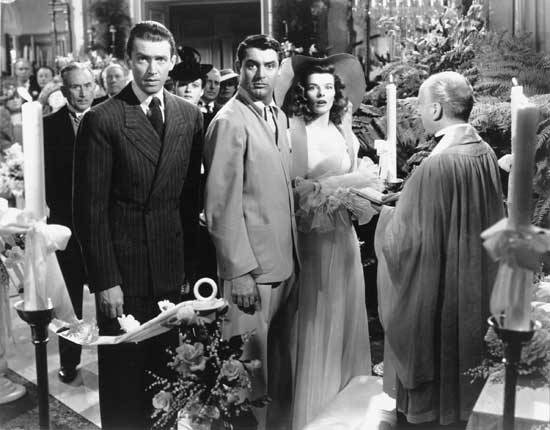
The Philadelphia Story. A very good movie. Hepburn and Stewart and Weidler steal the show here. I still don’t understand the appeal of Cary Grant.
Crystal Boyle — By Robert Boyle (Harper’s Magazine)
This is so wonderful. We’re all living even further in the future than other people’s crazy dreams.
From a wish list of scientific advancements compiled by chemist and inventor Robert Boyle, who in 1662 discovered that the pressure and volume of a gas are inversely proportional, a property now known as Boyle’s Law. The list, which dates from the 1660s, is on display this month at the Royal Society of London, as part of the institution’s 350th anniversary celebration.
- The Prolongation of Life
- The Recovery of Youth, or at Least Some of the Marks of It, as New Teeth, New Hair Colour’d as in Youth
- The Art of Flying
- The Art of Continuing Long Under Water, and Exercising Functions Freely There
- The Cure of Wounds at a Distance
- The Cure of Diseases at a Distance or at Least by Transplantation
- The Attaining Gigantick Dimensions
- The Acceleration of the Production of Things out of Seed
- The Transmutation of Metalls
- The Making of Glass Malleable
- The Making Armor Light and Extremely Hard
- The Transmutation of Species in Mineralls, Animals, and Vegetables
- The Emulating of Fish Without Engines by Custome and Education Only
- The Practicable and Certain Way of Finding Longitudes
- The Use of Pendulums at Sea and in Journeys, and the Application of It to Watches
- A Ship to Saile with All Winds, and a Ship Not to Be Sunk
- Freedom from Necessity of Much Sleeping Exemplify’d by the Operations of Tea and What Happens in Mad-men
- Pleasing Dreams and Physicall Exercises Exemplify’d by the Egyptian Electuary and by the Fungus Mentioned by the French Author
- Great Strength and Agility of Body Exemplify’d by That of Frantick Epileptick and Hystericall Persons
- Varnishes Perfumable by Rubbing
- A Perpetuall Light
 Mark Larson